COP 24 Katowice 2018. Youth Forum

Fantastique. C’est le premier mot qui nous vient à l’esprit après ce séjour de 5 jours basé autour de l’environnement mais aussi autour du partage, de l’échange et de la rencontre, au pays du charbon, la Pologne, ce qui est par ailleurs paradoxal dans le contexte de notre venue, et avec comme événement moteur, la COP24, conférence internationale sur le climat. Organisé par l’Alliance pour l’éducation à la citoyenneté planétaire (AECP), ce voyage a regroupé une soixantaine de personnes venant d’Europe, du Québec et d’Afrique francophone, qui ont été sélectionnées pour leur implication dans l’éducation au développement durable dans leur école ou association.
Dimanche 2, au soir et alors que la COP24 vient de s’ouvrir, nous débarquons de l’avion et c’est Cracovie qui nous accueille dans son atmosphère hivernale. Nous sommes désormais en route pour la maison d’hôtes qui nous héberge… et qui est à seulement une dizaine de minutes de marche du camp d’Auschwitz, dont on a visité l’entrée le lendemain.

C’est sur une période de 3 jours que nous avons accueilli chaleureusement, étant arrivés les premiers, les autres groupes venant de Belgique, du Tchad et du Maroc. A tour de rôle, chaque délégation et chaque établissement a pu présenter aux autres ses projets respectifs pour l’environnement et le développement durable et chacun a pu piocher dans les actions des autres pour les ajuster et les appliquer à son école.
Le lundi était un jour de préparation à la COP ; par petits groupes, nous avons essayé de lister les différentes questions à poser aux stands une fois sur place et avons travaillé sur ce qu’on voulait notamment ramener de la COP à notre retour (documents, photos, vidéos..) .

La journée de mardi était incontestablement la plus grosse journée du séjour, le jour le plus attendu de tous, la visite à la COP24. Séparés dans des groupes de 5 ou 6 personnes, nous avons pu profiter pleinement de ce grand événement international et aller à la rencontrer des délégations nationales aux pavillons, aux stands des ONG et des organisations intergouvernementales. Nous avons pu aussi assister à une conférence à laquelle participaient des grandes compagnies automobiles et avoir l’intervention de 4 jeunes étudiants français, qui ont partagé avec nous leur opinion sur le réchauffement et qui ont pu répondre à nos questions. A la fin de la journée, nous prenons la route du retour, comblés et avec nos petits badges et les sacs pleins de cadeaux. Nous en profitons pour accueillir le groupe de la Côte d’Ivoire qui arrive enfin après maintes péripéties durant leur voyage mais qui arrive avec le sourire.

Le mercredi matin était une demi-journée de debrief de la COP24 où nous avons échangé sur ce qu’on retiendrait de la COP, comment nous irons en parler à nos proches et camarades, de ce qui nous avait surpris, choqués, déçus là-bas. Nous avons travaillé notamment sur la façon dont on voulait retransmettre nos rencontres et notre découverte de la COP aux élèves de nos collèges.

Puis l’après-midi a été dédié à la visite guidée de Cracovie qui se situe à une petite heure de route de l’endroit où nous logions. Pendant cette demi-journée, nous avons pu visiter la cour du château de Cracovie et découvrir le patrimoine historique de celle qui est la seconde ville du pays et de son grand marché de Noël. Nous sommes rentrés épuisés mais surtout transis de froid par le temps glacial que notre guide considérait étonnamment comme assez clément. Le dernier soir, les adultes nous ont informés des projets mis en place entre les différents pays au cours du séjour et qui seront mis en œuvre au cours de l’année.

Le jeudi est donc la dernière journée de notre séjour, avec un retour à la COP pour assister à la table ronde avec des membres d’ONG, des délégations françaises et belges, et un expert du GIEC auxquels nous avons pu poser nos questions. Ensuite, ce fut l’occasion aussi pour certains de terminer les visites inachevées de mardi. Pour clôturer notre venue, nous avons interprété le chant préparé en amont mardi soir, dans les allées de la conférence, ce qui nous a valu un petit bain de foule venue nous regarder…mais aussi un petit rappel à l’ordre des agents de sécurité qui nous ont reproché de ne pas les avoir prévenus de notre intervention musicale.

C’est en début d’après-midi que nous nous séparons physiquement, tous émus de devoir nous quitter après nous être attachés les uns aux autres si rapidement et facilement, et déjà nostalgiques de ce qui reste une expérience infinie, unique et inoubliable.

Badis, Noémie, Warren et Tao.
 

Final Report of the World EE Day 2018, see you in 2019

Last days of 2018, this is the time to look back at what has been done, as the first edition of the World Environmental Education Day, held from 14 to 26 October. But it is also the moment to look ahead, and start thinking about the next edition, in October 2019. It is already available the logo of the World EE Day 2019. Schools, parks, environmental education centers, public institutions, associations, museums are invited to join the World Environmental Education Day organising special events to highlight the importance of environemtal educational actions all over the world.
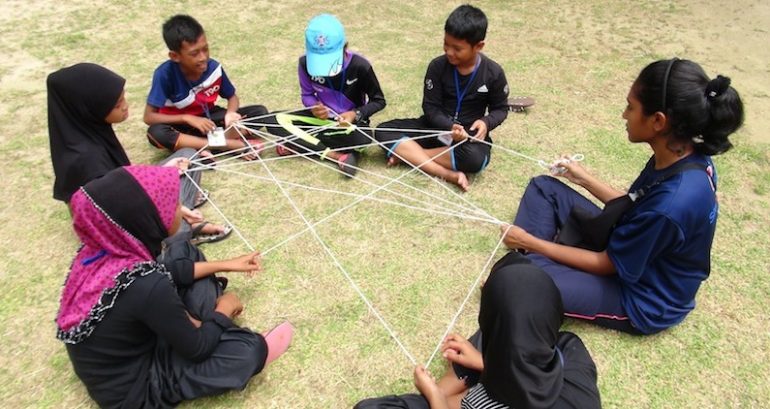
The World EE Day wants to focus on the complexity of the challenges in a world where everything is ever more interconnected.

Ask us the logo and share with us your contents from the World EE Day 2018. Send us reports, photos, videos… and we will share it on the Weec Network.

Several associations, universities, parks and institutions sent us information about their events in 2018. We already presented a selection of interesting case histories in this article.

Now we propose a new group of exemples.
In Izmir, Turkey, the Permaculture Park for young children presents its activities: «Our first aim is to create ‘Permaculture Park’ for young children who are kindergarden students, elementary school students, high school students and disabled students in Izmir, will learn system of agricultural and social design principals and they will practice by gardening, by growing plants in our Permaculture Park. The other aim is to create our own organic compost which includes recycled material including decayed vegetables, fruit, grass clippings and organic waste in Izmir (in Kültürpark, Izmir Fair area). Therefore, we will reduce the rate of trash which goes into landfill area. Next step is to make mulch composting. Finally, we will get on our own organic soil. Then we will organize some workshop activities and invite some people who are interested in permaculture activities. To sum up, we want to give them an opportunity to emphasize the goal of sustainable agriculture and to be environmentally conscious. And every young child or teenager will ‘touch the soil’».

In Iran the UNESCO Chair on Environmental Education presented the ‎“Coordination meeting of specialized workgroups of UNESCO Chair on ‎Environmental Education in Islamic Republic of Iran for establishment of national online environmental education network”‎. UNESCO Chair on Environmental Education in Islamic Republic of Iran seeks to pursue the ‎following objectives through research, educational and cultural approach:‎
– Enhancement of national and international status of environmental education through ‎Communicating between academics, local and civil communities, decision-makers and ‎researchers to create innovative ways of education and sharing information and ‎knowledge regarding Environmental Education, ‎
– Development and promotion of environmental culture
– Enhancement of the public participation in environment protection ‎
– Promotion of environmental literacy in form awareness raising, change of attitude and ‎environmental behaviors of citizens.
– Promotion of Islamic-Iranian approach in the field of environmental education ‎

In October 2018, UNESCO Chair on Environmental Education in Islamic Republic of Iran held ‎several meetings regarding running national online environmental education network with ‎participation of different educational workgroups of the chair such as waste management, ‎climate change, HSEE, carbon management, green business, participatory environmental ‎protection, green management, religions and environmental education, women and ‎environmental education, environmental education through toys and games, energy and ‎environmental education, environmental pollutions, water management, citizenship and ‎environmental education, Startup and innovative ideas regarding environmental education and ‎ecotourism. In these meetings determined all mentioned workgroups should:‎

‎-‎ Identify various audiences, needs and expectations of learners, developing learning ‎goals and objectives, identifying instructional strategies, creating educational contents, ‎implementing and evaluating the impact of their training and educational activities.‎
‎-‎Collaboration with national and international institutions, specialized research and ‎development organizations, NGOs and environmental researchers.‎
‎-‎Publication of scientific articles, books, newsletters and providing electronic content. ‎‎-‎Presentation of educational and research projects based on demand and supply in ‎various environmental topics. ‎
‎-‎Holding lectures, seminars and conferences on environmental education.‎
‎-‎Providing encyclopedia in environmental education
‎-‎Establishment of exhibitions, festivals and environmental events related to the activities ‎of national environmental education network. ‎

The UNESCO Chair on Environmental Education in Iran also held a Specialized Meeting on the role of social networking to improve environmental education ‎regarding green small business, ‎a meeting with ‎the participation and collaboration of members of Amirabad neighborhood sub-council entitled ‎‎“the role of social networking to improve environmental education regarding green small ‎business” in October 2018.‎

At first, the benefits of eco-friendly local businesses were mentioned‏.‏‎ A green small business is ‎one which takes measures to provide family-supporting profits and benefits, also reduce its ‎impact on the environment and preserves or enhances environmental quality. Green businesses ‎may be committed to environmental and social initiatives, such as the use of renewable energy ‎sources and energy-efficiency measures; the reduction of greenhouse gases emissions and other ‎environmental pollutants; the conservation of natural resources and energy; reduction of ‎material usage in order to enhance recyclability and reusability through green marketing such ‎as implementing a green supply chain, green products design, packaging, pricing and ‎promotion are benefits to society and the environment.‎
Local homogeneous groups in different areas of green small business were formed in the next ‎step. Their educational needs recognized as follows:‎
‎-‎ Family typology: Psychology topics, needs, etc.‎
‎-‎ Individual resilience: flexibility, compatibility, collaboration, understanding risk, ‎problem solving, etc. ‎
‎-‎ Community resilience: social connectedness for resource exchange, cohesion, response, ‎and recovery, social and economic well-being of the community, effective risk ‎communication, integration and involvement with different entities, etc. ‎
‎-‎ Green marketing: such as green product, green price, eco-labels that has economic ‎impact on local economy with emphasis on low-energy solutions, sustainable products, ‎non-toxic ingredients, low waste (or emissions), chemical free, recycled materials.‎
‎-‎ Specialized training in various fields: organic food, eco-friendly toy seller, ‎organic gift shop, eco-friendly beauty and health productions, financially and ‎ecologically sustainable alternative for waste sorting and reusing, green store, etc. ‎

Finally, UNESCO Chair on Environmental Education in Islamic Republic of Iran ‎announced its readiness to hold a series of training sessions on the above subjects.‎

In Portugal the Instituto Nacional de Investigação Agrária e Veterinária, I. P. (INIAV), in cooperation with an Oeiras School organized a visit to the Pecan tree collection – Carya illinoinensis (Wangenh) K. Koch, located at INIAV Campus in Oeiras (Portugal). During the visit 18 pupils of 8th level, 2 teachers and 1 researcher participated in outdoor environmental activities that highlighted some aspects of this plant bio-geography and its value for agriculture as a nut tree.

In Spain the Faculty of Educational Sciences of the University of A Coruña (Galicia, Spain) was carrying out during this week and on the occasion of the World Day of Environmental Education activities of cleaning and categorization of waste, both inside the Faculty and in the exterior, with the participation of students and teachers.

The Manifesto World Day of Environmental Education was also posted on the Faculty’s website and on the Instagram of the environment, insisting on the need to continue throughout the course developing activities that allow action to make the Faculty and the campus more sustainable.

Hopes for Mediterranean and Black Sea fisheries

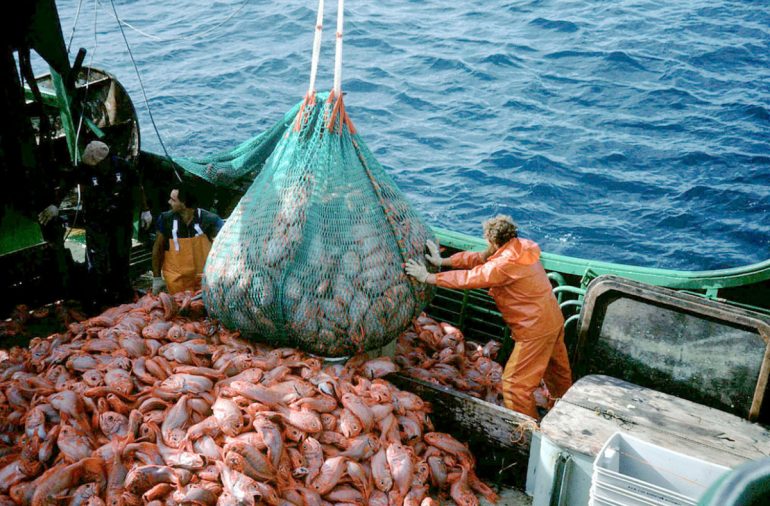
Good news in the Mediterranean and Black Sea: according to new FAO-GFCM report, for the first time over the past years, the pressure has reduced raising hopes for  fisheries. The percentage of overexploited fish stocks decreased by 10%- from 88 percent in 2014 to 78%in 2016. More efforts are needed, however, to ensure long-term fish stock sustainability, warns The State of Mediterranean and Black Sea Fisheries.
This means more support for the small-scale fishing sector, which employs most fishers and causes least environmental damage; reducing bycatch and discards; and introducing more drastic measures such as significantly reducing fishing or establishing fisheries restricted areas  (areas where fishing activities are regulated).

The latter is particularly needed to safeguard the most heavily fished species, such as  European hake, which is fished nearly six times beyond its sustainable level.

“Fisheries provide the region with an important socio-economic balance and are essential to ending hunger and poverty,” said Abdellah Srour, GFCM Executive Secretary.

“Sustainability may be expensive in the short term, but there is nothing more expensive than running out of fish,” said Miguel Bernal, FAO Fishery Officer and one of the report’s coordinators.

Mediterranean and Black Sea fisheries are under threat in the long run because of the effects of increased pollution from human activities, habitat degradation, the introduction of non-indigenous species, overfishing and the impacts of climate-driven changes.

Across, the region, the ranking of capture fisheries production in 2014-2016 continues to be dominated by Turkey (321 800 tonnes and 26 percent of total landings compared to 31 percent in 2013), followed by Italy (185 300 tonnes and 16 percent, similar to the 2013 percentage). Algeria (96 300 tonnes and 8 percent) and Greece (65 700 tonnes and 5 percent) also maintain the same (2013) percentages in landing contribution. Both Tunisia (185 300 tonnes) and Croatia (74 400 tonnes) show an increase compared to 2013 (from 7 to 9 percent for Tunisia and from 3 to 6 percent for Croatia). Total landings for Spain (78 200 tonnes) decreased from 8.5 percent to 7 percent of the total).

Among subregions, the Black Sea continues to provide the largest contribution to capture fisheries production, with a 32 percent of the total, followed by the western Mediterranean (22 percent of total), the Adriatic Sea (16 percent), and the central and eastern Mediterranean (15 percent each).


Some sectors generate more discards than others – trawling, for example, accounts for over 40 percent in some areas, whilst small-scale fisheries tend to be below 10 percent.

According to the report, incidental catches of vulnerable species are relatively rare events but are important because the species caught are of conservation concern. Among the vulnerable species most affected by incidental catches, are sea turtles (which appear in 8 out 10 of reports on incidental catches) followed by sharks, rays, and skates (appearing in 2 out of 10 reports on incidental catches each). Seabirds and marine mammals represent the lowest number of incidental catches, and are only occasionally included on incidental catches reports.

The report was launched on the occasion of the first GFCM Forum on Fisheries Science (Fish Forum 2018) organized at the FAO headquarters from 10th to 14th December 2018, as a recognition of the instrumental role of science in improving knowledge towards sustainable fisheries management.

Politics, Ecology and Society in the Anthropocene

The XII National Conference of Environmental Sociologists in Italy, titled “Politics, Ecology and Society in the Anthropocene”, will be held on 26 and 27 September 2019, at the University of Salerno.
The Conference will be focused on the organization and reorganization of political, social, and ecological relations within the era that some scholars define as Anthropocene.
At the same time, this concept will be critically considered. On the one hand, it is recognized the degree of uncertainty that the general scientific debate highlights about this concept, developing a deep critique. On the other, it is highlighted the geographical, social and political homogeneity implied by this concept, as it places in the background the inequalities which characterize the socio-ecological relations over time – for example those linked to colonial and neocolonial, gender, and human and extra-human natures relations.
The concept of Anthropocene marks a field in movement, both from the point of view of the quality of socio-ecological relationships, and from the point of view of the epistemological and methodological aspects that drive research and knowledge production.
This turbulence is theoretically and empirically important, involving the intertwining of
politics, society and ecology in all the areas of socio-ecological relationships that are
considered relevant.
On this basis and in consideration of the multiplicity of  approaches and research fields that traditionally characterize Environmental Sociology in Italy, a call for panels is opened, in order to organize the Conference in a series of sessions.

We invite all interested scholars to submit proposals for thematic sessions by 25 January 2019, specifying the following contents:
1) Panel title; 2) name or names of organizers; 3) three keywords; 4) an abstract to present panel aims (max 3,000 characters).
Proposals can be submitted in Italian, Spanish, or English, sending them to the following e-mail address: 12congresso.sociologiambiente@gmail.com.

Panel proposals will be evaluated and published by 5 February 2019, followed by a call for Conference presentations until submission deadline (25 April 2019). Presentations (title, proponents, 3 keywords, and a 3,000 characters abstract) will be sent both to the Conference address (12congresso.sociologiambiente@gmail.com) and the thematic session organizers.
Accepted presentations will be notified by 15 May 2019. Conference program will be published by 30 May 2019.

Conference Scientific committee: Alfredo Agustoni, Aurelio Angelini, Marco Castrignanò, Enrico Ercole, Alfredo Mela, Giorgio Osti, Luigi Pellizzoni, Lauro Struffi, Enrico M. Tacchi, Anna Maria Zaccaria. Local Conference organizer: Gennaro Avallone

Facebook Conference page