
A major new initiative to fight climate change was launched by Her Royal Highness Princess Lalla Hasnaa, President of the Mohammed VI Foundation for Environmental Protection, at the 2019 Climate Action Summit of the United Nations. The initiative, focused on promoting the ideas and solutions of young Africans, was launched on the sidelines of the United Nations General Assembly. Her Royal Highness, as a globally committed actor, has, for several decades, systematically placed young people and citizens at the center of the Foundation’s activities.
This initiative was born out of a partnership between the Mohammed VI Foundation for Environmental Protection, YOUNGO (group of children and young people at the United Nations Framework Convention on Climate Change), the Mohammed VI Polytechnic University, the OCP Group, as well as young people who were at the heart of the co-construction of this initiative.
The Mohammed VI Foundation for Environmental Protection brings to this initiative its 18 years of experience in education for sustainable development in Morocco, as well as a significant emphasis on Africa, digital technology and international cooperation . YOUNGO makes use of more than 200 youth-led NGOs for young people, as well as its technical expertise. The Mohammed VI Polytechnic University contributes with its approach based on learning by doing (learning by doing), its network of African experts as well as its cutting-edge resources. Finally, the OCP Group provides its support and expertise as a representative of the private sector.
The African Youth Climate Hub will offer young Africans the opportunity to establish and foster a generational movement to fight climate change. The Hub will educate, inspire, empower and mobilize young people to create lasting change in their schools, communities and professional ecosystems, at all levels.
The aim is to create a forum where young Africans can discuss their ideas for combating climate change. The ideas deemed most relevant to the key targets of the Hub will be developed in an incubator before being refined and then deployed. The Hub hopes to bring together the most committed and innovative young African thinkers on climate change, create a learning center and help people find green jobs in Africa.
«Africa is affected by climate change and at the same time constitutes a rich breeding ground for solutions. There has never been a more inclusive and impact-oriented space, allowing young Africans to come together and share their ideas for solutions adapted to their continent». This was stated by Meryem Hdia, a 21-year-old Moroccan woman, youth ambassador for the Hub. «This new platform will allow young Africans to create their own solutions to climate change. It is about developing ideas that will have a real impact on the lives of people around the world».
The African Youth Climate Hub will enable young Africans to identify and connect with the different groups and organizations that need to rely on their ideas to integrate best practices and amplify the impact of their actions. The Hub aims to generate forums involving the main stakeholders and young people, to reduce differences in capacity and to promote an active intergenerational approach.
But the Hub is not limited to ideas: the objective is to generate tangible results with support mechanisms put in place to make ideas happen. Among these mechanisms, the establishment of a network to facilitate cross-border and intergenerational connections, an incubator and a knowledge center.
The African Youth Climate Hub will be based at the Hassan II International Center for Environmental Training in Rabat, Morocco. An annual meeting of the Hub will be held at the Center and will allow young people from all over the African continent to share their knowledge, exchange their best practices, etc.
Contacts: contact@youthclimatehub.org

 The Twenty-Sixth International Conference on the Unity of the Sciences (ICUS XXVI) will be held in Seoul (Korea) on February 3 – 5. The main theme will be Resolving Environmental Threats for the Benefit of Humanity.
 Ready, set, go! MedArtSal kick is a project to promote sustainable management of artisanal salinas in the Mediterranean. The eight partners of the project
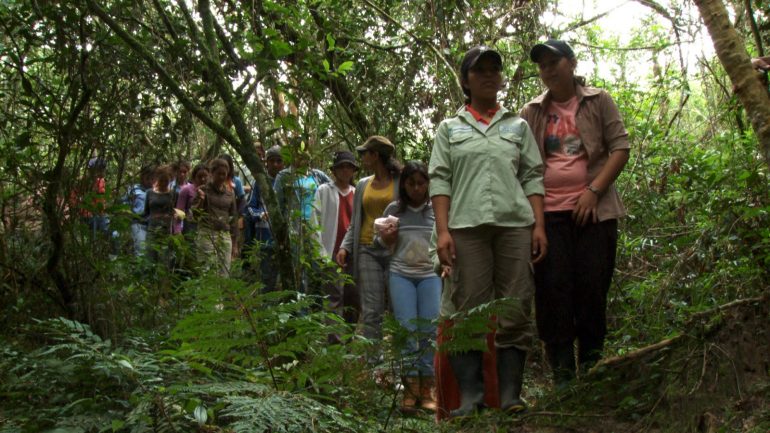 The documentary film Daughters of the forest tells the intimate, powerful story of a small group of girls in one of the most remote forests left on earth who are transformed by attending a radical high school where they learn to protect the threatened forest and build a better future for themselves.It tells the story of these girls living in a rural area where more than 95 percent of the forest has been razed for multi-national agri-businesses.
 The time of year has arrived for the Erasmus+ KA1 applications. This year