Empowering Uganda’s youth: Muyunga Bruno’s quest to Speaking 4 the Planet

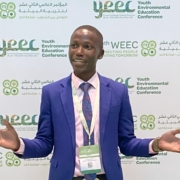
In the heart of Uganda, Muyunga Bruno, an IT Officer, Environmental Activist, and student mentor at St. Mark’s College Namagoma, is passionately leading a movement to safeguard the natural world for future generations.

Bruno’s love for preserving the environment traces back to his childhood, surrounded by Uganda’s stunning landscapes. However, he’s witnessed a troubling trend of environmental decline over the years. “Gone are the days when you could hear frogs in the evening,” he mourns, pointing to the loss of once-vibrant habitats due to human activities.

Recently returning from the 12th World Environmental Education Congress (WEEC) in Abu Dhabi, Bruno is reinvigorated. “Numerous factors, especially climate change, have profoundly impacted our environment,” he observes, stressing the urgent need for education and action.

At the WEEC, Bruno noted a critical knowledge gap, especially among younger community members. “Children and youths must learn the importance of preserving our environment,” he insists, noting the lack of guidance from previous generations on conservation efforts.

With this insight, Bruno is launching the “Speaking 4 the Planet” Environmental Speaking Competition at St. Mark’s College Namagoma. Set for April 13, 2024, the event aims to empower students to tackle environmental challenges using their voices and beliefs. It will involve various school clubs, including debate, wildlife, Red Cross, Interact, Scripture Union, mathematics, ICT, entrepreneurship, Swahili (East African Community), and cultural clubs.

Inspired by Mr. Phil Smith, who leads “Speaking 4 the Planet,” Bruno envisions expanding this initiative beyond his school. “I don’t plan to limit this to just our competition,” he shares, detailing ambitions to reach more schools, communities and neighboring countries.

Bruno dreams of a future where the younger generation is not only knowledgeable but also passionate about conserving and protecting the natural environment. “We must raise a generation capable of advocating for the planet,” he stresses.

In his mission to effect change, Bruno humbly seeks support. “This email is a humble request for any assistance—financial, advisory, or knowledge-based,” he appeals, hopeful for partnerships and resources to advance his cause.

As Uganda’s landscape faces mounting challenges from human impact, voices like Muyunga Bruno’s are crucial in paving the way for a sustainable future. Through initiatives such as the “Speaking 4 the Planet” competition, he aims to inspire, educate, and ignite a fervor for environmental conservation among Uganda’s youth.

For those interested in supporting Bruno’s cause or learning more about the “Speaking 4 the Planet” competition, inquiries are welcome at his email (muyungabruno@gmail.com). Together, we can advocate for the planet and cultivate a brighter, greener tomorrow for all.
Perth selected as host for 13th World environmental education congress (WEEC) in 2026

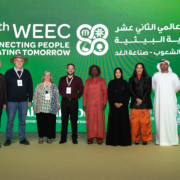
The World Environmental Education Congress (WEEC) Permanent Secretariat and the Australian Association of Environmental Education (AAEE) announced Perth as host for the 13th World Environmental Education Congress (WEEC) in 2026.

Following the resounding success of the 12th World Environmental Education Congress (WEEC) held in Abu Dhabi in January and February 2024, the WEEC Permanent Secretariat takes great pride in announcing that Wadjuk Noongar Country – Perth, Western Australia – has been selected as the host city for the 13th WEEC in 2026.

The WEEC Permanent Secretariat will partner with the Australian Association of Environmental Education (AAEE) to bring this premier international congress dedicated to the progression of environmental education and the advancement of education for sustainability worldwide.

“After twelve world congresses, the environmental education community starts a journey towards new goals from Australia”, said Mario Salomone, WEEC Secretary-General. “The environmental approach to the knowledge is a key for a paradigm shift and must be more and more at the centre of the formal and non-formal education. The global project on learning implemented in close collaboration with the Club of Rome will bring to the congress in Perth updated data, inspiring thoughts, and new mindfulness”.

The WEEC serves as a platform for global dialogue, learning, and exchanging ideas on environmental education programs. “The work we are doing in Australasia on environmental education and education for sustainability positions us as a leading destination,” said Dr Lisa Siegel, President of AAEE. “We welcome environmental educators locally and from around the world to attend WEEC 2026 to benefit from international discourse and showcasing best practices.”

AAEE Vice Presidents Dr Jennifer Pearson and Mr Jason Pitman, both in Western Australia, will co-chair the organising committee for the 13th WEEC. “We are thrilled to showcase Western Australia’s rich environmental and cultural heritage to delegates from around the world,” said Dr Pearson. “From sustainable initiatives in early learning to the growing impact of place-based education efforts, the 13th WEEC presents a unique opportunity to share our knowledge and learn from our global counterparts.”

“The 13th WEEC in 2026 will facilitate stronger connections between countries in the Oceania region and beyond,” added Mr Pitman. “By sharing our responses to the climate crisis and exchanging international perspectives on living more sustainably, we aim to foster collaboration and galvanise collective action in the global community.”


Information and updates

For further information and updates on the 13th WEEC 2026, please visit:

www.weecnetwork.org or www.aaee.org.au

Alternatively, please get in touch with the Local Organising Committee via:

Dr Jennifer Pearson, Co-chair, jopearson189@gmail.com

Mr Jason Pitman, Co-Chair, jason.j.pitman@gmail.com

And with the international Permanent Secretariat:

secretariat@weecnetwork.org

Twenty years and great aspirations at the 12th World WEEC Congress

Record-breaking numbers and prime factors were highlighted at the 12th edition of the World Environmental Education Congress (WEEC), which took place in Abu Dhabi from January 29 to February 2. Approximately 3000 delegates from 83 countries worldwide participated, alongside over 330 speakers who led more than 300 parallel sessions. Organized by the Permanent Secretariat of the WEEC Network based in Italy and the Abu Dhabi Environment Agency, the congress brought together environmental educators, teachers, associations, and institutions from across the globe.

“The WEEC 2024 Congress,” remarked Secretary General Mario Salomone, “represents a global commitment to environmental education, mirrored by the hosting country’s presidency of the International Union for Conservation of Nature. The United Arab Emirates’ pivotal role as our host has catalyzed a ripple effect that, I believe, will resonate far beyond the congress, inspiring significant change worldwide.”

The 2024 WEEC congress also marked twenty years since its inaugural gathering in Portugal in 2003, commemorated through a dedicated side event. It served as a platform to reflect on past commitments and set goals for the next two decades. Among these discussions was the announcement of the next edition, slated for September 2026 in Perth, Australia, organized in collaboration with the Australian Association for Environmental Education.

The rotation of congress locations worldwide aims to address diverse contexts, tailoring environmental education and sustainability efforts to specific regional needs, challenges, and resources. Each destination brings with it distinct traditions, cultures, economic structures, and social dynamics, offering pertinent insights, cutting-edge research, and effective practices.

To capture the unique narrative of the United Arab Emirates, the fifth day of the congress ventured into the field with a series of excursions spotlighting local environmental education initiatives. These ranged from exploring the Jubail Mangrove Park, where the Abu Dhabi Environment Agency has recently planted approximately 15 million mangroves to support the UAE’s goal of planting 100 million mangroves by 2030, to visiting the Yas SeaWorld Research & Rescue Center, the largest facility dedicated to marine research, rescue, and rehabilitation in the region.

Throughout the four days at the congress center, nine plenary sessions featured presentations from esteemed international speakers, including Mirian Vileda, Eureta Rosenberg, Akpezi Ogbuigwe, Purnima Devi Barman, Carlos Alvarez Pereira, Judy Braus, Kartikeya Vikram Sarabhai, Daniel Schaffer, and Gayatri Raghwa, among others.

A significant focus was placed on engaging youth, evident in the Youth Environmental Education Conference (YEEC) – a parallel event to the main congress since 2019. This edition saw substantial growth in both programming and participation, with around sixty speakers and hundreds of Emirati and international youth engaging in workshops, debates, and activities like the escape room and a daily podcast, a first in congress history, providing an innovative platform for sustainability discussions.

Connected to the YEEC area, a spacious exhibit zone facilitated interactions with local and international associations and universities. The “Sustainability Wall” showcased principles, objectives, and examples to inspire attendees to make a personal commitment to enhancing the sustainability of WEEC2024.

Emphasizing the concept of legacy, efforts were made to leave the congress venue better than before. As part of this commitment, the Abu Dhabi Environment Agency pledged to plant around 15,000 mangroves as a compensation activity. This tangible initiative, endorsed by WEEC, underscores the integration of environmental education into all facets of life.

The future of humanity depends on enabling everybody’s capacity to learn

The Fifth Element programme of The Club of Rome and The World Environmental Education Congress are joining forces to collaborate on a new project, sparked by the 45th anniversary of the report No Limits to Learning. The collaboration will focus on the transformative and regenerative function of learning at its full potential.

Overcoming the challenges that humanity is facing today will require a cultural transformation with collective learning at its heart. The Fifth Element’s vision is to explore and facilitate the recognition of blind spots and help catalyse the emergence of a revolution of mindsets towards equitable wellbeing on a healthy planet.

In the opening ceremony of the 12th edition of the World Environmental Education Congress (WEEC) in Abu Dhabi, the Secretary-General of the WEEC Permanent Secretariat, Mario Salomone, announced this collaboration between The Club of Rome and the WEEC Network to address the multidimensional challenges of the current “polycrisis”.

“Learning processes are essential. Through learning, we acquire the elements to move between the paths of history and the cases of life. We can learn well or poorly. We can become selfish and individualistic or supportive and cooperative. We can absorb conservative or innovative knowledge. Unlike material growth, which is impossible on a finite planet, learning has no limits.” commented Salomone.

45 years after the publication of the report to The Club of Rome No Limits to Learning, the words of Aurelio Peccei, founder of The Club of Rome, are still valid and powerful: “What we all need at this point in human evolution is to learn what it takes to learn what we should learn – and learn it.” This quote serves as the guiding inspiration for this new collaboration between The Club of Rome and the WEEC Network.

One of the aims is to understand better what is still blocking the potential of human communities everywhere to learn by themselves their pathways to regenerative and hence sustainable futures. As put forward by No Limits to Learning, making learning participatory, anticipatory, innovative and integrative would shape the responses we need for desirable futures.

Carlos Álvarez Pereira, Secretary General of The Club of Rome, commented: “The resonance between so many initiatives of transformational learning all around the world is critical. Resonance creates the conditions for mutual learning and will ultimately lead to systemic change towards equitable wellbeing within a healthy planet”.

In 2021 The Club of Rome published Learning New Ways of Becoming Human to reframe the current polycrisis as a failure in our collective capacity to learn and highlight at the same time the huge potential at our hands, provided that people are allowed to learn and address the existential challenges in their own ways. The future of humanity depends on how we bet today on the humanity and capacity of everybody.

The collaboration between The Club of Rome and the World Environmental Education Congress Network will unfold over two years and result in a new publication as an update to No Limits to Learning in the light of the transformations that have occurred since then. This new report will be presented at the WEEC 2026.

For more information or to arrange interviews contact:

Philippa Baumgartner  pbaumgartner@clubofrome.org

The Fifth Element is an initiative hosted by The Club of Rome which seeks to create a future of equitable wellbeing within a healthy ecosystem. We shift focus from stakeholders to human beings, fostering connections and creating space for people and organisations to engage in their own learning processes. Through engagements and initiatives based on a combination of traditional wisdom and leading-edge science, we are working to catalyse the emergence of a human revolution.

www.thefifthelement.earth

The Club of Rome is a platform of diverse thought leaders who identify holistic solutions to complex global issues and promote policy initiatives and action to enable humanity to emerge from multiple planetary emergencies. The organisation has prioritised five key areas of impact: Emerging New Civilisations; Planetary Emergency; Reframing Economics; Rethinking Finance; and Youth Leadership and Intergenerational Dialogues.

www.clubofrome.org 

The World Environmental Education Congress (WEEC) is an international network of environmental educators and organisations that promote education for sustainable development. The WEEC network aims to provide a platform for the exchange of ideas, experiences, and best practices in environmental education. The network organizes a biennial congress that brings together environmental educators, researchers, and practitioners from around the world to discuss and share their work. The congresses have been held in various locations around the world since the first one in 2003.

www.weecnetwork.org