Promoting transformative education at WEEC 2026: a call for global action

The 13th World Environmental Education Congress, taking place in Perth, Australia, invites educators, policymakers, and environmental advocates worldwide to engage in transformative learning experiences that challenge and inspire new approaches to environmental education. Underpinned by the wisdom and traditions of Australia’s First Nations, WEECE 2026 offers a unique platform for exploring critical educational themes that shape the future of our planet. This year’s congress will highlight six thought-provoking themes that align with the global push for sustainability, justice, and innovation.

Connection to Country: Learning from Land and Waters
Rooted in the timeless connection to the land and waters held by Australia’s First Nations peoples, the theme Boodjar kep dandjoo emphasizes the importance of place-based education in fostering a deep, personal relationship with the environment. Inspired by more than 50,000 years of Indigenous wisdom, this theme focuses on two-way learning methodologies that bridge the knowledge of local communities with broader environmental education. Participants will explore how place-based education can nurture stewardship, community engagement, and environmental appreciation while promoting sustainability in the context of the United Nations Decade of Ocean Science for Sustainable Development.

Beyond Regenerative Understanding: Shifting to a Low-Carbon Future
The theme Natdjing maladjiny kadadjiny underscores the pivotal role of education in shifting economies towards sustainability. It offers a deep dive into how educational strategies can inspire the transition to low-carbon economies. By focusing on new, sustainable economic models, this theme will spark conversations about how education can empower individuals and societies to adopt practices that support long-term environmental health and equity.

Reclaiming and Revolutionising Education
The transformation of curricula and pedagogy is at the heart of the Karo wer moordoowin korangan kadadjiny theme, which advocates for decolonising education and integrating Indigenous, local, and traditional knowledge. This theme champions a revolution in environmental education, one that respects and promotes equity, resilience, and cultural relevance. By drawing from the rich diversity of perspectives, particularly from the Global South, it calls for a more inclusive and dynamic approach to learning that can better address the environmental challenges of today and tomorrow.

Inspiring Change and Empowering Agency
Under the banner Woola-woola wer moordoowin yang, this theme calls for a global reassessment of educational systems, challenging the status quo and encouraging a shift from conservative to innovative learning. Participants will explore how education can empower learners to become active agents of change in their communities, advocating for systemic transformations that foster creativity, innovation, and the capacity to tackle complex global challenges.

Decision Making and Sense of Justice: Tackling Climate and Social Injustice
Kadadjiny warniny wer moolyak-abiny focuses on the intersection of climate change, social justice, and education. The theme examines the global challenges posed by climate injustice and environmental racism, particularly in vulnerable populations in the Global South. It emphasizes the need for ethical decision-making and education that fosters critical thinking, equipping learners to confront issues of climate and social equity. By focusing on underrepresented groups and empowering ecological refugees, this theme strives to create a more just and sustainable world.

Power of Partnerships and Shared Outcomes
The final theme, Moordoowin-abiny dandjoo wer bwart yang, highlights the significance of collaboration across disciplines in achieving sustainable outcomes. It seeks to break down the silos that often exist within educational institutions, advocating for interdisciplinary and transdisciplinary approaches that connect knowledge from various fields. Participants will explore how partnerships between educators, communities, and global stakeholders can drive collective action toward shared sustainability goals.

Many More Themes and Open Participation for All
While these six themes represent some of the highlights of WEECE 2026, the congress will cover many other crucial topics surrounding the future of education and sustainability. The organizers welcome input from all sectors and encourage participants to suggest additional themes they would like to see addressed. This is an open invitation to contribute to the global conversation and ensure that the diverse perspectives of learners and educators are included in the shaping of the congress agenda.

To suggest themes, participate in the conversation, or stay informed, individuals can sign up for the WEECE 2026 newsletter at www.weec2026.org. The newsletter will provide updates on the event, as well as an opportunity to share ideas and engage with the growing community of changemakers.

At WEECE 2026, attendees will not only engage with groundbreaking ideas but also contribute to the global conversation about how education can catalyze transformative change. By exploring these interconnected themes, the congress promises to inspire collective action for a more sustainable, just, and innovative future. Join the conversation today and be part of shaping the educational revolution for tomorrow!
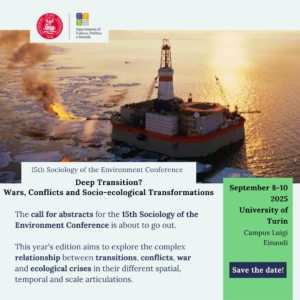
Turin hosts the 15th Conference of Environmental Sociologists. Deep Transition? Wars, conflicts and socio-ecological transformations

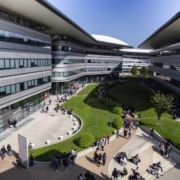
From September 8 to 10, 2025, the University of Turin will become a focal point for scientific debate on contemporary environmental and social challenges as it hosts the XV Conference on Environmental Sociology at the Luigi Einaudi Campus. Organized by the Department of Cultures, Politics, and Society, the event will explore “Deep Transitions” — the profound societal transformations driven by wars, conflicts, and ecological crises.

A timely and crucial theme

The 2025 conference will examine the complex interplay between ecological transitions, armed conflicts, and socio-economic changes, investigating how these factors influence one another at both local and global levels. A call for abstracts, set to be released in the coming months, will invite researchers, academics, and professionals to contribute their perspectives across a range of disciplines.

Objectives and key themes

The conference aims to foster interdisciplinary dialogue, generating fresh insights into how conflicts and crises shape ecological transitions. The main thematic areas will include:

  • Energy transitions and geopolitical conflicts: exploring how the competition for natural resources intensifies international and local tensions.
  • Climate crisis and forced migrations: analyzing migratory flows triggered by extreme weather events and environmental degradation.
  • Circular economy and alternative development models: proposing pathways toward post-growth and post-carbon societies.
  • Social movements and environmental justice: investigating the role of civil society in influencing public policies for sustainability.
  • Global governance and environmental policies: examining the role of international institutions in addressing environmental challenges and fostering cooperation.

A  platform for international exchange

The conference will welcome leading scholars and researchers from universities and research centers worldwide. The program will include plenary sessions, thematic panels, roundtables, and participatory workshops, offering participants a rich opportunity to engage deeply with various aspects of socio-ecological transitions.

Among the expected speakers are experts in political ecology, environmental sociology, conflict studies, and sustainability sciences, who will share their research and help shape a constructive debate on future trajectories.

Bridging research and action

One of the conference’s key strengths will be its emphasis on translating academic research into practical recommendations for policymakers and environmental activists. By facilitating the exchange of knowledge and experiences, the event aims to identify innovative solutions to pressing environmental and social issues, encouraging collaboration between academia, institutions, and local communities.

An essential event for scholars and society

The XV Conference on Environmental Sociology offers a unique opportunity to reflect on the role of sociology in understanding and navigating ecological transitions and global conflicts. The event aspires to stimulate critical knowledge production and promote more just and sustainable social and ecological practices.

For those eager to contribute, the upcoming call for abstracts will provide a platform to present research proposals and innovative projects. Details on submission deadlines and procedures will soon be available on the university’s official website.

In an era marked by unprecedented environmental challenges, moments of collective dialogue like this are vital for imagining and constructing alternative futures.

Save the date and join us for an event poised to leave a lasting impact on both the scientific community and society at large.

👉 For more information and to participate in the call for abstracts, CLICK HERE to download the full document.

Rey Juan Carlos University to host the VII International Congress on environmental education: advancing sustainability and ecological transformation

13-16 de Marzo 2025 | Universidad Rey Juan Carlos (Fuenlabrada, Madrid)

“Educación Ambiental para la transformación social y ecológica: de la conciencia a la acción. Sembrando cambios, cultivando futuros”.

From March 13 to 16, 2025, Rey Juan Carlos University in Fuenlabrada, Madrid, will host the VII International Congress on Environmental Education, held in conjunction with the VII Ibero-American Congress on Environmental Education for Sustainability. The event, titled “Environmental Education for Social and Ecological Transformation: From Awareness to Action. Sowing Change, Cultivating Futures,” aims to provide a collaborative platform for participants and partner organizations to discuss and promote environmental education and sustainability strategies.

Objectives of the VII International Congress on Environmental Education

The congress will focus on several key objectives, including:
Raising public awareness and fostering citizen participation in building a sustainable future.
Highlighting the connection between human health and the environment while promoting sustainable lifestyles.
Strengthening the professional role of environmental educators as essential agents of ecological transformation and sustainable development.

Evaluating the current status of environmental education in the education system to identify challenges and needs.
Encouraging collaboration and networking among local and international organizations to address the eco-social crisis.
Organizers and ParticipantsThe congress is organized by the Spanish Association for Environmental Education (AEEA) in partnership with Rey Juan Carlos University. It represents a significant opportunity for researchers, educators, and professionals to engage in meaningful discussions on sustainability and eco-social transformation.

The scientific committee is chaired by Dr. Aurelio Santiesteban Cimarro from the Autonomous University of Madrid and includes distinguished experts from various institutions such as the Complutense University of Madrid, the University of Valencia, the University of Granada, the University of Valladolid, UNICEPES in Mexico, and Enrique José Varona University in Cuba. The organizing committee is led by María Roca Carrera, supported by a team of dedicated professionals.

The inaugural speech will be delivered by María Novo from the UNESCO Chair on Environmental Education and Sustainable Development at UNED, who is also a member of the WEEC network.

Key topics and activities

  • The congress will address critical topics such as:
  • Circular economy and responsible consumption.
  • The link between environmental health and human well-being.
  • Integrating environmental education into school curricula.
  • The active role of citizens in environmental protection.

Attendees will have the opportunity to participate in plenary sessions, interactive workshops, expert presentations, and discussions featuring leading educators and researchers. The event’s comprehensive program will facilitate knowledge exchange and foster collaboration in building a more sustainable future.

Registration and additional information

For further details and to register for the congress, visit the official event website. The VII International Congress on Environmental Education promises to be a landmark event, inspiring actionable change in environmental education and sustainability efforts worldwide.

Discover the meaning of Gondwana: the name of the 13th WEEC Congress

Gondwana – Reconnecting Resilient Cultures: a unifying theme for the 13th World Environmental Education Congress

The 13th World Environmental Education Congress (WEEC) in Australia embraces the powerful and unifying theme of Gondwana, highlighting deep geological, ecological, and cultural interconnections across continents. This concept not only bridges ancient histories but also fosters dialogue on environmental education and sustainability in a globally interconnected world.

A shared heritage across continents

Gondwana once united Africa, Antarctica, Arabia, Australia, India, Madagascar, South America, and Zealandia, along with their surrounding oceans and seas. Today, this shared geological history serves as a reminder of the deep-rooted connections among these regions, extending beyond physical landscapes to the cultural and ecological systems that have thrived for millennia.
The theme is strongly supported by Whadjuk Noongar stakeholders, the traditional custodians of the land around Perth, Western Australia. Their endorsement underlines the significance of Indigenous perspectives in fostering environmental awareness and resilience.

Resilient cultures and traditional knowledge

The phrase “Resilient Cultures” acknowledges and respects the enduring legacies of First Nations peoples across the Southern Hemisphere and beyond. Gondwana, originally a Sanskrit term—where “Gond” refers to a Dravidian ethnic group and “vana” means forest—illustrates the longstanding relationship between people and nature. The Whadjuk Noongar people have expressed strong support for this terminology, recognizing the global importance of language preservation and Indigenous knowledge.
By reconnecting ancient cultures and ecosystems, the Congress aims to emphasize the importance of integrating Indigenous wisdom with contemporary environmental science. This approach fosters a more holistic understanding of sustainability and aligns with WEEC’s goal of promoting interdisciplinary knowledge and collaboration.

Learning from the past to shape the future

Gondwana serves as an inspiration for addressing modern environmental challenges by revisiting ancient wisdom and reinterpreting it in contemporary contexts. This philosophy resonates with Indigenous communities who advocate for drawing upon historical knowledge systems to develop sustainable solutions for the future.
The WEEC recognizes that the legacy of Gondwana underscores the necessity for global cooperation. By fostering eco-citizenship, multicultural respect, and a commitment to biodiversity conservation, the Congress aims to strengthen environmental education as a tool for promoting peace and sustainability worldwide.
As delegates from around the world gather to discuss pressing environmental concerns, Gondwana stands as a symbol of unity—reminding us that the challenges we face today can be better understood and tackled through collective efforts and a renewed appreciation for ancient, resilient cultures.

We remind you that the 13th WEEC Congress will take place from September 21 to 25, 2026, in Perth, Australia. Visit the website weec2026.org and subscribe to the newsletter to stay updated. Join our network for a more sustainable future and a global connection among experts and enthusiasts in the field.