Art and alternative languages from social and ethnic groups, for thinking and action alternatives

I had the opportunity to read different versions of the document “No Limits to Hope” and make brief comments in emails exchanged with Mario Salomone. The following comments and suggestions are highly pertinent to a project such as this, in this historic moment.

Regarding the reasoning, the “No Limits to Hope” Initiative presents a universalist connotation, considering the human species responsible for the problems and challenges that must be faced (“how WE think and act”).

However, there are social and ethnic groups that have proposed and propose other alternatives for thinking and acting, groups who have until recently been considered savage or uncivilised and therefore outside or on the fringes of that universal “WE”.

The contemporary importance of the Indigenous Peoples of Latin America is an example of this. Books such as “The Falling Sky” by Davi Kopenawa and Bruce Albert (published in English, French, Spanish, and Portuguese) and “I, Rigoberta Menchú. An Indian Woman in Guatemala” bring key elements to the historical expansion of planetary challenges, as does the work of Cameroonian philosopher Achille Mbembe. The positioning in the NLtH document regarding notions of progress and civilisation is highly important, even if discreet. It is essential to add, with greater emphasis, criticism of models of economic development, including sustainable development, which have already been intensely criticised in recent decades, yet which continue to be present and powerful in international institutions.

Against militarism and the misuse of science and innovation

Among the problems and challenges against which we must unite all our efforts is the “continued militarism and other misuse of science and innovation”. One possibility (pedagogic, cultural, and political) to counter militarism (and, I might add, totalitarianism and negationism) certainly relates to the new “learning models, which could be anticipatory, participatory, integrative and innovative”. In this sense, pedagogic experiences developed in countries that live with or have lived through authoritarian governments, genocides, civil wars, etc., must be acknowledged and disseminated.

The document references Paulo Freire’s work in Brazil, and I would add that his political and pedagogic theory has been studied and practised in different countries. In recent decades, new generations in innumerable nations have re-signified it, remaining increasingly pertinent and necessary.

To close, I would call attention to the importance of the arts in general, which develop languages that focus on perception, respect, and coexistence with otherness and others-than-humans, aimed at the common good. We must establish dialogues and partnerships with artists who have included contemporary themes and challenges in their everyday activities, amplifying and practising the transdisciplinarity the document suggests.

This contribution is part of the comments and suggestions on the document No limits to hope: Transforming learning for better futures

Hoping for education, in a time of transition. A call for debate

“No Limits to Hope: Transforming learning for better futures”.

Why this need for hope and this need for learning transformation? Because, in 2024, forty-five years after the report “No Limits to Learning: Bridging the Human Gap”, the Club of Rome, The Fifth Element, taking up the proposal of the WEEC Network, have jointly launched a new global call that aims to inspire action by educators, learners and citizens alike to pursue a global shift in educational and learning paradigms, and together they launched the initiative at the 12th WEEC?

The answer is that forty-five years after the 1979 report, what the founder of the Club of Rome, Aurelio Peccei, wrote in the Preface is even more valid. There is a “human gap” between the human condition and the natural environment, destined almost inevitably to get much broader.

The report, as a result of the “No Limits to Hope” initiative, will be presented at the 13th World Congress, which will take place in Perth (Australia) from 21 to 25 September 2026 and will be a key event of that congress.


Perfectly converged lenses

The goals of the joint initiative CoR, T5thE, and WEEC and the global environmental education community’s goals, which meet every two years for congresses in different parts of the planet, are perfectly convergent.

The CoR, with its more than 50 years of existence, and the EE community, with its more than 20 years of international meetings, work for a wide-ranging and long-term vision to produce significant systemic change.

In the 1979 report to the Club of Rome, “No Limits to Leaning: Bridging the Human Gap,” the global WEEC community saw a splendid explanation of the principles and methods of environmental education (EE) that in those times had been structured over about ten years.

In the joint initiative of research and debate on how to “transforming learning for better futures” we have seen a splendid opportunity for synergies and common commitment with those who since 1968 (therefore more or less from the same years in which environmental education began to be talked about with more awareness) have given the most continuous, most authoritative and most wide-ranging contribution to research on the challenges and dangers of contemporary history.


At the centre of a crossroad of perspectives

Reconnecting humanity and Nature in a new Alliance, reconnecting people and cultures, reconnecting disciplines: “Reconnecting” is a keyword of the next WEEC congress in 2026.

The same reconnection is needed for education globally. It involves reconnecting educational systems, methods, and organisations with ethical challenges and crucial issues, as well as goals and daily routines with the sad reality of an unequal and dangerous society.

Contrary to a trivial vision of EE, the education on the interconnectedness and interdependence of Humans-Nature and its complexity (that is, speaking of the environment) is a broad crossroads of perspectives and the ideal ground for building interdisciplinarity and transdisciplinarity. EE must lead a global commitment to profoundly reorganising knowledge, structures, and laws towards interdisciplinarity and transdisciplinarity. This requires considering socio-cultural diversity, biodiversity, the relationalities between humankind and nature, and the place of epistemological pluralism in our field. Western scientific thinking must be questioned, and the relationships between expert knowledge and traditional and empirical knowledge must be examined. It requires changing the questions: we teach many answers, but do not pose enough new and alternative questions.


Action and Hope

For us, reconnecting is an educational challenge—an authentic, transformative mission. Complexity, Systems Thinking, Interconnectedness, and Interdependence are keywords closely related to “Reconnecting,” but education is also about eco-citizenship, global citizenship, equity, multiculturalism, and peace. So, EE is education both for the present (action and commitment) and the future (hope and capacity for designing and building alternative futures).

We don’t have power, properties, or weapons: our tools are nonviolent and meek. Sometimes, words and books can wound and hurt. In history, words and books prepared and legitimised wars, hate, injustices, and genocides. Our unarmed means can change minds, mindsets, science, paradigms, worldviews, and, therefore, socioeconomic models and global policies. This is an integral shift: “shift” is another keyword common to the “No Limits to Hope” Initiative and the environmental education’s fight for a new, ecological, sustainability-based, holistic culture.

It means moving towards decolonisation, amplifying, recognising, and valuing voices from the Global South, respecting traditional knowledge, and moving beyond the dominant logic of globalisation.

It means opening education more and more to pedagogies and methodologies for transformative learning, e.g., service learning, community stewardship, project-work-based activities, Place-Based education, participatory action, citizen science, skills development, and action-oriented education for making new personal, communal, and political choices.

It means considering different scales of space (local, national, global) and time (past, present, and future) to understand how elements of the environmental, social, economic, and cultural dimensions interact and relate to each other.


Get involved and attend the world congress in Perth (Australia)

It means paying attention to climate and social justice and cultivating a critical understanding of our current socioeconomic model and its differentiated effects in the Global South and the Global North.

It means examining educational systems worldwide, their blockages or innovations, weaknesses, and threats to propose a renewed role for education and learning.

So, the “No Limits to Hope. Transforming learning for better futures” Initiative offers many ultimate stimuli to everyone interested in assuring a safe and fair operational space for Humans without destroying themselves and what remains for Nature. And the WEEC Congress in 2026 offers a consistent, biodiverse milieu for meeting, debate, and enhancing action and collaboration.

Get involved, send comments for the Forum online, and cooperate in many other ways with the Initiative. Consider also attending the worldwide meeting in Perth.

Looking forward to hearing from many, my warmest greetings.

This contribution is part of the comments and suggestions on the document No limits to hope: Transforming learning for better futures

Las conexiones entre el arte y la ciencia sobre el tema del medio ambiente: entrevista a María Novo

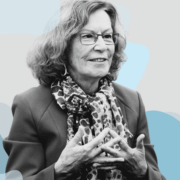
This article presents the perspective of María Novo – Doctor of Philosophy and Educational Sciences, Professor Emeritus at the Spanish National University of Distance Education (UNED), as well as a writer, poet, and painter – on the theme of integrated ecology and the relationship between humans and nature.

The interview was conducted after the 7th International Congress on Environmental Education, held in Madrid, and in continuity with the themes addressed during the National Conference of the Weec Italy Network on the island of Ischia. Through her experience, Novo illustrates how scientific knowledge and artistic expression can converge in environmental education, offering a more holistic and humanistic approach to sustainability.

Introduction

In recent decades, the urgency of the environmental crisis has pushed educators, researchers, and institutions to rethink the very foundations of how we approach the relationship between humans and nature. The concepts of integrated ecology and sustainability are no longer limited to scientific discourse but now embrace philosophical, artistic, and emotional dimensions as well.

Within this broader vision, the 7th International Congress on Environmental Education—held last March in Madrid and organized by the Spanish Association for Environmental Education—served as an important platform for reflection and dialogue. In continuity with the themes addressed at the National Conference of the Weec Italy Network on the island of Ischia, we interviewed María Novo, a leading figure in environmental education in Spain and internationally.

A scholar with a solid academic background and a deep sensitivity as a poet and painter, Dr. Novo has long explored the intersection between rational knowledge and creative expression. In this conversation, she shares her personal and professional journey, emphasizing the value of integrating science and art in educational processes. Her approach is a testament to the power of a holistic vision—one that not only informs but also inspires, involving both mind and heart in the quest for a sustainable future.


Con motivo de su conferencia en la inauguración del VII Congreso Internacional de Educación Ambiental organizado por la Asociación Española de Educación Ambiental, entrevistamos a María Novo, Doctora en Filosofía y Ciencias de la Educación, Catedrática Emérita de la Universidad Nacional de Educación a Distancia de España y, last but not least, escritora, poeta y pintora.


La Dra. Novo nos comenta su larga experiencia trabajando en proyectos que aúnan el enfoque científico y la mirada artística, un planteamiento que ha incluido en su conferencia. Y recurre a su historia personal para contarnos cómo vivió la necesidad de conciliar su trabajo en la universidad y su vocación de poeta y pintora.


-No me quedaba más remedio que poner de acuerdo ambos aspectos de mi vida por pura coherencia. Así que comencé a pintar y escribir poemas sobre principios científicos y pude comprender y mostrar que Ciencia y Arte no solo no son contrarios sino que son totalmente complementarios y se enriquecen recíprocamente.


-Para transitar en esta dirección, en el año 2000 inicié con otros profesionales el Proyecto EcoArte (www.ecoarte.org). En el año siguiente lo presentamos internacionalmente en la UNESCO con una exposición de pintura sobre cuestiones de la ciencia. Después vinieron otras exposiciones, conferencias, aportaciones… Eso es lo que me ha llevado a incorporar el valor del arte como instrumento de cambio en mi conferencia.


Qué temas abordaste en esta tu conferencia inaugural del Congreso titulada “Es sostenible la sociedad de las prisas? La educación como palanca de cambio.


-Comencé planteando el difícil escenario que presenta el momento presente: hemos roto algunos mecanismos de regulación de la naturaleza y hemos desbordado sus límites. El resultado es un mundo incierto y peligroso, incentivado por los conflictos bélicos, políticos y sociales, también por la enorme desigualdad en el acceso y uso de los recursos…


-En mi opinión, en todos estos procesos se da una constante que se repite insistentemente: la aceleración, los ritmos precipitados con los que hemos explotado los bienes naturales a la hora de producir y consumir.


-Por eso me atrevo a llamar a esta sociedad “la sociedad de las prisas”. Ese es el título de mi último libro, en el que analizo con detalle cómo esta sociedad es también la de la insostenibilidad ecológica, social, personal…


¿Cuáles serían, a tu juicio, los rasgos básicos de esta sociedad?


En mi conferencia he señalado tres: Complejidad, Riesgo e Incertidumbre.


La complejidad porque el sistema ecológico no funciona mediante relaciones causa efecto lineales, sino mediante realimentaciones, sinergias, efectos de umbral… Eso hace impredecibles los resultados de algunos procesos.


En consecuencia, los modelos mecanicistas, deterministas y reduccionistas propios de la Modernidad no nos sirven para abordar los problemas ecológicos y sociales del mundo actual. Lo que hace necesario que trabajemos siempre en educación ambiental a partir de un enfoque sistémico/complejo.


Por lo que respecta al riesgo, es preciso enfatizar que ir más allá de los límites con nuestros impactos sobre la naturaleza genera riesgos desconocidos. Y que el “precio” de estos riesgos no es solo económico, sino que afecta a la vida misma: vida natural, recursos físicos y vidas humanas (catástrofes socioecológicas, migraciones, hambrunas…).


Estas dos dimensiones de la crisis ambiental explican el por qué estamos actualmente en contextos de alta incertidumbre. Hemos sobrepasado varios puntos de no retorno (tipping points). En lo que va de siglo XXI hemos consumido tantos recursos naturales y hemos lanzado tanta contaminación y calor a la atmósfera como en todo el siglo XX.


Y este viaje sin freno hacia un deterioro creciente de nuestras condiciones de vida nos coloca al borde del abismo. Estamos en la sociedad de las prisas y la aceleración.


Dado tu conocimiento en la materia, me gustaría conocer tu opinión sobre el papel de la educación ambiental en la sociedad que describes.


Se habla mucho, en exceso, de un cambio de paradigma. Pero es preciso profundizar en el concepto y lo que significa: En ciencia, cuando cambia un paradigma lo que cambia no son las respuestas sino las preguntas.


Necesitamos hacernos preguntas no solo distintas sino de otra índole. Junto a las preguntas económicas (que son las que rigen nuestras sociedades) es preciso manejar interrogantes socioecológicos:

¿Seremos capaces de acoplar nuestros ritmos acelerados a los de le naturaleza?

¿Sabremos adaptarnos a los nuevos escenarios y mitigar los daños?

¿Aprenderemos a valorar el tiempo, los ritmos, las pautas de producción y consumo en un escenario de recursos no renovables escasos?

¿Estamos dispuestos a aplicar la cuestión de los límites a nuestra vida personal: poner límites a nuestros deseos, aprender a desear…?


Hemos llenado el mundo de paneles solares, aerogeneradores, centrales nucleares… Todo eso son respuestas al viejo modelo del crecimiento indefinido, un modelo que nos lleva a la catástrofe. Pero la mayoría de los gestores económicos y políticos no explican a la ciudadanía que lo que hay que cambiar son nuestras formas de vida. Ese es un cambio en las preguntas… que debe conducirnos a comprender ya no podemos seguir con las pautas de explotación de recursos y producción de desechos en forma de contaminación, calor, desorden…


Y no pienso en los niños, esto es demasiado complejo para ellos. En las primeras etapas de la vida basta con que aprendan a amar la naturaleza, a entender cómo funciona y a moderar su consumo. Me refiero a la educación ambiental que se imparte en las universidades, en los Masters, en los Seminarios y Grupos de Trabajo, en los Congresos destinados a los adultos que, antes o después, tomarán decisiones sobre los recursos. Ahí es donde podemos incidir con toda la crudeza del tema.


¿Cuáles serían, en tu opinión, las estrategias más efectivas para promover otros comportamientos socioecológicos?


Me remito al principio para responderte: esa mezcla de complejidad y riesgos nos sitúa ante un escenario inédito de alta incertidumbre. Como afirmaba Prigogine, el futuro no está dado, vivimos el fin de las certidumbres.


Si nos situamos ahí, la pregunta es ¿Seremos capaces de enseñar a los estudiantes a gestionar la incertidumbre? ¿Sabremos hacerlo los educadores ambientales?


Y aparecen, de inmediato, otras preguntas: ¿Cuándo desapareció de la educación la incertidumbre? ¿O es que nunca estuvo presente de forma generalizada en ella? ¿Podemos esperar que las generaciones jóvenes sepan lidiar con el mundo incierto e inseguro que les espera?


En educación ambiental es muy importante, en el campo de las Ciencias Sociales, plantear distintas alternativas, una gama de grises, que acostumbre a los estudiantes a manejar una lógica borrosa y a elaborar alternativas a los problemas. Estamos metidos en una espiral de información y tecnificación de nuestros niños y jóvenes. Les enseñamos miles de conceptos, teorías, destrezas informáticas…, pero no superamos la división aristotélica de verdadero/falso y nos perdemos los matices del mundo real.


Tenemos que mostrar que para cualquier problema existen no una, sino múltiples soluciones. Y aquí juegan un papel importante el arte y la creatividad que contribuyen a generar preguntas con múltiples repuestas


El arte nos sitúa en un punto de observación abierto, es un estímulo para la imaginación, nos impulsa a ver lo que todos ven y pensar lo que nadie ha pensado. Una visión artística, creativa, es capaz de dar entrada a lo impredecible, de captar y expresar relaciones y posibilidades a las que no se llega solo por la vía racional.


Utilizar el arte en educación ambiental favorece también la puesta en práctica de procesos lentos, de situaciones de silencio y reflexión, de asombro, que acostumbren a las personas que aprenden a los debates sosegados, a la escucha…


Y finalmente, junto con el arte está el problema del tiempo. Los educadores ambientales podemos dar ejemplo en el necesario ejercicio de aminorar la velocidad de los procesos destructivos y el consumo. La sociedad de las prisas es la que, con la aceleración de los impactos sobre la naturaleza, nos ha traído a la crisis ecológica y social.


En mi opinión, el reto es pensar desde la complejidad y vivir (producir y consumir) desde la sencillez. Una vida personal y profesional responsable, consciente de los límites y condicionamientos del planeta, es el mejor aprendizaje que podemos practicar los docentes y proponer a nuestros estudiantes. En esa dirección, surge una pregunta que debería estar en el frontispicio de nuestros colegios y universidades:

¿Cuánto es suficiente?

Speaking 4 the Planet: creativity, courage, and a call for change

Speaking 4 the Planet (S4P) is an arts-based approach to sustainability education that empowers young people to become informed, passionate advocates for the Earth and its many species. Launched in 2013 as a competition for secondary school students, S4P has since evolved into a global platform where students express environmental concerns and hopes through creativity, critical thinking, and evidence-based advocacy.

Designed to celebrate youth voices on issues affecting the planet and their future, S4P invites participants to blend the humanities and sciences, to reflect on the philosophical dimensions of human impact, and to imagine a better world grounded in scientific understanding.

Over time, the initiative has expanded to include primary, secondary, and tertiary institutions, offering competitions in a variety of expressive formats—public speaking, art, writing, drama, video, memes, and STEM. These events not only help students develop their skills, but also emphasize the importance of having a voice and using it for change. S4P values creativity, critical inquiry, and unconventional solutions to some of the world’s most urgent environmental challenges.

Importantly, S4P helps young people recognize that they are not alone in their concern for the future. It builds local and global networks of students, schools, and communities united by a shared commitment to sustainability and social responsibility.

A timeline told through posters

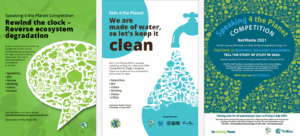
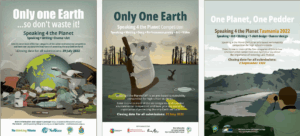
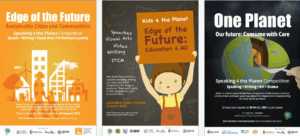
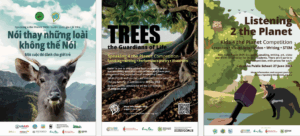
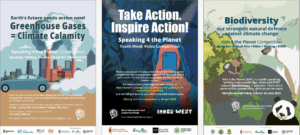
Each year, the competition is shaped by a new theme, as illustrated in its visual archive of event posters:

  • 2021: “Rewind the Clock – Reverse Ecosystem Degradation” encouraged students to reflect on the importance of ecosystems.

  • 2022: With events such as “Only One Earth… so don’t waste it!” and “One Planet, One Pedder”, the focus shifted to waste reduction and ecosystem restoration.

  • 2023: “One Planet. Our Future: Consume with Care” addressed sustainable consumption, while Kids 4 the Planet continued engaging younger students.

  • 2024: The largest S4P to date was held in Vietnam, giving voice to wildlife and biodiversity. In Uganda, the first African edition mobilized over 200 students from 11 school clubs, showcasing solutions through performances, displays, and debate.

  • 2025: “Greenhouse Gases = Climate Calamity”, hosted in Sydney, focused on air pollution and climate action through speaking, writing, visual and recycled art.

These posters not only capture annual themes—they mark the growth of a movement that continues to adapt to local contexts while remaining rooted in a shared global vision.

An invitation to join the movement

Educators, students, and organizations around the world are invited to take part in future editions of S4P. The project offers guidance and support for those interested in hosting their own competition, helping local communities create engaging, meaningful, and youth-driven sustainability events.

For more information, contact: phil@speaking4theplanet.org.au

Visit: https://speaking4theplanet.org.au

Let the next generation’s words, images, and ideas speak for the planet.