Hope Without Limits for Lebanon

In a world facing complex and interconnected crises — from climate change and political instability to economic downturns and social inequalities — the need to rethink education and learning systems has never been greater. The international initiative “No Limits to Hope,” launched by The Club of Rome, The Fifth Element, and the WEEC Network, builds upon a long legacy of visionary thinking to inspire a global shift in how education fosters meaning, justice, and sustainability.

Forty-five years after No Limits to Learning: Bridging the Human Gap, the initiative calls for transformative learning approaches that enable humanity to meet today’s challenges with creativity, equity, and hope. Using Lebanon as a case study offers a compelling insight into how education can be both a site of struggle and opportunity in societies marked by crises yet rich in resilience.

Lebanon’s Educational Landscape: Challenges and Resilience

Lebanon’s education system reflects the country’s complex social fabric, comprising public, private, religious, and international institutions. While Lebanese universities are known regionally for quality, the broader education landscape is marred by inequalities and fragmentation. Public schools, serving the majority, suffer from underfunding, deteriorating infrastructure, and outdated curricula that emphasize memorization rather than critical thinking or problem-solving. Meanwhile, private schools cater primarily to wealthier families, exacerbating social divides. The prolonged economic crisis, compounded by political instability and the 2020 Beirut explosion, has severely impacted education access and quality. Inflation and poverty force many families to withdraw children from schools or push them toward informal work. Refugee populations, notably Syrians and Palestinians, face additional legal and practical barriers to schooling, further marginalizing vulnerable groups.

Despite these challenges, Lebanon’s education sector shows resilience. NGOs, civil society, and international actors have stepped in with innovative programs to keep learning alive through digital platforms and community initiatives, particularly during COVID-19 lockdowns and economic collapse. These efforts embody the spirit of “No Limits to Hope,” demonstrating how learning can adapt and empower even in adversity.

Who Has Access to Knowledge and Decision-Making Power?

In Lebanon, access to quality education and decision-making power is deeply unequal. Political elites and wealthy families largely control educational resources and governance. Public institutions are under-resourced, and governance is fragmented across multiple ministries and religious authorities, impeding coherent reforms. This power imbalance excludes many communities from shaping education policy or accessing quality learning. Refugees, poor families, and marginalized sectarian groups often have limited access to resources, reinforcing cycles of poverty and exclusion. Similarly, civil society organizations advocating for reform and inclusion frequently struggle to influence decision-making due to political patronage and sectarian interests.

The “No Limits to Hope” framework stresses the need to democratize knowledge and governance. Education should be a right accessible to all and shaped through inclusive, participatory processes that empower marginalized voices and foster social cohesion.

Using the Learning and Climate Space to Empower or Suppress

Lebanon’s education and civic sectors offer examples of both empowerment and suppression within the climate and learning space. On
one hand, NGOs and youth-led groups have harnessed digital tools and community education to raise awareness about environmental challenges, social justice, and civic participation. These initiatives create spaces for marginalized groups, especially young people and refugees, to gain skills and advocate for their rights. For instance, grassroots climate education programs link environmental protection with socioeconomic justice, encouraging collective action. Online platforms have expanded access to learning and knowledge-sharing beyond traditional institutions, fostering collaboration across social and geographic divides. However, significant barriers persist. The digital divide restricts access for rural and poor populations, deepening inequalities. Politicization and sectarianism sometimes limit open dialogue and exclude dissenting perspectives from public discourse. Moreover, climate education remains underdeveloped in formal curricula, leaving
many unaware of Lebanon’s acute environmental vulnerabilities. These mixed dynamics highlight the crucial role of “No Limits to Hope” in promoting learning spaces that genuinely empower all citizens while challenging systems that perpetuate exclusion.

Toward a Transformative Learning Paradigm for Lebanon

To align with the vision of “No Limits to Hope,” Lebanon’s education system needs a profound transformation based on five key pillars:

1. Equitable Access: Expand quality education opportunities for all, including refugees and marginalized communities, by investing in
public schools and bridging the digital divide.

2. Inclusive Governance: Involve diverse stakeholders — including civil society, youth, and marginalized groups — in education and
climate policy decisions to ensure relevance and equity.

3. Curriculum Innovation: Shift from rote memorization to critical thinking, creativity, and problem-solving. Integrate climate justice, peace education, and social inclusion into curricula to prepare learners for complex challenges.

4. Technology with Equity: Use digital tools to enhance learning while ensuring they do not exacerbate existing inequalities. Complement technology with culturally relevant, human-centered pedagogy.

5. Intersectional Climate and Social Justice Education: Foster awareness that environmental and social issues are interconnected, empowering learners to act for sustainable and just futures.

Hope Without Limits for Lebanon

“No Limits to Hope” is a call to reimagine education as a transformative force rooted in equity, resilience, and collective empowerment. Lebanon’s unique challenges — political fragmentation, economic crisis, social inequality, and environmental risk — make it a powerful case study for how learning can either reinforce old divisions or help build bridges toward a better future. Lebanon’s strength lies in its diverse communities, dynamic civil society, and especially its youth. By embracing the principles of “No Limits to Hope,” Lebanon can pioneer an education transformation that democratizes knowledge, nurtures critical consciousness, and prepares citizens to navigate uncertainty with creativity and solidarity. While the road ahead is difficult, Lebanon’s history of endurance reminds us that when hope knows no limits, education becomes the foundation for a just and sustainable future for all.
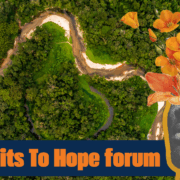
Virunga en péril : l’éducation environnementale, clé pour sauver un patrimoine mondial

Aux parc national de Virunga un patrimoine mondial de L’UNESCO dans la République Démocratique du Congo des milliers d’hectares sont vandalisé par des populations riveraines en coupant les arbres arbres en faisant des charbons de commerce, coupe de bois de chauffage, exploitation artisanale des minéraux etc. Notre organisation mkaaji mpya asbl qui se donne tout ses possibilités pour Éduquer la population l’importance de la biodiversité, l’avenir d’un climat meilleur au futur génération.

Suite à celà le parc national de Virunga est confronté à beaucoup des multiples violations en matière de la protection de son écosystèmes alors que ce parc est le vitrine de l’environnement au nord kivu en dégageant un climat frais et adorable pour la population riveraine et attire les touristes pour contempler sa beauté et ses espèces rares qu’il abrite.

La République Démocratique du Congo est une terre des richesses naturelles exceptionnelle car elle abrite la deuxième plus grande forêt du monde âpres l’Amazonie au Brésil, elle abrite même un réseau hydrographique puissant, une biodiversité inestimable. Pourtant ces richesses sont menacées aujourd’hui par la déforestation, l’exploitation minière incontrôlé, la pollution, le changement climatique etc… Face à ce problème ou ces défis, l’éducation environnementale doit être considérée comme priorité au pays car elle est la clé pour éveiller la conscience des personnes qui commette ces résultats négatifs pour l’environnement.

Sustainability, Social Justice and Intergenerational Solidarity

Anthropocentric education considers human as the center of everything, rarely emphasizing the existence of ecology as an integral part of human life. This education creates human selfishness to dominate nature through unlimited exploitation of natural resources to meet only present needs, totally ignoring the sustainability of the planet and the prosperity of future generations. This is why popular education is needed on a strong basis in revolutionary ideas to fight for the liberation of the people, women’s emancipation, intergenerational solidarity, ecological preservation and ensuring the sustainability of the planet.

Theologian and philosopher Leonardo Boff suggests that we need actions that liberate the poor through education and training to be able to use natural resources in a sustainable way to meet human needs and at the same time preserve the sustainability of natural resources from
generation to generation.

Education is partial; must be pro poor people, pro ecology, pro truth and social justice.

Not Just Knowing, but Acting: Towards Pro-Sustainability Climate Education

Climate change is fundamental but it is not sufficient in itself for the development of pro-sustainability attitudes and behaviours.
The development of students’ pro-sustainability skills and dispositions are critical components of the overall learning outcomes of climate
change education.

For climate change education this means not only assessing and measuring what students know about climate change but also, what they are doing with that knowledge and their attitudes, individually and collectively, to undertaking pro-sustainability actions.

Art as a discipline for ecological sensitization, beyond mere rational awareness

Environmental Education didactic proposal  is based on four fundamental dimensions for the aim of a transformative, critical, sensitive, and
democratic education: (1) Personal Dimension; (2) Social Dimension; (3) Socio-environmental Dimension; and (4) Eco-spiritual Dimension.

The personal dimension focuses on the learner’s intimate experience including their bodies, emotions, perceptions, and inner reflections. Here, the emphasis is on cultivating self-awareness as an integral part of network, recognizing that the body and mind are the first environment we inhabit.

Society and the school community are seen as a human ecosystem in constant interaction and interdependence: school, family, community groups, virtuais networks, institutions, and political forces. It involves recognizing and valuing human diversity — especially socially marginalized and historically excluded groups.

The socio-environmental dimension addresses the relationship between human beings and the physical, chemical, and biological environments that surround them, this represents the traditional and one-dimensional perspective of Environmental Education—focused on the preservation and sustainability of natural elements. Eco-spirituality recognizes the existence of a symbolic or spiritual dimension in the human relationship with the planet by embracing practices, beliefs, and rites connected to Indigenous people, traditional communities, Afro-descendant spiritualities, and Indigenous worldviews that affirm the sacredness of the Earth and the interdependence of all beings. This contribution recognizing that human beings exist within networks of interdependent relationships — personal, social, environmental, and eco-spiritual.

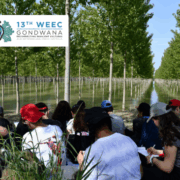
13th WEEC abstract submissions now open

Join us at the 13th World Environmental Education Congress (WEEC) where the theme is “Reconnecting”. This global event invites educators, researchers, policymakers, NGOs and institutions to explore ways to reconnect with nature, each other, diverse cultures, and the Global South and North. Inspired by the ancient supercontinents of Gondwana and Laurasia, the Congress emphasises unity and shared environmental responsibility.

Since 2003, WEEC has served as a vital platform for advancing environmental education, fostering global partnerships, and driving meaningful change. The 13th WEEC will build on the legacy of previous gatherings to offer enriching dialogue, impactful collaborations, and practical solutions for shaping education systems worldwide.

Abstract submissions are now open – be part of the movement.

The 13th WEEC will explore themes that inspire dialogue, connection, and action across environmental education. They reflect urgent global challenges and opportunities – grounded in diverse knowledge, justice, innovation and ecological responsibility.

Discover the themes shaping this landmark event and reflect on how your work aligns.

Session formats

  • Round table presentation
  • ePosters
  • Workshop
  • Symposium

You are also invited to explore opportunities to host or take part in NGO Activations, collaborative spaces for organisations to engage more deeply within the Congress.

Reflection from World Environment Day 2025 

Continuing the Fight Against Plastic Pollution

World Environment Day 2025 has passed, but its message remains more urgent than ever. This year’s theme #BeatPlasticPollution united people across the globe in taking a stand against one of the most critical environmental issues of our time.

But the real work begins now. Will you commit to reducing single-use plastics in your daily life, supporting businesses and initiatives that champion circular solutions, or advocating for stronger, more effective environmental policies in your community? Every choice you make can help shift the tide toward a healthier planet.

Your action, no matter how small, adds to a global movement demanding change. Let’s not lose momentum – the challenge is ongoing, and the planet is counting on us.

Partner with 13th WEEC

The Congress offers a unique opportunity for organisations to connect with a global audience of thought leaders, educators, researchers and policy influencers committed to sustainability and education.

The Sponsorship and Exhibition Prospectus is available and outlines a range of tailored opportunities to align your brand with WEEC’s mission, values and global reach. From major sponsorship packages to exhibitor booths and in-kind partnerships, there’s a place for you to get involved.

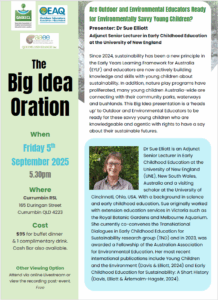
The Big Idea Oration 2025

On 5 September 2025, at 5:30 p.m., Currumbin RSL will host The Big Idea Oration 2025, an unmissable event for educators, professionals, and sustainability enthusiasts.

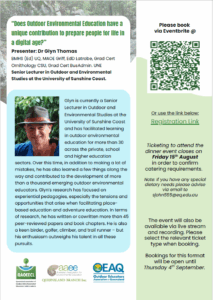
The evening will feature Dr. Sue Elliott and Dr. Glyn Thomas, two leading figures in environmental and outdoor education.

The event can be attended in person (ticket: $95) or followed for free via live online streaming, with the option to watch the recording afterwards.

Sue Elliott – Adjunct Lecturer in Early Childhood Education at the University of New England – will address the question: “Are environmental and outdoor educators ready to welcome children who are environmentally aware?”
Since 2024, sustainability has been a new principle in the Australian Early Years Learning Framework (EYLF), and nature play programs have been expanding nationwide. Elliott will invite educators to be ready to welcome children who are already skilled, knowledgeable, and active, and who have the right to express their views on their sustainable future.

Glyn Thomas – Senior Lecturer in Outdoor and Environmental Studies at the University of the Sunshine Coast – will explore the topic: “Can outdoor environmental education make a unique contribution to preparing people for life in the digital age?”
With an extensive academic and professional background, Thomas will examine how experiential learning in nature can strengthen skills and resilience, even in an increasingly technological world.

Event Information and Registration:
📅 When: Friday, 5 September 2025, 5:30 p.m.
📍 Where: Currumbin RSL (in person) or online via live stream
💵 Cost: $95 in person – free online
🔗 Registration: https://www.eventbrite.com.au/e/the-big-idea-oration-2025-tickets-1489786675049?aff=oddtdtcreator

PolyCIVIS Issues Dakar Communiqué to Strengthen Europe-Africa Climate Cooperation

The PolyCIVIS Alliance has released the Dakar Communiqué, a key outcome of the PolyCIVIS Agora Forum held in Dakar, Senegal, on April 23, 2025. The high-level forum brought together academics, practitioners, civil society representatives, and policymakers to address the theme “Strengthening Europe-Africa Cooperation on Climate, Environment, and Energy Transition in a Polycrisis Era.”

The Dakar Communiqué captures the main insights, recommendations, and shared priorities that emerged from the discussions. It forms part of PolyCIVIS’ ongoing policy work, which also includes a series of Policy Briefs designed to inform decision-making and foster equitable Euro-African cooperation in climate governance and environmental resilience.

PolyCIVIS is a network of 21 European and African universities committed to advancing dialogue, research, education, and action on pressing global challenges, with a strong focus on climate and environmental crises. The initiative is co-funded by the European Union as a Jean Monnet network.

For more information and to access the Dakar Communiqué, visit PolyCIVIS website.

Please read the Dakar Communiqué in English and in French

The Belgrade Charter 50 Years Later: A Compass For Environmental Education

In 1975, as the world began to confront the early signs of an ecological crisis, an event took place in Belgrade that would leave a lasting mark on the history of education. Ninety-six experts from sixty countries came together to define a new concept: environmental education. The outcome was the Belgrade Charter — a document that, for the first time, clearly and systematically outlined the goals, methods, and principles of education aimed at addressing the environmental challenges of both the present and the future.

Fifty years later, the Charter remains a key point of reference for those engaged in education, environmental issues, and active citizenship. But what exactly did this document propose? And why does it still matter today?


Education That Starts With The Environment (And Reaches People)

The Belgrade Charter begins with a simple yet revolutionary idea: the environment is not just nature — it’s the sum of all the conditions in which we live, including ecological, economic, social, and cultural dimensions.

Educating about the environment, then, means helping people understand the complexity of the world, recognize their role within an interconnected system, and act accordingly.

According to the Charter, the goal of environmental education is to foster informed and engaged citizens — people who can identify environmental problems, understand their causes and impacts, and take action, both individually and collectively, to prevent or solve them.

Education, in this vision, goes far beyond transmitting knowledge. It involves values, emotions, motivations, and behaviour.

To achieve this, the Charter outlines six key objectives:

  1. Awareness – developing a broad understanding of the environment and its most pressing issues.
  2. Knowledge – acquiring scientific and cultural insights into environmental challenges.
  3. Attitudes – nurturing values and sensitivity toward the protection of nature and society.
  4. Skills – learning to solve problems in practical, creative ways.
  5. Evaluation – developing critical thinking and analytical abilities.
  6. Participation – feeling empowered to take part in change, both in daily life and within one’s community.

This approach was remarkably forward-thinking for its time. The idea that education and the environment are deeply connected — and that education can help transform society — anticipated by decades the very issues that today are at the heart of the United Nations’ 2030 Agenda.


A Legacy That Lives On

The Belgrade Charter had a profound impact on the landmark Tbilisi Conference of 1977, which confirmed and expanded the core principles of environmental education. Since then, the idea that education can drive environmental and social change has inspired public policies, school programs, local initiatives, and global awareness campaigns.

Education for sustainable development, for instance, builds on the original concept of environmental education, extending its scope to include issues like social equity, the solidarity economy, and climate justice. Yet the founding values of the Belgrade Charter remain at its core: interdisciplinarity, participation, lifelong learning, and the vital connection between knowledge and action are still central to this broader educational vision.

This is not about nostalgia. The Charter is still relevant today because it continues to speak to us. In the face of global challenges such as climate change, pollution, biodiversity loss, and social inequality, we need an education that nurtures critical thinking and hope, awareness and responsibility.


A Guide For The Future

So, what lesson can we take from the Belgrade Charter? That educating means creating meaning — and that meaning is something we build together: in schools, families, communities, and institutions. It also means recognizing that every person, at every stage of life, can play a role. Environmental education isn’t just for children or students; it’s a cultural practice that involves all of society. And for that reason, it must be accessible, inclusive, and rooted in dialogue.

In a fast-changing world where eco-anxiety is on the rise, we need education that not only raises the alarm but also nurtures the capacity to imagine and build alternatives. In this sense, the Belgrade Charter offers us a compass — not a rigid set of rules, but a guide to help us stay on course.

Fifty years ago, the Belgrade Charter gave voice to a powerful hope: that through education, we can truly build a more just, sustainable, and compassionate future. That hope is still alive — within us and around us. It’s up to us to keep it alive, to bring it into schools, cities, projects, and everyday conversations. Because educating about the environment always means educating about life.


Essential bibliography

  • Unesco-Unep (1975), Belgrade Charter. A global framework for environmental education. Paris: Unesco. Available at https://www.mase.gov.it/portale/documents/d/guest/belgrado-pdf.
  • Palmer, J. (1998), Environmental Education in the 21st Century: Theory, Practice, Progress and Promise, Routledge.
  • Carson, R. (1962), Silent Spring, Boston, Houghton Mifflin.