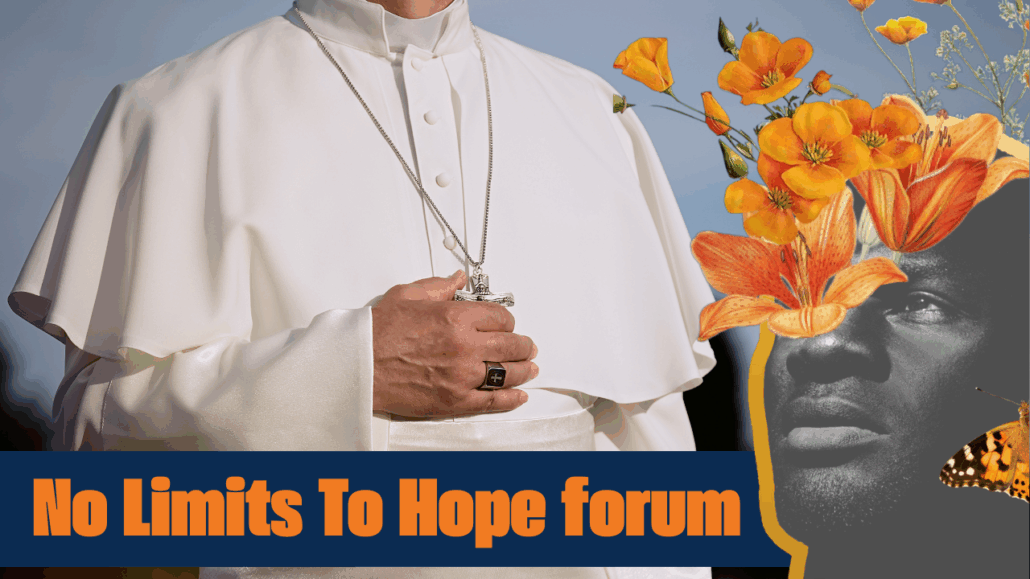
Pope Francis’ Hope as Praxis of Education: foregrounds hope not as an abstraction, but as an active education practice that decolonizes
I am honored to join the No Limits to Hope Forum and contribute to this urgent global conversation about the future of education. Drawing inspiration from Pope Francis’s vision, I believe that transforming education must begin with a radical commitment to hope—not as naive optimism, but as an active, decolonial force for healing, justice, and ecological stewardship. Educational systems should be rebuilt as communities of care, dialogue, and encounter, where the dignity and voices of historically marginalized peoples are centered and every learner is empowered to be an agent of change. Let us reject models rooted in exclusion, alienation, and “ideological colonization,” and instead cultivate educational environments where cultural diversity, local wisdom, and intergenerational solidarity are valued as essential resources for human and planetary flourishing. Hope, in this context, is not only possible—it is a shared responsibility and the foundation of a new compact for the common good.
- Context and Rationale
Today’s world is marked by “epochal change”—environmental collapse, mass displacement, economic injustice, and persistent colonial legacies that drive exclusion and despair. Pope Francis recognizes that education has often played a complicit role in these realities, yet he sees a radical potential for schools, families, communities, and institutions to become sites of integral human development, solidarity, and renewal (Klein, 2023).
The educational “compact” has broken down: responsibility for forming persons has been ceded to market-driven, technocratic models, perpetuating colonial logics and alienation (Klein, 2023). This is apparent in persistent inequality, ecological devastation, and forced migration—failures of both colonial and neo-colonial educational paradigms (Francis, 2018; Pope Francis, 2022).
- The Decolonial Character of Francis’s Vision
Francis’s educational proposal is decolonial in both critique and construction. In Pope Francis’s critique of domination, he identifies the root of educational crisis in coloniality and systems that prioritize economic outputs, marginalize indigenous and local knowledges, and disrupt holistic human flourishing (Klein, 2023). Pope Francis argues that integral human development education must nurture the full person—“head, heart, and hands”—not just as workers, but as agents of community and ecological harmony (Pope Francis, 2020; Klein, 2023).
On the pedagogical and epistemological aspect, Pope Francis has called on an Epistemic plurality that prioritizes dialogue as “an intrinsic requirement”—inviting mutual enrichment between cultures, identities, and knowledge systems (Pope Francis, 2018). This pedagogical and epistemological new paradigm should centralize the option for the marginalized: The most fragile and marginalized, especially in postcolonial contexts, must become central actors in shaping education (Klein, 2023).
III. Core Principles and Pedagogical Commitments
- Interconnectedness and Care for the Common Home
Education should foster ecological consciousness and a spirituality of global solidarity—healing the rift between humanity and creation, individuals and society (Francis, 2018; Francis, 2015).
- Dialogue, Encounter, and Relationality
Francis defines education as an “enterprise that demands cooperation”—a synthesis of reason, empathy, and action—through genuine dialogue, encounter, and inclusion (Pope Francis, 2020; Klein, 2022).
- Centering the Human Person in Community
Formative processes must cultivate agency, discernment, and responsibility—especially for the poor, refugees, and historically excluded. This approach overcomes colonial patterns of exclusion and builds up person-in-community (Pope Francis, 2018; Pope Francis, 2020).
- Education as an Act of Hope
Francis stresses education as a generator of hope: schools become places where despair and fatalism are broken by acts of solidarity, creativity, and mutual care (Klein, 2022; Pope Francis, 2020). Hope here is not rhetoric, but praxis—fueling cycles of renewal for individuals and their communities.
- Implementation: Praxis and Institutional Reform
Pope Francis’s call for a Global Compact is a planetary covenant uniting all partners—schools, families, religious, civic, and governmental bodies—to “mend the fabric of human relationships” and reshape education based on global fraternity (Pope Francis, 2020).
Decolonizing Content, Methods, and Spaces: Curricula must include marginalized histories, indigenous epistemologies, ecological awareness, and dialogue-based pedagogies—eschewing both relativism and neocolonial imposition (Klein, 2022; Pope Francis, 2018).
Schools must be inclusive communities—replacing exclusion and meritocracy with mutual care and civic participation (Pope Francis, 2020).
Teachers, families, and institutions are called to be “artisans of hope”—practicing ethical responsibility and humility before otherness (Klein, 2022).
- Contextual Hope: Educational Renewal for Colonized Areas
Francis’s vision resists the determinism of colonial legacy, market logics, and technocratic despair. Instead, it locates hope in: (1)The redemptive capacity of dialogue—where truth and beauty are found in every culture and encounter (Pope Francis, 2018; Klein, 2022). (2) A spirituality of care, healing relationships with self, others, the Earth, and the Divine (Pope Francis, 2020). (3) The creative agency and resilience of learners and communities—able to resist, reimagine, and rebuild systems for justice and authentic human flourishing (Klein, 2022).
Conclusion
This new educational dynamic invites the world—especially those in formerly or currently colonized areas—to leave behind models of fragmentation and domination. It calls for a revolution of hope, rooted in the agency of the marginalized, and realized through acts of care, dialogue, and a passionate commitment to building a truly human, connected, and sustainable common home.
References
Francis, P. (2015). Laudato Si. Paulines.
Francis, P. (2018). Pope Francis’ Apostolic Constitution “Veritatis gaudium” on ecclesiastical Universities and Faculties. https://press.vatican.va/content/salastampa/en/bollettino/pubblico/2018/01/29/180129c.html
Klein, L. F. (2023, March 9). How Pope Francis Sees Education. LA CIVILTÀ CATTOLICA. https://www.laciviltacattolica.com/how-pope-francis-sees-education/
Pope Francis. (2022). Address of His Holiness Pope Francis to Participants at the Seminar “Education: The Global Compact,” organized by the Pontifical Academy of Social Sciences | Uniservitate. https://repository.uniservitate.org/resources-repository/address-of-his-holiness-pope-francis-to-participants-at-the-seminar-education-the-global-compact-organized-by-the-pontifical-academy-of-social-sciences/