
Hopes for Mediterranean and Black Sea fisheries
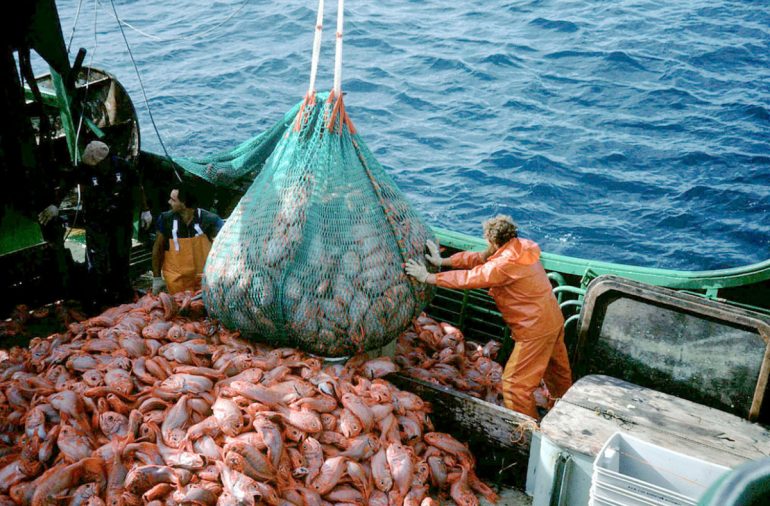 Good news in the Mediterranean and Black Sea: according to new FAO-GFCM report, for the first time over the past years, the pressure has reduced raising hopes for fisheries. The percentage of overexploited fish stocks decreased by 10%- from 88 percent in 2014 to 78%in 2016. More efforts are needed, however, to ensure long-term fish stock sustainability, warns The State of Mediterranean and Black Sea Fisheries.
This means more support for the small-scale fishing sector, which employs most fishers and causes least environmental damage; reducing bycatch and discards; and introducing more drastic measures such as significantly reducing fishing or establishing fisheries restricted areas (areas where fishing activities are regulated).
The latter is particularly needed to safeguard the most heavily fished species, such as European hake, which is fished nearly six times beyond its sustainable level.
“Fisheries provide the region with an important socio-economic balance and are essential to ending hunger and poverty,” said Abdellah Srour, GFCM Executive Secretary.
“Sustainability may be expensive in the short term, but there is nothing more expensive than running out of fish,” said Miguel Bernal, FAO Fishery Officer and one of the report’s coordinators.
Mediterranean and Black Sea fisheries are under threat in the long run because of the effects of increased pollution from human activities, habitat degradation, the introduction of non-indigenous species, overfishing and the impacts of climate-driven changes.
Across, the region, the ranking of capture fisheries production in 2014-2016 continues to be dominated by Turkey (321 800 tonnes and 26 percent of total landings compared to 31 percent in 2013), followed by Italy (185 300 tonnes and 16 percent, similar to the 2013 percentage). Algeria (96 300 tonnes and 8 percent) and Greece (65 700 tonnes and 5 percent) also maintain the same (2013) percentages in landing contribution. Both Tunisia (185 300 tonnes) and Croatia (74 400 tonnes) show an increase compared to 2013 (from 7 to 9 percent for Tunisia and from 3 to 6 percent for Croatia). Total landings for Spain (78 200 tonnes) decreased from 8.5 percent to 7 percent of the total).
Among subregions, the Black Sea continues to provide the largest contribution to capture fisheries production, with a 32 percent of the total, followed by the western Mediterranean (22 percent of total), the Adriatic Sea (16 percent), and the central and eastern Mediterranean (15 percent each).
Some sectors generate more discards than others – trawling, for example, accounts for over 40 percent in some areas, whilst small-scale fisheries tend to be below 10 percent.
According to the report, incidental catches of vulnerable species are relatively rare events but are important because the species caught are of conservation concern. Among the vulnerable species most affected by incidental catches, are sea turtles (which appear in 8 out 10 of reports on incidental catches) followed by sharks, rays, and skates (appearing in 2 out of 10 reports on incidental catches each). Seabirds and marine mammals represent the lowest number of incidental catches, and are only occasionally included on incidental catches reports.
The report was launched on the occasion of the first GFCM Forum on Fisheries Science (Fish Forum 2018) organized at the FAO headquarters from 10th to 14th December 2018, as a recognition of the instrumental role of science in improving knowledge towards sustainable fisheries management.

Leave a Reply
Want to join the discussion?Feel free to contribute!