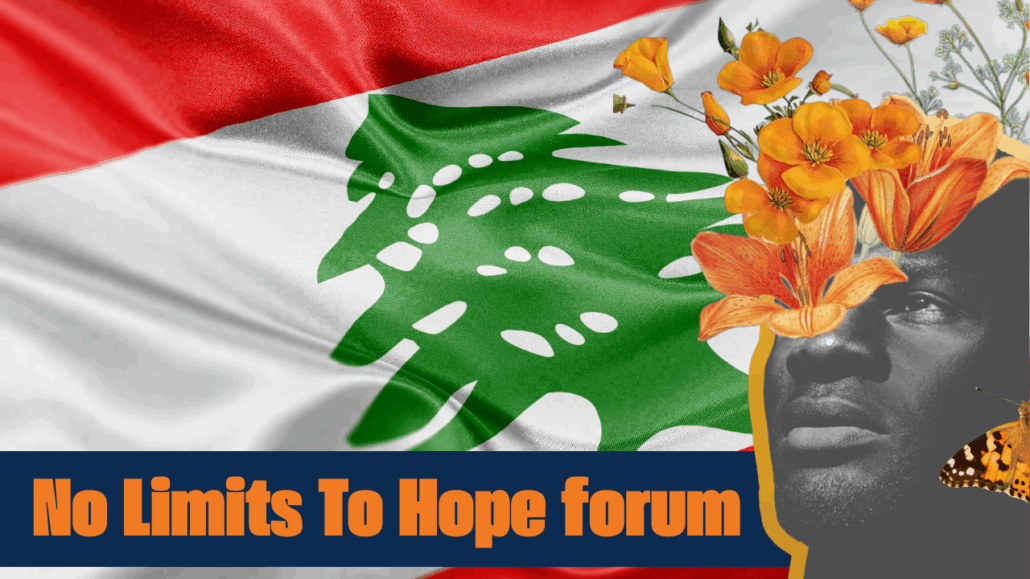
Hope Without Limits for Lebanon
In a world facing complex and interconnected crises — from climate change and political instability to economic downturns and social inequalities — the need to rethink education and learning systems has never been greater. The international initiative “No Limits to Hope,” launched by The Club of Rome, The Fifth Element, and the WEEC Network, builds upon a long legacy of visionary thinking to inspire a global shift in how education fosters meaning, justice, and sustainability.
Forty-five years after No Limits to Learning: Bridging the Human Gap, the initiative calls for transformative learning approaches that enable humanity to meet today’s challenges with creativity, equity, and hope. Using Lebanon as a case study offers a compelling insight into how education can be both a site of struggle and opportunity in societies marked by crises yet rich in resilience.
Lebanon’s Educational Landscape: Challenges and Resilience
Lebanon’s education system reflects the country’s complex social fabric, comprising public, private, religious, and international institutions. While Lebanese universities are known regionally for quality, the broader education landscape is marred by inequalities and fragmentation. Public schools, serving the majority, suffer from underfunding, deteriorating infrastructure, and outdated curricula that emphasize memorization rather than critical thinking or problem-solving. Meanwhile, private schools cater primarily to wealthier families, exacerbating social divides. The prolonged economic crisis, compounded by political instability and the 2020 Beirut explosion, has severely impacted education access and quality. Inflation and poverty force many families to withdraw children from schools or push them toward informal work. Refugee populations, notably Syrians and Palestinians, face additional legal and practical barriers to schooling, further marginalizing vulnerable groups.
Despite these challenges, Lebanon’s education sector shows resilience. NGOs, civil society, and international actors have stepped in with innovative programs to keep learning alive through digital platforms and community initiatives, particularly during COVID-19 lockdowns and economic collapse. These efforts embody the spirit of “No Limits to Hope,” demonstrating how learning can adapt and empower even in adversity.
Who Has Access to Knowledge and Decision-Making Power?
In Lebanon, access to quality education and decision-making power is deeply unequal. Political elites and wealthy families largely control educational resources and governance. Public institutions are under-resourced, and governance is fragmented across multiple ministries and religious authorities, impeding coherent reforms. This power imbalance excludes many communities from shaping education policy or accessing quality learning. Refugees, poor families, and marginalized sectarian groups often have limited access to resources, reinforcing cycles of poverty and exclusion. Similarly, civil society organizations advocating for reform and inclusion frequently struggle to influence decision-making due to political patronage and sectarian interests.
The “No Limits to Hope” framework stresses the need to democratize knowledge and governance. Education should be a right accessible to all and shaped through inclusive, participatory processes that empower marginalized voices and foster social cohesion.
Using the Learning and Climate Space to Empower or Suppress
Lebanon’s education and civic sectors offer examples of both empowerment and suppression within the climate and learning space. On
one hand, NGOs and youth-led groups have harnessed digital tools and community education to raise awareness about environmental challenges, social justice, and civic participation. These initiatives create spaces for marginalized groups, especially young people and refugees, to gain skills and advocate for their rights. For instance, grassroots climate education programs link environmental protection with socioeconomic justice, encouraging collective action. Online platforms have expanded access to learning and knowledge-sharing beyond traditional institutions, fostering collaboration across social and geographic divides. However, significant barriers persist. The digital divide restricts access for rural and poor populations, deepening inequalities. Politicization and sectarianism sometimes limit open dialogue and exclude dissenting perspectives from public discourse. Moreover, climate education remains underdeveloped in formal curricula, leaving
many unaware of Lebanon’s acute environmental vulnerabilities. These mixed dynamics highlight the crucial role of “No Limits to Hope” in promoting learning spaces that genuinely empower all citizens while challenging systems that perpetuate exclusion.
Toward a Transformative Learning Paradigm for Lebanon
To align with the vision of “No Limits to Hope,” Lebanon’s education system needs a profound transformation based on five key pillars:
1. Equitable Access: Expand quality education opportunities for all, including refugees and marginalized communities, by investing in
public schools and bridging the digital divide.
2. Inclusive Governance: Involve diverse stakeholders — including civil society, youth, and marginalized groups — in education and
climate policy decisions to ensure relevance and equity.
3. Curriculum Innovation: Shift from rote memorization to critical thinking, creativity, and problem-solving. Integrate climate justice, peace education, and social inclusion into curricula to prepare learners for complex challenges.
4. Technology with Equity: Use digital tools to enhance learning while ensuring they do not exacerbate existing inequalities. Complement technology with culturally relevant, human-centered pedagogy.
5. Intersectional Climate and Social Justice Education: Foster awareness that environmental and social issues are interconnected, empowering learners to act for sustainable and just futures.
Hope Without Limits for Lebanon
“No Limits to Hope” is a call to reimagine education as a transformative force rooted in equity, resilience, and collective empowerment. Lebanon’s unique challenges — political fragmentation, economic crisis, social inequality, and environmental risk — make it a powerful case study for how learning can either reinforce old divisions or help build bridges toward a better future. Lebanon’s strength lies in its diverse communities, dynamic civil society, and especially its youth. By embracing the principles of “No Limits to Hope,” Lebanon can pioneer an education transformation that democratizes knowledge, nurtures critical consciousness, and prepares citizens to navigate uncertainty with creativity and solidarity. While the road ahead is difficult, Lebanon’s history of endurance reminds us that when hope knows no limits, education becomes the foundation for a just and sustainable future for all.