Reimagining Education for a Transformative Future

Education is the cornerstone of human progress, a powerful force that shapes individuals, communities, and societies. The concept note “No Limits to Hope: Transforming Learning for Better Futures” encapsulates a vision of education that transcends traditional boundaries, fostering optimism, inclusivity, and innovation to prepare learners for a rapidly evolving world. Reflecting on this theme, I explore
how education can embody hope, break down barriers, and create equitable, sustainable futures through transformative learning.

Education as a Beacon of Hope

Hope is the heartbeat of education. It is the belief that every individual, regardless of circumstance, can grow, learn, and contribute meaningfully to society. The phrase “No Limits to Hope” suggests that education should not be constrained by socioeconomic status, geography, gender, or systemic inequities. Instead, it should serve as a universal right, igniting aspirations and empowering individuals to
envision brighter futures.
In my reflection, I recall the stories of learners who have defied odds through education. From Malala Yousafzai(Pakistani activist for female education and the youngest Nobel Prize laureate), who championed girls’ education in the face of violence, to students in remote villages accessing online learning for the first time, these narratives embody hope. Education offers a pathway out of poverty, a tool for empowerment, and a means to challenge injustice. By fostering hope, education transforms not only individual lives but also entire communities, creating ripple effects of progress.
However, hope alone is not enough. It must be paired with action—systems, policies, and innovations that make education accessible and relevant. The concept note’s emphasis on “transforming learning” calls for a reimagining of how education is delivered, ensuring it is equitable, inclusive, and forward-looking.

Transforming Learning: A Paradigm Shift
Transformative learning is about more than acquiring knowledge; it is about equipping learners with the skills, mindsets, and values needed to navigate an uncertain future. The world today is marked by rapid technological advancements, climate challenges, and social upheavals. Traditional education models, often rooted in rote memorization and standardized testing, are increasingly misaligned with these realities. Transformation requires a shift toward learner-centered, flexible, and holistic approaches.

One key aspect of transformative learning is embracing technology. Digital platforms, artificial intelligence, and virtual reality have the potential to democratize education, making it accessible to those in underserved regions. For instance, initiatives like Khan Academy and Coursera have brought high-quality resources to millions, breaking geographical barriers. Yet, the digital divide remains a significant challenge. In 2023, UNESCO reported that 2.6 billion people—roughly one-third of the global population—lacked internet access, limiting their ability to engage in modern learning environments. Transforming learning means bridging this gap through investments in infrastructure, affordable devices, and digital literacy programs.

Beyond technology, transformation involves redefining what we teach. The future demands skills like critical thinking, collaboration, adaptability, and emotional intelligence. Curricula must prioritize interdisciplinary learning, blending science, humanities, and ethics to prepare students for complex global challenges. For example, climate education can empower students to innovate sustainable
solutions, while lessons in empathy and cultural competence can foster social cohesion in diverse societies. Transformative learning also means valuing indigenous knowledge and local contexts, ensuring education is culturally relevant and inclusive.

Equity and Inclusion: The Heart of Transformation
Hope and transformation are hollow without equity. Education systems worldwide grapple with disparities that perpetuate cycles of disadvantage. Children in low-income communities, girls, refugees, and those with disabilities often face systemic barriers to quality education. The concept note’s vision of “better futures” hinges on dismantling these barriers.

Reflecting on global efforts, I am inspired by initiatives like the Global Partnership for Education, which funds education in low-income countries, and programs like Room to Read, which focus on girls’ literacy. These efforts demonstrate that equity is achievable through targeted interventions. However, challenges persist. For instance, UNESCO data from 2022 showed that 244 million children and youth were out of school, with girls disproportionately affected in regions like Sub-Saharan Africa. Addressing this requires not only funding but also policy reforms to eliminate gender-based discrimination, provide safe learning environments, and support marginalized groups.

Inclusion also extends to neurodiversity and disabilities. Transformative learning environments must be designed to accommodate diverse needs, using tools like universal design for learning (UDL) to ensure all students can thrive. Teachers, too, need training to foster inclusive classrooms, where every learner feels valued and supported.

Lifelong Learning for Sustainable Futures
The concept of “better futures” implies sustainability—not just environmental, but social and economic. Education must prepare individuals for lifelong learning, as the skills needed today may become obsolete tomorrow. The rise of automation and artificial intelligence underscores the need for continuous upskilling. For example, the World Economic Forum’s 2023 Future of Jobs report predicted that 44% of workers’ skills would be disrupted by 2028, highlighting the urgency of adaptable education systems.

Lifelong learning also means fostering a growth mindset, where individuals see challenges as opportunities to learn. This aligns with the concept note’s emphasis on hope—an optimistic belief in one’s ability to grow and contribute.
Governments and institutions can support this by creating flexible learning pathways, such as micro-credentials and online courses, that allow adults to reskill at any stage of life.
Moreover, education for better futures must address global challenges like climate change. By integrating sustainability into curricula, schools can empower students to become stewards of the planet. Programs like the UN’s Education for Sustainable Development initiative show how education can drive action on issues like renewable energy and biodiversity conservation.

The Role of Educators and Communities
Transformative learning cannot happen without educators. Teachers are the architects of hope, guiding students toward their potential. Yet, they often face low pay, burnout, and lack of resources. Supporting educators through professional development, fair compensation, and access to modern tools is critical to realizing the vision of “No Limits to Hope.”
Communities, too, play a vital role. Parents, local leaders, and organizations can advocate for equitable education and create supportive environments for learning. In my own experience, I’ve seen how community-driven initiatives, like after-school programs in underserved areas, can spark hope and opportunity for children who might otherwise be left behind.

Challenges and the Path Forward
Despite its potential, transforming education faces significant hurdles. Funding shortages, political resistance, and cultural biases can impede progress. For instance, efforts to modernize curricula often face pushback from those who favor traditional approaches. Overcoming these challenges requires collaboration among governments, educators, private sectors, and civil society.
The concept note’s vision also calls for bold innovation. Pilot programs, such as competency-based education in Finland or mobile learning units in refugee camps, offer models for scaling transformative practices. Data-driven approaches can help identify what works, while partnerships with tech companies can accelerate access to digital tools.

Conclusion
No Limits to Hope” calls for reimagining education as a dynamic, inclusive force.
By embracing technology, prioritizing equity, fostering lifelong learning, and empowering educators, we can unlock human potential and build sustainable futures. Education is about igniting dreams and breaking barriers. With transformative action, hope knows no limits, ensuring education remains a beacon for generations.
Foundations for hope

When discussing the concept of hope in relation to the climate crisis, one of my students remarked, “Talking about hope gives me uneasiness and anxiety; the fact that we need to talk about hope is scary.” In one way or another, hope involves confronting a challenge or a threat. It’s about a future that we cannot predict, and our desire for a positive outcome. Hope is also linked to our ability to accept and meet challenges and limitations in life, recognizing that outcomes may not be guaranteed and that there are always elements beyond our control (Ojala, 2017; Rosa, 2019). This is not easy, and the multiple crises facing societies and the planet make it difficult to engage in questions about hope in education. For many a sense of stability and security has been lost and feeling hopeful is increasingly hard.

As a concept “hope” invites students to engage in overarching reflections and judgments regarding the state of the world and where it is heading. This can be overwhelming and inevitably includes distressing global issues where the possibility of a positive outcome is very limited, and in some cases, lost. Students’ worldviews and attitudes toward life—such as whether one identifies as an optimist, realist, or pessimist—can further make these discussions very personal and the sensitive subject. Choosing to try not to think and talk about hope and the future may appear as a solution. However, having hope is vital for learning and motivation to create a better world. So, discussions are needed in education, even if we may be at loss, and answers and perceptions diverge.

As Ojala (2017) shows, “hope” can be conceptualized and approached in many ways in education. Here I wish to share a few poems relating to the foundations of hope that I find supportive. The first is a famous verse by Emily Dickinson, also found in Satish Kumar’s book Soil, Soul and Society (2024, p. 9):

Hope is the thing with feathers

That perches in the soul

And sings the tune without words

And never stops at all.

Hope may be seen as an inner source of energy and inspiration, which is fundamental to our existence and purposefulness in life. In the terminology of Hartmut Rosa (2019), hope may arise when we engage in resonant relationships with the world, actively listening and responding to our experiences and environment. Hope manifests in action when we are connected to our inner core, our values, dreams and our creative energy. It is very difficult to live without hope, as it is essential to what we find meaningful and connected to our curiosity for life. Hope as a life-affirming energy needs to be taken care of and nurtured. Sustaining this energy in ourselves and supporting it in others in education, however difficult, is therefore urgently needed.

As Ojala (2017) concludes, hope relates to the goals one considers desirable, the pathways perceived as effective for achieving these goals, and one’s ability to motivate oneself to pursue these pathways. For youth and adults, reflecting on problems from multiple perspectives, considering constraints, and imagining futures can create critical hope. We may promote active and radical perceptions of hope, when hope becomes a conscious choice—taking the right action, irrespective of what the future holds (Ojala, 2017; Lange, 2023). Reflecting may not necessarily start from an overall question such as “Is there hope?” but from more concrete ones such as “What can we hope for?” and “What do we hope for—ourselves, for other human beings, and for the more-than-human world?” Providing space in education for alternative perspectives and stories, as well as the significant work and efforts that have been and are currently being undertaken for sustainability, can help in envisioning desirable and possible futures (Berry, 1999; Lange, 2023).

As Ojala (2017) argues, the ways we develop our conceptions of hope are deeply socially embedded, and social relations and communities are foundational for hope. Hope is closely intertwined with experiences of trust and beliefs in the benevolence of others. Trust is significantly developed in childhood, but is equally important for adults, and is reflected in our expectations on life. Children’s lack of trust in adults’ engagement in climate issues has been shown to be central to their experiences of hope and distrust (Hickman et al., 2021). Lack of trust in fellow human beings and society can also be a significant reason why adults do not engage. Individuals worldwide systematically underestimate the willingness of their fellow citizens to act for the climate (Andre et al., 2024). This shows the need for greater knowledge, but strengthening interpersonal trust and collective hope is also central. As Lange (2023) and many sustainability educators argue, to build more trust respect, compassion and love need to have more space in education. Love as a foundation for trust and hope is beautifully expressed in the poem by Chief Dan George, cited in Lange (2023, p. 391):


The Right Kind of Love

The right kind of love, the silent, deep, and lasting one, pleases the Creator. Sometimes there may be darkness in our hearts that makes us dread the future. Young people should never overlook that this love is working silently in a thousand ways. Because of it, we can have confidence in the years ahead. Where this love lives, beauty grows.

Sin límites a la esperanza: Transformando la educación para construir un futuro mejor

En el contexto del mundo actual, con todos los problemas y desafíos que a diario se nos están presentando, me parece excelente, muy
pertinente y necesaria, la iniciativa “Sin límites a la esperanza: Transformando el aprendizaje para un futuro mejor”, por lo cual quiero
unirme al Foro educativo en línea, abierrto para intercambiar nuestras ideas e iniciativas creativas y novedosas desde la Educación, y poder
implementarlas para llevarlas a la práctica y de esta manera contibuir a lograr un mundo mejor, para nuestros hijos y las generaciones futuras.

Zhejiang Normal University’s leadership in interdisciplinary education, sustainable technology transfer, and rural revitalization

Educational empowerment acts as a vital bridge linking advanced technology and local communities, substantially increasing acceptance
and sustainable operational capability.

This framework exemplifies how locally tailored educational strategies can address inherently complex socio-technical challenges.
Seeding Tomorrow, as educational innovations not only empower learners with technical competencies but also nurture agency and ownership, critical factors for sustainable adoption and long-term resilience.

In reflecting on the ongoing global transformation challenges faced by education, the “Seeding Tomorrow” experience offers several key
insights:

  • Interdisciplinary Integration and Practice-Oriented Learning;
  • Balancing Technology Diffusion with Capacity Building;
  • Promoting Social Equity and Inclusion through Education;
  • Deep Coupling with Sustainable Development;
  • Harnessing Digital and Networked Platforms for Broader Impact.

Educational transformation is not merely a supportive element for technological application but a crucial driver of societal resilience and climate action. In an era marked by sweeping global change, empowering grassroots communities—particularly farmers and vulnerable groups lacking educational resources—injects enduring vitality into green agricultural development. Seeding Tomorrow, will foster substantive innovation that collectively “seeds” a sustainable and livable tomorrow for all humanity.

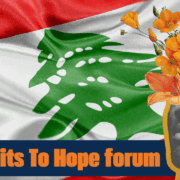
Hope Without Limits for Lebanon

In a world facing complex and interconnected crises — from climate change and political instability to economic downturns and social inequalities — the need to rethink education and learning systems has never been greater. The international initiative “No Limits to Hope,” launched by The Club of Rome, The Fifth Element, and the WEEC Network, builds upon a long legacy of visionary thinking to inspire a global shift in how education fosters meaning, justice, and sustainability.

Forty-five years after No Limits to Learning: Bridging the Human Gap, the initiative calls for transformative learning approaches that enable humanity to meet today’s challenges with creativity, equity, and hope. Using Lebanon as a case study offers a compelling insight into how education can be both a site of struggle and opportunity in societies marked by crises yet rich in resilience.

Lebanon’s Educational Landscape: Challenges and Resilience

Lebanon’s education system reflects the country’s complex social fabric, comprising public, private, religious, and international institutions. While Lebanese universities are known regionally for quality, the broader education landscape is marred by inequalities and fragmentation. Public schools, serving the majority, suffer from underfunding, deteriorating infrastructure, and outdated curricula that emphasize memorization rather than critical thinking or problem-solving. Meanwhile, private schools cater primarily to wealthier families, exacerbating social divides. The prolonged economic crisis, compounded by political instability and the 2020 Beirut explosion, has severely impacted education access and quality. Inflation and poverty force many families to withdraw children from schools or push them toward informal work. Refugee populations, notably Syrians and Palestinians, face additional legal and practical barriers to schooling, further marginalizing vulnerable groups.

Despite these challenges, Lebanon’s education sector shows resilience. NGOs, civil society, and international actors have stepped in with innovative programs to keep learning alive through digital platforms and community initiatives, particularly during COVID-19 lockdowns and economic collapse. These efforts embody the spirit of “No Limits to Hope,” demonstrating how learning can adapt and empower even in adversity.

Who Has Access to Knowledge and Decision-Making Power?

In Lebanon, access to quality education and decision-making power is deeply unequal. Political elites and wealthy families largely control educational resources and governance. Public institutions are under-resourced, and governance is fragmented across multiple ministries and religious authorities, impeding coherent reforms. This power imbalance excludes many communities from shaping education policy or accessing quality learning. Refugees, poor families, and marginalized sectarian groups often have limited access to resources, reinforcing cycles of poverty and exclusion. Similarly, civil society organizations advocating for reform and inclusion frequently struggle to influence decision-making due to political patronage and sectarian interests.

The “No Limits to Hope” framework stresses the need to democratize knowledge and governance. Education should be a right accessible to all and shaped through inclusive, participatory processes that empower marginalized voices and foster social cohesion.

Using the Learning and Climate Space to Empower or Suppress

Lebanon’s education and civic sectors offer examples of both empowerment and suppression within the climate and learning space. On
one hand, NGOs and youth-led groups have harnessed digital tools and community education to raise awareness about environmental challenges, social justice, and civic participation. These initiatives create spaces for marginalized groups, especially young people and refugees, to gain skills and advocate for their rights. For instance, grassroots climate education programs link environmental protection with socioeconomic justice, encouraging collective action. Online platforms have expanded access to learning and knowledge-sharing beyond traditional institutions, fostering collaboration across social and geographic divides. However, significant barriers persist. The digital divide restricts access for rural and poor populations, deepening inequalities. Politicization and sectarianism sometimes limit open dialogue and exclude dissenting perspectives from public discourse. Moreover, climate education remains underdeveloped in formal curricula, leaving
many unaware of Lebanon’s acute environmental vulnerabilities. These mixed dynamics highlight the crucial role of “No Limits to Hope” in promoting learning spaces that genuinely empower all citizens while challenging systems that perpetuate exclusion.

Toward a Transformative Learning Paradigm for Lebanon

To align with the vision of “No Limits to Hope,” Lebanon’s education system needs a profound transformation based on five key pillars:

1. Equitable Access: Expand quality education opportunities for all, including refugees and marginalized communities, by investing in
public schools and bridging the digital divide.

2. Inclusive Governance: Involve diverse stakeholders — including civil society, youth, and marginalized groups — in education and
climate policy decisions to ensure relevance and equity.

3. Curriculum Innovation: Shift from rote memorization to critical thinking, creativity, and problem-solving. Integrate climate justice, peace education, and social inclusion into curricula to prepare learners for complex challenges.

4. Technology with Equity: Use digital tools to enhance learning while ensuring they do not exacerbate existing inequalities. Complement technology with culturally relevant, human-centered pedagogy.

5. Intersectional Climate and Social Justice Education: Foster awareness that environmental and social issues are interconnected, empowering learners to act for sustainable and just futures.

Hope Without Limits for Lebanon

“No Limits to Hope” is a call to reimagine education as a transformative force rooted in equity, resilience, and collective empowerment. Lebanon’s unique challenges — political fragmentation, economic crisis, social inequality, and environmental risk — make it a powerful case study for how learning can either reinforce old divisions or help build bridges toward a better future. Lebanon’s strength lies in its diverse communities, dynamic civil society, and especially its youth. By embracing the principles of “No Limits to Hope,” Lebanon can pioneer an education transformation that democratizes knowledge, nurtures critical consciousness, and prepares citizens to navigate uncertainty with creativity and solidarity. While the road ahead is difficult, Lebanon’s history of endurance reminds us that when hope knows no limits, education becomes the foundation for a just and sustainable future for all.

Virunga en péril : l’éducation environnementale, clé pour sauver un patrimoine mondial

Aux parc national de Virunga un patrimoine mondial de L’UNESCO dans la République Démocratique du Congo des milliers d’hectares sont vandalisé par des populations riveraines en coupant les arbres arbres en faisant des charbons de commerce, coupe de bois de chauffage, exploitation artisanale des minéraux etc. Notre organisation mkaaji mpya asbl qui se donne tout ses possibilités pour Éduquer la population l’importance de la biodiversité, l’avenir d’un climat meilleur au futur génération.

Suite à celà le parc national de Virunga est confronté à beaucoup des multiples violations en matière de la protection de son écosystèmes alors que ce parc est le vitrine de l’environnement au nord kivu en dégageant un climat frais et adorable pour la population riveraine et attire les touristes pour contempler sa beauté et ses espèces rares qu’il abrite.

La République Démocratique du Congo est une terre des richesses naturelles exceptionnelle car elle abrite la deuxième plus grande forêt du monde âpres l’Amazonie au Brésil, elle abrite même un réseau hydrographique puissant, une biodiversité inestimable. Pourtant ces richesses sont menacées aujourd’hui par la déforestation, l’exploitation minière incontrôlé, la pollution, le changement climatique etc… Face à ce problème ou ces défis, l’éducation environnementale doit être considérée comme priorité au pays car elle est la clé pour éveiller la conscience des personnes qui commette ces résultats négatifs pour l’environnement.

Sustainability, Social Justice and Intergenerational Solidarity

Anthropocentric education considers human as the center of everything, rarely emphasizing the existence of ecology as an integral part of human life. This education creates human selfishness to dominate nature through unlimited exploitation of natural resources to meet only present needs, totally ignoring the sustainability of the planet and the prosperity of future generations. This is why popular education is needed on a strong basis in revolutionary ideas to fight for the liberation of the people, women’s emancipation, intergenerational solidarity, ecological preservation and ensuring the sustainability of the planet.

Theologian and philosopher Leonardo Boff suggests that we need actions that liberate the poor through education and training to be able to use natural resources in a sustainable way to meet human needs and at the same time preserve the sustainability of natural resources from
generation to generation.

Education is partial; must be pro poor people, pro ecology, pro truth and social justice.

Not Just Knowing, but Acting: Towards Pro-Sustainability Climate Education

Climate change is fundamental but it is not sufficient in itself for the development of pro-sustainability attitudes and behaviours.
The development of students’ pro-sustainability skills and dispositions are critical components of the overall learning outcomes of climate
change education.

For climate change education this means not only assessing and measuring what students know about climate change but also, what they are doing with that knowledge and their attitudes, individually and collectively, to undertaking pro-sustainability actions.

Art as a discipline for ecological sensitization, beyond mere rational awareness

Environmental Education didactic proposal  is based on four fundamental dimensions for the aim of a transformative, critical, sensitive, and
democratic education: (1) Personal Dimension; (2) Social Dimension; (3) Socio-environmental Dimension; and (4) Eco-spiritual Dimension.

The personal dimension focuses on the learner’s intimate experience including their bodies, emotions, perceptions, and inner reflections. Here, the emphasis is on cultivating self-awareness as an integral part of network, recognizing that the body and mind are the first environment we inhabit.

Society and the school community are seen as a human ecosystem in constant interaction and interdependence: school, family, community groups, virtuais networks, institutions, and political forces. It involves recognizing and valuing human diversity — especially socially marginalized and historically excluded groups.

The socio-environmental dimension addresses the relationship between human beings and the physical, chemical, and biological environments that surround them, this represents the traditional and one-dimensional perspective of Environmental Education—focused on the preservation and sustainability of natural elements. Eco-spirituality recognizes the existence of a symbolic or spiritual dimension in the human relationship with the planet by embracing practices, beliefs, and rites connected to Indigenous people, traditional communities, Afro-descendant spiritualities, and Indigenous worldviews that affirm the sacredness of the Earth and the interdependence of all beings. This contribution recognizing that human beings exist within networks of interdependent relationships — personal, social, environmental, and eco-spiritual.

Art and alternative languages from social and ethnic groups, for thinking and action alternatives

I had the opportunity to read different versions of the document “No Limits to Hope” and make brief comments in emails exchanged with Mario Salomone. The following comments and suggestions are highly pertinent to a project such as this, in this historic moment.

Regarding the reasoning, the “No Limits to Hope” Initiative presents a universalist connotation, considering the human species responsible for the problems and challenges that must be faced (“how WE think and act”).

However, there are social and ethnic groups that have proposed and propose other alternatives for thinking and acting, groups who have until recently been considered savage or uncivilised and therefore outside or on the fringes of that universal “WE”.

The contemporary importance of the Indigenous Peoples of Latin America is an example of this. Books such as “The Falling Sky” by Davi Kopenawa and Bruce Albert (published in English, French, Spanish, and Portuguese) and “I, Rigoberta Menchú. An Indian Woman in Guatemala” bring key elements to the historical expansion of planetary challenges, as does the work of Cameroonian philosopher Achille Mbembe. The positioning in the NLtH document regarding notions of progress and civilisation is highly important, even if discreet. It is essential to add, with greater emphasis, criticism of models of economic development, including sustainable development, which have already been intensely criticised in recent decades, yet which continue to be present and powerful in international institutions.

Against militarism and the misuse of science and innovation

Among the problems and challenges against which we must unite all our efforts is the “continued militarism and other misuse of science and innovation”. One possibility (pedagogic, cultural, and political) to counter militarism (and, I might add, totalitarianism and negationism) certainly relates to the new “learning models, which could be anticipatory, participatory, integrative and innovative”. In this sense, pedagogic experiences developed in countries that live with or have lived through authoritarian governments, genocides, civil wars, etc., must be acknowledged and disseminated.

The document references Paulo Freire’s work in Brazil, and I would add that his political and pedagogic theory has been studied and practised in different countries. In recent decades, new generations in innumerable nations have re-signified it, remaining increasingly pertinent and necessary.

To close, I would call attention to the importance of the arts in general, which develop languages that focus on perception, respect, and coexistence with otherness and others-than-humans, aimed at the common good. We must establish dialogues and partnerships with artists who have included contemporary themes and challenges in their everyday activities, amplifying and practising the transdisciplinarity the document suggests.

This contribution is part of the comments and suggestions on the document No limits to hope: Transforming learning for better futures