Air crash: environmentalism cries its victims

A great tragedy has hit the world of environmentalism. The Ethiopian Airlines aircraft crashed yesterday after take-off near Addis Ababa, caused the death of 157 people who were on board, including passengers and crew members.

Among the victims there are also many delegates who were directed to the Fourth Assembly of the United Nations on Environment in Nairobi.

The WEEC Permanent Secretariat gathers around the relatives of the victims. Mario Salomone, WEEC General Secretary recalls that everyone’s commitment is important for the future of the planet. «The pain for the loss of so many people actively involved in the protection of the environment – he said – must make us continue their meritorious work and must remind us that their life had a common and highly meritorious goal».

The assembly opens today (Monday, 11th) in silence to remember the victims of the plane crash. The goal of the forum is to understand how to save the planet from climate change and resource over-exploitation, and in this context until 15 March, heads of state and environment ministers, with NGOs, activists and multinational administrators will meet to discuss and make commitments, with a view to a global environmental pact.

The people on board had 32 different nationalities: 8 Italians, 32 Kenyans, 18 Canadians, 9 Ethiopians, 8 Chinese, 8 Americans, 7 French, 7 British, 6 Egyptian, 5 Dutch, 4 people with UN passports, 4 Indians, then citizens of Austria, Switzerland, Russia, Morocco, Spain, Israel, Belgium, Indonesia, Uganda, Yemen, Sudan, Serbia, Togo, Mozambique, Rwanda, Somalia, Norway, Ireland.
The many peoples fraternized by a tragic destiny are a symbol of the unity of humanity beyond borders, languages and cultures.

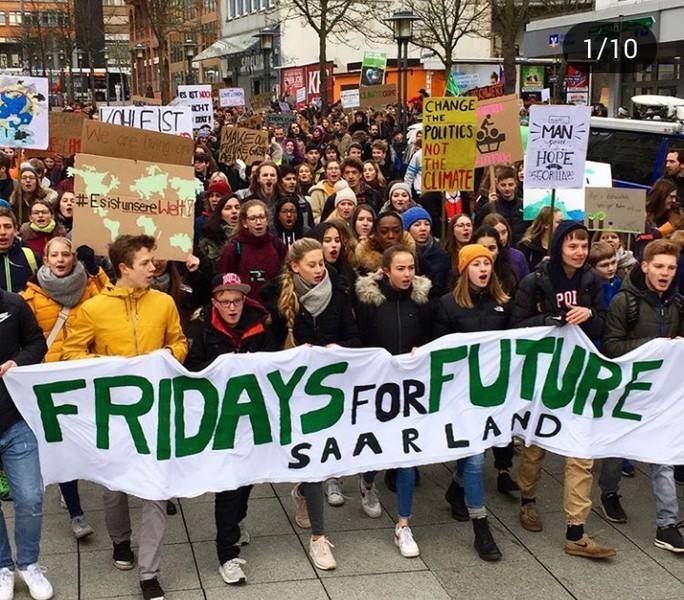
Fridays for future. Alongside young people all over the world

From the young Swedish student Greta Thunberg, the successful example of how the message on the urgency of change can reach hearts and consciences. She deserves all our applause and support. From his courageous gesture a movement is born that mobilizes groups of young people all over the world. The events of “Fridays for future” and the global strike of March 15th are a sign of hope that must leave its mark. This is why the WEEC Secretariat invites all the people involved in the defense of the environment and all the members of the largest international network of environmental educators to join, to be in the front line and to give maximum support to the campaign for the respect for commitments against global warming. «Greta» said among other things the WEEC Secretary General Mario Salomone «spoke also to the great people of the Earth, COP24 and the WEF of Davos. They heard her, but it is not said that they listened to her. It is up to all of us to help extinguish the burning house fire. Women and men of every generation side by side».

FR

A côté des jeunes du monde entier. L’éducation à l’environnement au premier rang de la bataille pour le climat

Le réseau d’éducation à l’environnement WEEC adhère à Fridays for Future en fournissant ses canaux d’information et ses bureaux. Greta Thunberg, jeune étudiante suédoise, montre comment le message sur l’urgence du changement peut atteindre les cœurs et les consciences. Journée de mobilisation du 15 mars contre la catastrophe climatique. Le Secrétaire général WEEC, Mario Salomone, lance un appel à l’adhésion.

Greta Thunberg mérite tous nos applaudissements et notre soutien. De son geste courageux est né un mouvement qui a mobilisé des groupes de jeunes du monde entier. Les événements de vendredi ” pour l’avenir ” et la grève mondiale du 15 mars sont un signe d’espoir qui doit laisser sa marque. C’est la raison pour laquelle le secrétariat du réseau environnemental du WEEC invite toutes les personnes impliquées dans la défense de l’environnement et tous les membres du plus grand réseau international d’éducateurs à l’environnement à se joindre à nous, à être en première ligne et à apporter un soutien maximal à la campagne pour la protection de l’environnement. respect des engagements contre le réchauffement climatique. « Greta – a notamment déclaré le secrétaire général du WEEC, Mario Salomone – s’est également entretenu avec les plus grands peuples de la Terre, la COP24 et le WEF de Davos. Ils l’ont entendu, mais on ne dit pas qu’ils l’ont écouté. Nous devons tous aider à éteindre l’incendie de la maison en feu. Les femmes et les hommes de chaque génération côte à côte ».


ES

Junto a los jóvenes de todo el mundo. Educación ambiental en primera fila en la lucha por el clima

La red de educación ambiental WEEC participa en Fridays for Future poniendo a disposición sus canales de información y oficinas. Empezando por la joven estudiante sueca Greta Thunberg, el exitoso ejemplo de cómo el mensaje sobre la urgencia del cambio puede llegar a los corazones y las conciencias. El 15 de marzo día de movilización contra la catástrofe climática. Desde el Secretariado General WEEC Mario Salomone un llamado a unirse.

Greta Thunberg merece todo nuestro aplauso y apoyo. De su gesto valeroso nació un movimiento que movilizó a grupos de jóvenes de todo el mundo. Los eventos del viernes “para el futuro” y la huelga global del 15 de marzo son un signo de esperanza que deba dejar su huella. Por este motivo, el Secretariado de la Red mundial de educación ambiental WEEC invita a todas las personas involucradas en la defensa del medio ambiente y a todos los miembros de la red internacional más grande de educadores ambientales a unirse, estar en la primera línea y dar el máximo apoyo a la campaña para el respeto por los compromisos contra el calentamiento global. «Greta» dijo el Secretario General de WEEC, Mario Salomone, «habló también a las grandes personas de la Tierra, la COP24 y el WEF de Davos. La escucharon, pero no se sabe si la entendieron. Depende de todos nosotros ayudar a extinguir el incendio de la casa. Mujeres y hombres de todas las generaciones lado a lado».

Media Credentials for Journalists at WEEC2019

Press and Media are warmly welcome to attend the 10th World Environmental Education Congress in Bangkok (3-7 November 2019). In order to attend as press you need to submit an official press ID specifying media affinity to media@weecnetwork.org  and wait for an acceptance letter from the Organizing Committee in order to register as media. Fill the press accreditation form and send it to media@weecnetwork.org
Our  wish is for a distribution of press geographically and according to media type.

Journalists, including photographers, are required to submit one of the following:

  • A letter of assignment on the letterhead of the news organization being represented
  • Copies of 2 bylined environmental/science articles (or credited photos) published within the last year. Web links are acceptable, provided the full article is accessible.
  • A copy of official press credentials, such a press card issued by a recognized journalists’ association or a government-sanctioned press organization and/or a business card issued by a recognized news organization

Freelance journalists including photographers must submit one of the following:

  • A letter of assignment on the letterhead of the news organization being represented
  • Copies of 2 bylined environmental/science articles (or credited photos) published within the last year. Web links are acceptable, provided the full article can be accessed.

WEEC2019, new Call: Patterns of Complexity in an Anthropocene Environmental Curriculum

We want to analyze how an experimental curriculum in Environmental Education in the era of Anthropocene requires a multi-disciplinary and a multi-scale approach. Through the presentation of examples and case studies, we intend to show how an environmental thinking framework has to include simultaneously:
– a focus on local approach and on the implementation of small scale interventions, aimed at empowering small agents and local minorities;
– a focus on the realization of macro actions, planned in top-down perspective, and effective on a global scale.
Such capability of upscaling and downscaling within the same thinking framework characterizes the patterns of the theory of complexity, in particular reflecting self-similarities and recursive behaviors presented by multiscale systems. Environmental education in fact reveals itself as a complex topic, where multiple patterns of specific localities and macro complexities coexist and converge.
At the same time, the time frame of the Anthropocene we are supposedly living in calls for a strong multidisciplinary approach. No methodology or traditional field of research alone can make sense of the Anthropocene multiple environmental controversies. Anthropocene is both a fully natural and fully cultural construct.
The practice of ethnography typical of anthropological research is particularly fitted to identify and highlight small-scale contexts, and to pinpoint the role of local actors, minority groups and marginal societies, but it shows some limitations when confronted to quantitative information and big data, that are at the basis of all the environmental knowledge in the making. A productive pattern for an Anthropocene Environmental Curriculum has to be able to embrace heterogeneous methodologies and knowledge sources, and at the same time build the epistemological texture where uneven data can dialogue and develop.
The thematic cluster calls for papers that describe local and global scale case studies, used profitably in Environmental Education, which rely on and exemplify multi-scale thinking frameworks and multi-disciplinary approaches.

Call proposed by:
Elena Bougleux
– University of Bergamo, elena.bougleux@unibg.it
Jennifer Wells – CIIS San Francisco, jwells@ciis.edu

Come promoting the WEEC with us!

Voir ci-dessous pour la version française
Ver abajo para la versión en español

We hope you can support the congress and its dissemination. How? Here you are some quick suggestions:

  • Send an invitation to participate to all your friends and colleagues. Many people could be interested in attending the Congress, but maybe they are not in our database. Ask them to subscribe our newsletter to be always in contact with us. If you like, help us also to spread the communication about WEEC 2019 using the “Save the date” stamp as signature of your e-mail and on social network and websites.
  • Promote your country delegation. Do you want to be the referent of your country? Surely you know many people interested in participating, but (for reasons of time and work) they need help in organising, that person can be you!
  • Do you know that you can get a discount using the group rateGroup of 5 persons and upto 9 persons, who registered together / same time, will get 10% discount on total fee. Group of 10 persons and above, who register together /same time, will get 20% discount on total fee. Organize your group (association, university, institution, group of friends and students)!
  • Pay before, pay less. The early bird registration is valid until  March 31st 2019. It is therefore useful to take advantage of it.
  • Send us your proposal for a Call. We launched the call for papers on specific topics we are going to receive. This initiative aims at promoting a collaborative process enriching and specifying topics listed on the program. So, you (or your colleagues) can send us your own thematic calls for papers we will share and will promote through the WEEC website, newsletter and Facebook. Proposals you like to develop with/to announce to colleagues from all over the world can be sent to: staff@weecnetwork.org (suitable deadline: March 31st 2019).  Of course, proponents will be the point of reference also BEFORE the congress and at the congress they will chair/coordinate thematic niches built on this basis.

We are sure that, thanks to your help, it will be a remarkable Congress!


FR
Nous espérons que vous pourrez soutenir le congrès et sa diffusion. Comment ? Voici quelques suggestions rapides:

– Envoyez une invitation à tous vos amis et collègues. Si vous le souhaitez, aidez-nous également à diffuser la communication sur le WEEC 2019 en utilisant le timbre ” Save the date ” comme signature de votre courrier électronique ainsi que sur les réseaux sociaux et les sites Web.

Promouvez-vous la délégation de votre pays. Voulez-vous être le référent de votre pays ? Vous connaissez sûrement beaucoup de personnes intéressées à participer, aidez-les à s’organiser !

– Savez-vous que vous pouvez obtenir un rabais en utilisant le tarif de groupe :  Groupe de 5 personnes et jusqu’à 9 personnes, qui se sont inscrits ensemble / en même temps, obtiendront 10% de réduction sur les frais totaux. Les groupes de 10 personnes et plus, qui s’inscrivent ensemble / en même temps, obtiendront un rabais de 20% sur les frais totaux.

– Payez avant, payez moins. L’inscription anticipée est valable jusqu’au 31 mars 2019. Il est donc utile d’en profiter.

– Envoyez-nous votre proposition d’appel. Nous avons lancé l’appel à communications sur des sujets spécifiques que nous allons recevoir. Cette initiative vise à promouvoir un processus de collaboration enrichissant et spécifiant les sujets énumérés dans le programme. Les propositions que vous aimez développer avec / à annoncer à des collègues du monde entier peuvent être envoyées à: staff@weecnetwork.org (date limite: 31 mars 2019). Bien entendu, les promoteurs seront le point de référence également AVANT le congrès et, lors du congrès, ils présideront / coordonneront les niches thématiques construites sur cette base.

Nous sommes sûrs que, grâce à votre aide, ce sera un congrès remarquable!

ES

Envía una invitación para participar a todos tus amigos y colegas. Si lo desea, ayúdenos también a difundir la comunicación sobre WEEC 2019 utilizando el sello “Guardar la fecha” como firma de su correo electrónico y en las redes sociales y sitios web.

– Promover la delegación de su país. ¿Quieres ser el referente de tu país? Seguramente conoces a muchas personas interesadas en participar, ayúdalos a organizarse!

– ¿Sabe que puede obtener un descuento utilizando la tarifa de grupo:  Grupo de 5 personas y hasta 9 personas, que se registraron juntas / al mismo tiempo, obtendrán un 10% de descuento sobre la tarifa total. Grupo de 10 personas o más, que se registren juntos / a la misma hora, obtendrán un 20% de descuento sobre la tarifa total.

– Paga antes, paga menos. La inscripción anticipada es válida hasta el 31 de marzo de 2019. Por lo tanto, es útil aprovecharla.

– Envíanos tu propuesta de convocatoria. Lanzamos la convocatoria de artículos sobre temas específicos que vamos a recibir. Esta iniciativa tiene como objetivo promover un proceso de colaboración que enriquezca y especifique los temas enumerados en el programa. Las propuestas que desee desarrollar con / para anunciar a colegas de todo el mundo se pueden enviar a: staff@weecnetwork.org (fecha límite adecuada: 31 de marzo de 2019). Por supuesto, los proponentes también serán el punto de referencia ANTES del congreso y en el congreso presidirán / coordinarán nichos temáticos construidos sobre esta base.

Estamos seguros de que, gracias a su ayuda, ¡será un Congreso extraordinario!

WEEC2019. New Call: The environment and indigenous development challenges

The World Bank estimates that there are about 370 million Indigenous people living worldwide in over 90 countries, accounting for 4,8% of the world’s population. Almost 80 percent of these are located in Asia and more than one-third in China alone. This type of ancestral knowledge and expertise on how to adapt, mitigate and reduce disaster risks has been internationally recognized as a support for the modern methods to cope with the imminent effects of climate change. Further, indigenous education can be an example of what a sustainable life means: a non-anthropocentric experiential transmission of coexistence with nature, based on mutual respect and a deep sense of belonging. Any knowledge (epistemology) can “be useful or useless, politically salient or meaningless, socially relevant or irrelevant, empirically testable or irrefutable, ideologically open or blind, without reference to whether it is indigenous or scientific” (Arun Agrawal). However, conitnuing pressure to maintain living standards in the industrial countries imply devastating socio-economic and territorial changes for indigenous peoples all over the world. The Their livelihoods are contaminated by raw material extraction and deforestation processes, and actions that force them to enter into market dynamics as the only way to survive and protect their territory.

In this context, some significant figures have begun to shown their influence in facilitating change: among others the Bora(1) leader, Liz Chicaje Churay, was awarded with the Franco-German Human Rights Prize and Rule of Law Award for her work in favor of the territorial security of the indigenous communities of Peru(2); Ruth Buendía, Asháninka(3), won The Goldman Environmental Prize (South and Central America) for her leadership skills in raising awareness about the impact of Peruvian energy development and its threats using digital simulations of how the Ene River Valley would be flooded during construction. Today more and more leaders from indigenous communities are involved in environmental defense issues. Another example is Rusbel Casternoque, a leader of the indigenous community Kukama Tarapacà, who is actively fighting for a prior consultation process in the case of “Hidrovia Amazonica”(4), worried about the environmental impacts that would fall on the territory, in particular regarding the issue of food and livelihood sources for communities along the rivers courses there. It should be stressed that among the indigenous peoples we must also not only isolated communities, but those who have integrated into the urban centres or live on reserves (see for example First Nations communities in Canada).

These are many examples of how indigenous cultures are in tension with the industrialized West. With our research we need to raise awareness about the many connections between environmental stewardship and indigenous cultures; at the same time, new technologies and the mass media give a voice and a face to all persons, stimulating proactive processes of change.

In line with this aim, we welcome contributions (in the form of oral sessions, papers, posters, round table sessions or workshop) engaging with any of the following (and associated) topics:

The 21st century indigenous communites and cultural values
Ancestral knowledge and experiential education techniques
Indigenous adaptation measures assisting in current environmental remediation
Tensions between indigenous cultures and globalization processes
Forms of environmental education occurring in Indigenous communities
Modern tools useful for the improvement of life in indigenous communities

Enquiries: staff@weecnetwork.org –  Flavia Napoletano in cooperation with David Zandvliet

References

The World Bank (2018) “Indigenous people”,

Arun Agrawal (2009) Why indigenous knowledge?, 39:4; 157-158, DOI:10.1080/03014220909510569

1Indigenous peoples originally settled in Colombia, nowadays in the north-east of Peru after the rubber exploitation.
2Her actions led the creation of the Yaguas National Park.
3Asháninkas are the demographically largest Amazonian indigenous people of Peru.
4The project involves dredging some areas of the Amazon River (Brazil and Peru) and its tributaries (Marañón, Ucayali and Huallaga), to ensure “safe navigation throughout the year”.

“Gilets jaunes”. A special focus on the Francophonie by Roland Gerard

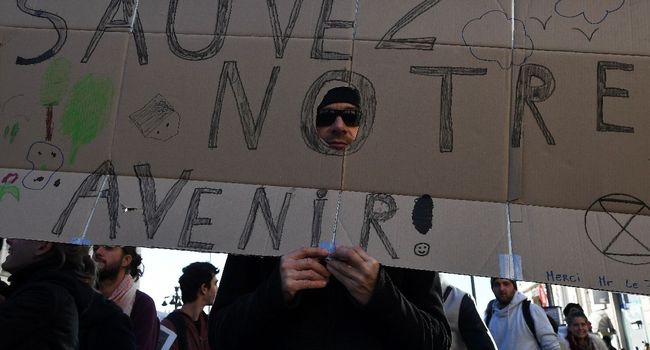
Cet été Nicolas Hulot le ministre de l’écologie, a démissionné du gouvernement en disant en direct à tous les français sur France inter : « … je ne veux plus me mentir… ». Comme quelqu’un qui y croyait avant et qui n’y croit plus maintenant. Parce que c’est vrai, tout est là pour qu’on y croie. Les chiffres et les cris d’alerte des scientifiques, les paroles des politiques, les textes signés lors des grandes conférences internationales, tout est là pour qu’on croie, tant le péril est évident, qu’on va faire quelque chose. Alors forcément un temps on y croit… Et puis la réalité s’impose et la prise de conscience vient. Le constat est terrible. « Ils » ne font rien. Il n’y a pas de « nous ». Ce serait stupide d’y croire plus longtemps. Des milliers d’enfants dans des centaines de villes dans le monde comme Greta Tunberg à Stockholm se mettent en grève pour le crier.

Gilets jaunes

Depuis la fin de l’année 2018 et maintenant début 2019 la France est secouée par une crise très grave qui se traduit par de grandes violences et de grandes inquiétudes. Les gilets jaunes en sont la marque. Cela peut sembler étrange mais quand on réfléchit un peu au chemin parcouru ces quarante dernières années, nous avons avec l’histoire de l’éducation à l’environnement, une clé de compréhension de ce désespoir et de cette rage qui monte.

Tous ensemble

Depuis au moins quarante ans en France les acteurs de l’éducation à l’environnement dans leur diversité s’organisent entre eux afin de faire avancer leur pratique éducative dans le corps social français. Dans leur cheminement ils ont créé de nombreuses associations qui sont autant de corps intermédiaires. Le Réseau Ecole et Nature, les GRAINE (Groupe Régional Animation Initiation Nature Environnement) et le Collectif Français pour l’Education à l’Environnement vers un Développement Durable (CFEEDD) sont les plus connus. Après des assises nationales qui ont réuni en 2000, 2009 et 2013 des milliers de personnes toutes parties prenantes, dont des ministres, des acteurs associatifs, des fonctionnaires des collectivités et de l’État, des acteurs syndicaux, des acteurs des entreprises et de l’université … des espaces de concertation pour l’EEDD ont été créés. Tout cela a été porté à bout de bras par les acteurs de la société civile et quelques fonctionnaires éclairé(e)s.

Petite pousse pleine d’espérance qui faute de soin meurt

Mais l’État, comme la plupart des collectivités n’attache pas d’importance à cette organisation des acteurs. A moins qu’il la redoute. On peut dire que les autorités publiques, qu’elles soient nationales ou régionales ou encore plus locales, le plus souvent, il y a heureusement des exceptions, se désintéressent de l’EEDD et la laisse volontiers livrée à elle-même. Il a fallu aux acteurs de la société civile française déployer une énergie considérable pour créer des organisations, faire des assises, organiser le forum international francophone Planet’ERE 2 en 2001 à l’UNESCO avec 1500 participants de 42 pays ! Créer une ONG internationale francophone, s’impliquer dans le World Environnmental Education Congress (WEEC)… Ils n’auront pas de soutien ou si peu, en tout cas jamais à la hauteur des enjeux.

Petite plante spontanée qui pousse pleine de vigueur et après quelques temps meurt sur son rond point privée d’eau quand elle a soif, d’ombre quand il faut de l’ombre, de soleil quand il faut de la lumière, sans soin dans l’indifférence de tous.

Sans corps intermédiaires rien ne va

Ce mouvement des gilets jaunes qui s’est déclenché en novembre 2018 en France et se poursuit avec une grande vigueur en janvier 2019 et qui secoue la France est le symptôme d’un dérèglement profond dans la société française. Nous sommes face à l’absence de corps intermédiaires entre l’autorité publique et le citoyen.

Or sans corps intermédiaires rien ne va. Les associations, les syndicats, les partis politiques… sont des corps intermédiaires, or pour de multiples raisons, ceux en place depuis des années sont affaiblis, ils disparaissent, des nouveaux n’arrivent pas à naitre. Ils sont considérés soit comme sans valeur ou comme contre pouvoir, éventuellement un jour dangereux, donc à éliminer.

Sans eux pourtant l’individu se retrouve sans aucun lien avec l’autorité publique, sans lien avec son prince, sauf, la loi qui s’impose à lui, l’impôt qui s’impose à lui, sauf des média publics dont il doute, sauf un pauvre bulletin de vote qui tous les ans semble peser moins lourd. Il n’a en réalité aucune prise, il ne sait comment agir pour que les choses aillent un peu mieux à son goût dans la société. Il ressent une impuissance incompatible avec le statut de citoyen qu’on lui promet par ailleurs.

« Citoyen » un statut historique et qui a du sens dans l’âme française. Oui, il passerait bien au jaune le gilet de l’éducateur à l’environnement en France. Il avait toutes les raisons de croire que « nous » allions faire quelque chose, l’éducateur à l’environnement. Oui « nous » société civile et autorités publiques locales, régionales et nationales main dans la main, et même les entreprises avec, oui le secteur marchand, dans le dialogue, dans la concertation, dans le respect mutuel, la coconstruction… et rien. On ne peut plus se mentir. Rien.

Quand « essentiel » ne veut rien dire

Ils ont dit les Etats dés 1972 à Stockholm (déjà !) dans le principe 19 : « Il est essentiel de dispenser un enseignement sur les questions d’environnement aux jeunes générations aussi bien qu’aux adultes… », Ils l’ont répété à Rio en 92 en disant dans le principe 10 : « La meilleure façon de traiter les questions d’environnement est d’assurer la participation de tous les citoyens concernés, au niveau qui convient. » et encore lors de toutes les conférences jusqu’à l’accord de Paris de la COP 21 qui le répète en 2015 dans son article 12… et rien… pas d’effet, pas d’action… « Essentiel » ne veut rien dire ! Une ministre même, Delphine Batho, devant 1200 personnes en 2013 à Lyon lors des troisièmes assises a dit que l’EEDD devait devenir une « grande cause nationale » et rien… Ils ont unilatéralement effacé le mot « environnement » et imposé « l’éducation au développement durable » qui venait du haut, concept qui a enlevé de la clarté, provoqué de la fragmentation et fait perdre des heures de palabres pour rien. Mot qu’aujourd’hui on n’entend plus nulle part. Ils ont créé un observatoire de l’éducation à l’environnement en 2004, comme préconisé dans le Plan National d’Action créé par la société civile en 2000, cet observatoire n’a jamais rien produit et n’existait plus en 2006. Pendant près de dix ans animée par la société civile, une réelle concertation autour de l’EEDD a existé entrainant jusqu’à six ministères, elle est morte aujourd’hui de n’avoir pas été soutenue alors que, ce qu’était cette concertation et ce qu’elle faisait, était dans la droite ligne des recommandations de l’UNESCO soutenu par la France. Mais qu’elle France ? Une France qui acquiesce quand des barons régionaux inondent les chasseurs de subventions et assèchent encore plus le tissu de ceux qui aux cotés de la jeunesse et de tous les citoyens s’engagent pour la faune, la flore, la fin du réchauffement… Ils portent atteinte au sens des mots.

La maison brûle.

Comme l’ancien ministre, les éducateurs à l’environnement français ne peuvent plus se mentir eux non plus. On les a trahis, c’est la réalité, on pourra les traiter de naïf, de candide, la réalité c’est qu’ils ont cru en l’existence d’un prince bienveillant et à l’écoute du peuple, or rien, jamais rien. Donc forcement la colère monte, la rage vient, on se rend compte qu’on s’est bien fait avoir, on nous a promenés en bateau. L’UNESCO dit que les Etats devraient avoir des plans d’action pour l’EEDD, la France n’en a pas et elle s’en fout, mieux, cela l’arrange. Comment ne pas finir par le croire que ça l’arrange. Comme l’arrange le fait de ne plus donner aucun moyen aux associations qui sont vues plus comme des contre pouvoirs que comme des forces de propositions constructives. Alors forcément la situation se tend. Mais il y a des français qui ne se contentent pas de ça et pas seulement dans l’éducation à l’environnement. Ils sont constructifs, ils connaissent leur affaire, ils sont sincères et rigoureux, on se moque d’eux, ils agiront quand même autrement, localement sans doute, ils ne peuvent eux regarder ailleurs quand  « la maison brûle »

Insupportable pour celui qui aime son pays.

Maintenant c’est nous tous qui ne pouvons plus nous mentir. Voilà maintenant une immense colère qui s’exprime, voilà qu’on dit que pour nous « essentiel » ça a du sens, voilà qu’on dit que « participation de tous les citoyens concernés » ça a du sens, voilà qu’on dit qu’on ne veut plus entendre parler de « double discours » mais qu’on dise clairement « mensonge » et « tromperie ». C’est pour ça aussi tous ces gilets jaunes, c’est pour ça aussi ces 2 millions de signatures pour soutenir une action en justice pour le climat «  l’affaire du siècle » contre l’Etat français. Il est urgent de réactiver l’éducation à la citoyenneté, l’écart entre le souverain et le citoyen ne peut plus devenir plus grand, il faut agir, cette situation est devenue insupportable pour celui qui aime son pays.

Roland GERARD

Final Report of the World EE Day 2018, see you in 2019

Last days of 2018, this is the time to look back at what has been done, as the first edition of the World Environmental Education Day, held from 14 to 26 October. But it is also the moment to look ahead, and start thinking about the next edition, in October 2019. It is already available the logo of the World EE Day 2019. Schools, parks, environmental education centers, public institutions, associations, museums are invited to join the World Environmental Education Day organising special events to highlight the importance of environemtal educational actions all over the world.

The World EE Day wants to focus on the complexity of the challenges in a world where everything is ever more interconnected.

Ask us the logo and share with us your contents from the World EE Day 2018. Send us reports, photos, videos… and we will share it on the Weec Network.

Several associations, universities, parks and institutions sent us information about their events in 2018. We already presented a selection of interesting case histories in this article.

Now we propose a new group of exemples.
In Izmir, Turkey, the Permaculture Park for young children presents its activities: «Our first aim is to create ‘Permaculture Park’ for young children who are kindergarden students, elementary school students, high school students and disabled students in Izmir, will learn system of agricultural and social design principals and they will practice by gardening, by growing plants in our Permaculture Park. The other aim is to create our own organic compost which includes recycled material including decayed vegetables, fruit, grass clippings and organic waste in Izmir (in Kültürpark, Izmir Fair area). Therefore, we will reduce the rate of trash which goes into landfill area. Next step is to make mulch composting. Finally, we will get on our own organic soil. Then we will organize some workshop activities and invite some people who are interested in permaculture activities. To sum up, we want to give them an opportunity to emphasize the goal of sustainable agriculture and to be environmentally conscious. And every young child or teenager will ‘touch the soil’».

In Iran the UNESCO Chair on Environmental Education presented the ‎“Coordination meeting of specialized workgroups of UNESCO Chair on ‎Environmental Education in Islamic Republic of Iran for establishment of national online environmental education network”‎. UNESCO Chair on Environmental Education in Islamic Republic of Iran seeks to pursue the ‎following objectives through research, educational and cultural approach:‎
– Enhancement of national and international status of environmental education through ‎Communicating between academics, local and civil communities, decision-makers and ‎researchers to create innovative ways of education and sharing information and ‎knowledge regarding Environmental Education, ‎
– Development and promotion of environmental culture
– Enhancement of the public participation in environment protection ‎
– Promotion of environmental literacy in form awareness raising, change of attitude and ‎environmental behaviors of citizens.
– Promotion of Islamic-Iranian approach in the field of environmental education ‎

In October 2018, UNESCO Chair on Environmental Education in Islamic Republic of Iran held ‎several meetings regarding running national online environmental education network with ‎participation of different educational workgroups of the chair such as waste management, ‎climate change, HSEE, carbon management, green business, participatory environmental ‎protection, green management, religions and environmental education, women and ‎environmental education, environmental education through toys and games, energy and ‎environmental education, environmental pollutions, water management, citizenship and ‎environmental education, Startup and innovative ideas regarding environmental education and ‎ecotourism. In these meetings determined all mentioned workgroups should:‎

‎-‎ Identify various audiences, needs and expectations of learners, developing learning ‎goals and objectives, identifying instructional strategies, creating educational contents, ‎implementing and evaluating the impact of their training and educational activities.‎
‎-‎Collaboration with national and international institutions, specialized research and ‎development organizations, NGOs and environmental researchers.‎
‎-‎Publication of scientific articles, books, newsletters and providing electronic content. ‎‎-‎Presentation of educational and research projects based on demand and supply in ‎various environmental topics. ‎
‎-‎Holding lectures, seminars and conferences on environmental education.‎
‎-‎Providing encyclopedia in environmental education
‎-‎Establishment of exhibitions, festivals and environmental events related to the activities ‎of national environmental education network. ‎

The UNESCO Chair on Environmental Education in Iran also held a Specialized Meeting on the role of social networking to improve environmental education ‎regarding green small business, ‎a meeting with ‎the participation and collaboration of members of Amirabad neighborhood sub-council entitled ‎‎“the role of social networking to improve environmental education regarding green small ‎business” in October 2018.‎

At first, the benefits of eco-friendly local businesses were mentioned‏.‏‎ A green small business is ‎one which takes measures to provide family-supporting profits and benefits, also reduce its ‎impact on the environment and preserves or enhances environmental quality. Green businesses ‎may be committed to environmental and social initiatives, such as the use of renewable energy ‎sources and energy-efficiency measures; the reduction of greenhouse gases emissions and other ‎environmental pollutants; the conservation of natural resources and energy; reduction of ‎material usage in order to enhance recyclability and reusability through green marketing such ‎as implementing a green supply chain, green products design, packaging, pricing and ‎promotion are benefits to society and the environment.‎
Local homogeneous groups in different areas of green small business were formed in the next ‎step. Their educational needs recognized as follows:‎
‎-‎ Family typology: Psychology topics, needs, etc.‎
‎-‎ Individual resilience: flexibility, compatibility, collaboration, understanding risk, ‎problem solving, etc. ‎
‎-‎ Community resilience: social connectedness for resource exchange, cohesion, response, ‎and recovery, social and economic well-being of the community, effective risk ‎communication, integration and involvement with different entities, etc. ‎
‎-‎ Green marketing: such as green product, green price, eco-labels that has economic ‎impact on local economy with emphasis on low-energy solutions, sustainable products, ‎non-toxic ingredients, low waste (or emissions), chemical free, recycled materials.‎
‎-‎ Specialized training in various fields: organic food, eco-friendly toy seller, ‎organic gift shop, eco-friendly beauty and health productions, financially and ‎ecologically sustainable alternative for waste sorting and reusing, green store, etc. ‎

Finally, UNESCO Chair on Environmental Education in Islamic Republic of Iran ‎announced its readiness to hold a series of training sessions on the above subjects.‎

In Portugal the Instituto Nacional de Investigação Agrária e Veterinária, I. P. (INIAV), in cooperation with an Oeiras School organized a visit to the Pecan tree collection – Carya illinoinensis (Wangenh) K. Koch, located at INIAV Campus in Oeiras (Portugal). During the visit 18 pupils of 8th level, 2 teachers and 1 researcher participated in outdoor environmental activities that highlighted some aspects of this plant bio-geography and its value for agriculture as a nut tree.

In Spain the Faculty of Educational Sciences of the University of A Coruña (Galicia, Spain) was carrying out during this week and on the occasion of the World Day of Environmental Education activities of cleaning and categorization of waste, both inside the Faculty and in the exterior, with the participation of students and teachers.

The Manifesto World Day of Environmental Education was also posted on the Faculty’s website and on the Instagram of the environment, insisting on the need to continue throughout the course developing activities that allow action to make the Faculty and the campus more sustainable.

Mio-Ecsde reconfirmed the Weec member Bonelli in its Board

The 23rd AGM – Annual General Meeting of MIO- ECSDE– was successfully held in Athens on 23rd October side by side with the closing of ACT4Litter Conference and SWIM-H2020 SM training on Marine Litter.

Before the AGM, a session about NGO’s accountability was attended by the representatives of the many organizations (127) from all the countries of both shores of Mediterranean in MIO network.

The AGM showed once again the strength of MIO in running relevant Projects, Actions and Events related to Sustainable Development, involving different partnership, and in particular, associations of the network. Very important is the role MIO played in diplomacy of civil society in Mediterranean, the accountability and the resilience, also when for several years the funds were reduced.

A new important entry in MIO Board is the representative of associations from Syria. The majority of members of the board were reconfirmed as well as Patrizia Bonelli from Institute for Environment and Education caring the WEEC Secretariat.

Next congress in a year. Save money now with the early bird

Bangkok Thailand city skyline at central business district of Sathorn street. Drone aerial view. Public park Lumpini in the front.

Until December 31st it is possible to register at 10th Weec, the World Environmental Education Congress, by taking advantage of the special early bird fee.  Do not miss this opportunity to be part of the world’s largest environmental education network and to meet other professionals in the same sector.

Now you can register for the Congress and propose your abstracts.

Stay in touch and save the date! The next Weec Congress will be in Bangkok (Thailand) exactly in a year: 3-7 Novembre 2019.