The journal “education relative à l’environnement” celebrates 25 years at UQAM

The education relative à l’environnement journal marks a quarter-century of dedication to research and practices in the field of environmental education. Founded in 1998 at the university of Quebec in Montreal (UQAM), it remains the only scholarly journal in the french language dedicated to this field of study.

To commemorate this significant milestone, a special event is scheduled for Tuesday, December 12, from 3:00 pm to 5:00 pm at the Woodwork Room of UQAM (J-2805). The celebration will kick off with a special presentation titled “The twenty-five years of the environmental education journal: a research heritage,” presented by Lucie Sauvé and Étienne van Steenberghe, prominent figures in the publication.

Following the presentation, a roundtable discussion on “The future of research journals: current challenges and issues at the heart of the francophonie” will take place. Participants in this discussion include madame Louise Poissant (scientific director, fonds de recherche du Québec – society and culture), Madame Sophie Montreuil (director of Acfas), mr. Vincent Larivière (university of Montreal), and mr. Yves Gingras (university of Quebec in Montreal). madame Louise Vandelac (Institute of environmental science, UQAM) will moderate the exchanges.

After the guest presentations, the audience is invited to engage in an interactive discussion about the current challenges facing francophone scholarly journals. Among the contributors to this discussion is madame Katel Colin, director of Programs and partnerships at the fonds de recherche du Québec.

The celebration will conclude with a friendly gathering over a drink, providing an ideal opportunity to network and celebrate this outstanding achievement together.

Organizers encourage potential attendees to confirm their presence by sending an email to revue.ere@uqam.ca. For any logistical questions, feel free to contact them.

Don’t miss this significant event that highlights the rich heritage of the “education relative à l’environnement” journal and explores the future outlook of research journals in the francophone world.

The Earth Prize returns for its third edition, calling for global participation in environmental sustainability

The Earth Prize is back for its third edition! Over the past two years, this initiative has reached more than 1,500 schools in 144 countries and territories, showcasing a global commitment to innovation and environmental sustainability. This year, the Earth Prize aims to grow even further and, as a champion of change, invites those who share the same ideals to participate and join in the important task of spreading this initiative through their networks.

The Earth Prize is an annual global environmental sustainability competition worth $200,000, open to students aged between 13 and 19. The competition recognizes and rewards teams whose projects demonstrate the utmost potential to address environmental issues.

As part of the competition, participants have access to mentoring from students of top universities and exclusive educational materials covering key concepts of environmental sustainability, featuring young change-makers from around the world.

The winning team of the competition will receive an outstanding cash prize of $100,000, to be divided among the team members and their school. The second-place schools, totaling three, will also be awarded $25,000 each to further support sustainability projects in their respective communities. Additionally, a teacher will be named Educator of the Year for the Earth Prize 2024 and will be rewarded with a cash prize of $10,000.

Registration for the Earth Prize 2024 is free and will remain open until November 30th. Students will have until the end of January 2024 to work on their projects and present innovative ideas.

This is a call to all passionate students and teachers of sustainability: it’s time to make your voice heard and contribute to a greener and healthier future for all of us.

Interested students and teachers can register on the website www.theearthprize.org.

Together, we can create a sustainable future for generations to come. Join us and be part of the change.

A step towards a greener future: the 7th World Environmental Education Day

The seventh World Environmental Education Day, which will be celebrated on 14 October, reflects the crucial importance of education for a sustainable future.

Read more

Magroves, dunes or delaika? 12 field trips are waiting for you at 12WEEC

Twelve field trips are planned during the 12th WEEC, connecting theory with practice.  The morning, afternoon, or full day sessions provide participants with the opportunity to explore many of the landscapes and environmental education landmarks in and around Abu Dhabi. Transport is included.

Read more

12WEEC: example of sustainability

The 12WEEC 2024 wants to set an example of sustainable congress and of how sustainable practices can be employed in big and important events.

Read more

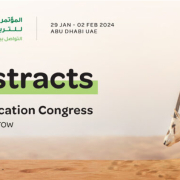
12WEEC Call for Abstracts

The WEEC Permanent Secretariat and the Local Organizing Committee welcome the submission of original contributions to be presented at the 12th World Environmental Education Congress (WEEC).

The call for abstract submission is open to present works, researches and activities in the field of environmental education.


Abstracts may only be submitted via the online system here

You can submit Abstracts in four languages: English, Arab, French and Spanish. Participation in the congress can be declined in various formats: oral presentation, e-poster, round table, etc. In this way we want to give everyone the opportunity to express themselves in the way they deem most appropriate to present their initiatives.
The WEEC congress is attended by teachers, researchers, associations, students, activists and all kinds of scholars and experts in the field of environmental education.

Submit your proposal today and don’t miss the chance to meet other experts from all over the world.
12WEEC awaits you in Abu Dhabi!

WEEC Network is granted consultative status at the UN

Have you heard the incredible news?! WEEC Network has officially been granted ECOSOC (Economic and Social Council) Consultative Status with the United Nations!


From now on WEEC Network has the special consultative status with the Economic and Social Council at the UN. The consultative status is the core of a formal relationship between the UN and social organizations, which is also a key approach for social organizations to take initiatives and to be engaged in activities of the UN and international communities.

As a member of the WEEC Network, you can also take part in the initiatives: keep reading to find out more.

Become a representative at ECOSOC!

As NGO with ECOSOC status, WEEC Network can choose delegates to be represented by in the various occasions. If you are interested, apply to be a delegate, representing one of the most worldwide organizations in environmental education.

Contact us on secretariat@weecnetwork.org

The Economic and Social Council of the UN (ECOSOC)

Article 71 of the United Nations Charter, which established the Economic and Social Council (ECOSOC), states the following:

The Economic and Social Council may make suit able arrangements for consultation with non-governmental organizations which are concerned with matters within its competence. Such arrangements may be made with international organizations and, where appropriate, with national organizations after consultation with the Member of the United Nations concerned.

— United Nations Charter, Chapter X, Article 71

One of the six principal organs of the UN, the Economic and Social Council (ECOSOC) is the central UN forum for international economic and social issues. The Council coordinates the economic and social work of the UN system, which engages 70 percent of the system’s human and financial resources. All of the UN specialized agencies (e.g., the World Health Organization and the Food and Agriculture Organization), as well as all of the UN programs and funds (e.g., UNICEF and the World Food Program), report to ECOSOC.

The ECOSOC Council has eight functional Commissions:

  1. Commission on the Status of Women
  2. Commission for Social Development
  3. Commission on Population and Development
  4. Commission on Crime Prevention and Criminal Justice
  5. Commission on Narcotic Drugs
  6. Commission con Science and Technology for Development
  7. Statical Commission
  8. United Nations Forum on Forests

ECOSOC Regional Commissions:

➤ Economic Commission for Africa (ECA)

➤ Economic and Social Commission for Asia and the Pacific (ESCAP)

➤ Economic Commission for Europe (ECE)

➤ Economic Commission for Latin America and the Caribbean (ECLAC)

➤ Economic and Social Commission for Western Asia (ESCWA)

Other bodies:

  • Permanent Forum on Indigenous Issues
  • Sessional and standing committees
  • Expert, ad hoc, and related bodies


What we gained as NGO in consultative status

The ECOSOC Resolution 1996/31 specifies the non-governmental organizations (NGOs) in Consultative Status are entitled to:

  • Attend international conferences and events.
  • Make written and oral statements at these events.
  • Organize side events.
  • Enter United Nations premises.
  • Have opportunities to network and lobby.

NGOs that are accredited with ECOSOC can participate in a number of events, including, but not limited to, the sessions/meetings of ECOSOC, its functional commissions and its other subsidiary bodies. At these events, NGO may:

  • Attend official meetings
  • Submit written statements prior to sessions
  • Make oral statements
  • Meet official government delegations and other NGO representatives
  • Organize and attend parallel events that take place during the session; and
  • Participate in debates, interactive dialogues, panel discussions and informal meetings.

Click Here to learn more about what ECOSOC is

Click Here to learn about ECOSOC 2021 goals:
https://www.un.org/ecosoc/en/events/2021/ecosoc-high-level-segment-including-three-day-ministerial-segment-hlpf-convened-under

Nature in Mind, international conference in Rome

Nature in Mind, an international conference promoted by the Italian Carabinieri brought together voices from all over the world and from every sector. From Pope Francis to the President of the Italian Republic Sergio Mattarella, high-level interventions and networking. Wide presence of the WEEC network

Nature in Mind: the value of biodiversity

“By Leaves We Live”
“This is a green world, with animals comparatively few and small, and all dependent on
the leaves. By leaves we live. Some people have strange ideas that they live by money.
They think energy is generated by the circulation of coins. Whereas the world is mainly a
vast leaf colony, growing on and forming a leafy soil, not a mere mineral mass: and we
live not by the jingling of our coins, but by the fullness of our harvests.”
(Sir Patrick Geddes, 1854-1932)

On the occasion of the 30th anniversary of the Convention for Biological Diversity, signed on May 22 nd, 1992 in Rio de Janeiro,  Italian environmental police force, in collaboration with WEEC Network,  wants to celebrate, with a 2-day International Conference – Nature in mind – the value of biodiversity in the name of a greener and more sustainable future. 

International Day for Biological Diversity is the occasion to reflect on our responsibilities towards the environment and to consider the possibility of creating a new culture of nature.
The scientific comprehension of natural processes and the new awareness about the importance of the compliance of our behaviours with the law are two equally important and strictly integrated elements which aim at the conservation of nature.

Environmental education thus becomes education to environmental “legality”: a set of knowledge that becomes “culture”, environmental culture, that has to represent the fundamental part of the most deeply rooted education of citizenship, necessary to build a better future for the next generations.

The Conference Nature in Mind, which will be held in a mixed form (in person and remotely), will address various topics thanks to the interventions of distinguished Italian and international speakers
following the ideal path of seven Sessions:

  1. Opening Session
  2. One Health – Nature and Well-being
  3. At the Nature School
  4. Education and Nature
  5. School, city, territory
  6. Education, infosphere, mass culture and Nature
  7. Voices from the world

For the registration, have a look here.


11th WEEC: Hybrid, young and integrated

The 11th edition of the WEEC world environmental education congress has come to an end.
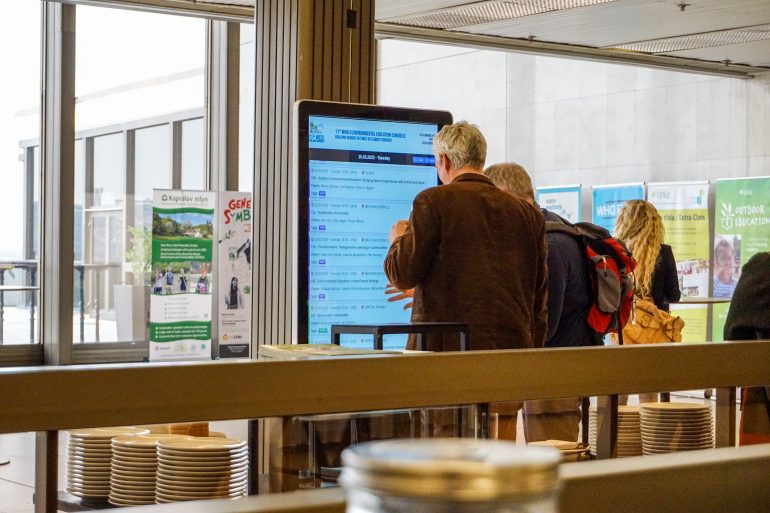
A special edition, held in Prague (Czech Republic) from 14 to 18 March 2022, characterized during its organization, by two years of pandemic. This has led to a change in the travel and training habits of all environmental educators, teachers and researchers, associations and institutions.

The WEEC adapted to the new context proposing for the first time a hybrid edition. It was a bet, which we can say we have won: about a third of the delegates participated online, making the participation possible for those who couldn’t or didn’t move (for health reasons, uncertainty linked to travel or for the costs).
The hybrid congress – which will probably remain in the next editions – will open the door to many new delegates, becoming more and more inclusive and welcoming. Environmental education is not for “a select few”, it must involve associations, parks, young people… and the 11th congress in Prague did it. «The future belongs to hybrid congresses – said Prof. Jan Cincera, co-chair of the congress and LOC organiser – I was quite sceptical about this, however in reality it worked very well. There may not be a covid in the next few years, but we will be certainly dealing with the carbon footprint. The key is to professionally provide and set up the interactive platform to suit the needs of the event. We were the first hybrid WEEC in history, but probably not the last».

The youth congress was a great success, it gathered over 120 participants from 22 countries and allowed children to compare themselves with each other and also with the adult congress. «The linking the “big” congress with the youth congress worked very well – added Cincera – In the future, I could imagine a higher level of integration between the two events. The YEEC organizers did a great job!»

An online platform with recordings of all content is built, extending the congress beyond its runtime, a participatory way, for creating a wider community. «The linking of the “academic” and “field-based, practice-oriented” parts also worked very well. Again, I could imagine a higher level of integration. Both “theorists” and “practitioners” have their own unique perspectives and it is important that they meet from time to time».

The 11WEEC is a new stage of the path started in 2003, with inspiring debates, conferences, and presentations. Every congress is a milestone for environmental education worldwide «but the congresses should above all be an opportunity of coagulation for a flow of energies, proposals, regenerative learning experiences, and best practices – explained Prof Salomone, Secretary General of the WEEC Network – It is crucial to fill the time between a congress and the next one, not only as individuals or education bodies but as a worldwide network.
As permanent secretariat, our human and technical resources are limited but are at the disposal of the worldwide community of researchers, teachers, and educators.
So, many positions are open at the network: positions for volunteers, for goodwill people. We must enhance initiatives and prepare at best the next congress thanks to the help of a large community».