From Bhutan with love, a poem for doctors from all over the world

I follow the news with a heavy heart. I see images of health workers, care-givers, and people in the front-lines and pay my tributes to their courage and sacrifices.
Here is a little tribute to the medical personnel and the brave-hearts around the world.

TS Powdyel

Thank you forever…

Did you ever think…

This would come?

No, no one ever did.

Hippocrates was no diviner

No, not Florence Nightingale either…

This is all you were told:

Life is sacred: Life is precious

Preserve it… honour it… celebrate it…

This is what you hold in your hand today.

But the scourge is all over:

It is here, there

It has exploded everywhere.

And there you are…

Right in the eye of the storm!

Today, you are not a doctor…

No, nor a nurse…

You’re life unto life

Yes, precious life

Unto precious life

Your vital role dissolves with its precious soul today…

When you go in today

Wrapped in your multi-layered PPE

Tight from head to toe

A single thought reigns supreme in your mind:

These lives are in my hand

No matter what lies beyond…

Thank you for the precious lives you save everyday

Putting selfless service before your own dear self


Thank you for the hunger and the thirst you put aside

And the mask-scars and the heart-aches that will abide

Even as the pressing call of nature you put on hold…

Thank you forever… God bless you evermore…

We see you take your fight to the end

Till you know you cannot bear it anymore…

We see your drained-out colleague drop on the floor

And cry with you for the battles forever lost.

Heart-broken today for the lives that the virus cost…

Hold on, Doctor… heal on, Sister…

Forge on every front-line hero…

And the brave-hearts behind you…

This battle must be fought and won

And Life has to go on…


Thank you for the world…

And, thank you for Life…

The sun will rise again…

Thank you forever…

God bless you evermore…

Covid-19 crisis and the Life-Principle of Learning

As a teacher, I believe that the first principle of education is the affirmation and celebration of life. Life is precious and every bit worth preserving and honouring. Little wonder, here is the emphatic command of the King Himself on behalf of Life, Milu Rinpoche: ‘Not a single life should be lost to coronavirus’.

The whole world is coming around!

All our teaching and learning will go only so far and no further if this basic principle of education is missing. As unusual as the current situation is, it may provide a welcome opportunity to re-discover the fundamental goal of education – that is Sherig – meaning ‘deep learning’. We will then be able to locate the core purpose of education as it ought to be.

The scourge of the coronavirus has forced education systems around the world to find alternative ways of teaching the students and engaging them meaningfully during these uncertain periods of home-stay while at the same time hoping to ‘cover the sacrosanct syllabus’!

The Ministry of Education has formulated versatile plans and our fellow-teachers are making valiant efforts to marshal technology to reach out to their students. All this is as it ought to be in the given ongoing situation. And, the results, I would like to believe, must match the inputs.

In the unlikely event that current public security interventions warrant extension, an additional option could require the students to explore diverse and original formats to represent their previous year’s or semester’s learning and submit credible samples of work for assessment at the end of the designated period.

Knowledge is power but how knowledge is internalised and represented is success.

This alternative would provide greater diversity in learning and in representing what is learnt, free learning from undue dependence on expensive gadgets especially in disadvantaged areas, relieve teachers to focus on more purposeful support and monitoring, and build greater integrity in learning.

Above all, such alternatives would emphasise depth over breadth, insights over information, quality over quantity, education over qualification, among other advantages.

The intent of Every Village a School: Every Home a Classroom, and Educating for Gross National Happiness initiatives was to pave the way for learning blessed with integrity.

For now though, precious Life is absolute Priority Number 1.

We are all in it together… in our efforts, in prayers, in our hope…

Thakur S Powdyel
Former Minister of Education in Bhutan, Starter of Green School in Bhutan

Coronavirus and EE. Situation, proposals, perspectives: the debate is open

Environmental Education is in quarantine too.
What are we learning from this crisis? What is the impact of the Covid-19 emergency on several activities? And how can environmental education help address this and other crises? What are the best practices for continuing to do environmental education using the Internet and e-learning? Is it necessary for schools and universities to be more focused on social and ecological sustainability? What are the prospects for the future? What are we going to do when the emergency is over, and the fear has passed? Will everything come back as before? What will have changed for the better or for the worse? Is there a risk in the future of a further reduction in the funds available for environmental education and the Green New Deal?

The WEEC Network opens the debate on these and other questions, to try to better understand the situation of environmental education in all countries in the days of Coronavirus.

Send us news, comments, stories, proposals. We will publish them on the WEEC network website.

Coronavirus Covid-19 Crisis: EE is a fundamental tool to build resilience

The world environmental education network (WEEC) is close to everyone in these long months who are experiencing painful moments and a situation of social isolation all over the world.

For teachers at schools and universities, the pandemic means that they have to give up their relationship with millions of young students. Online courses are a remedy that cannot replace the educational relationship, and there is a digital divide that increases the disadvantage of people living in socio-economic conditions, thus creating even greater educational poverty.

Measures to tackle the infection also deprive young people and adults of the opportunity to go outdoors, go to natural parks, take advantage of museums, theatres, libraries and other educational opportunities.

For environmental education, all this is a heavy brake: the Coronavirus crisis paralyses all environmental education activities.

At the same time, today the environmental education also has a more significant task. The origin of the pandemic and its impacts, which mainly affect people weakened by a polluted environment and unhealthy lifestyles, remind everyone of the importance of restoring the balance of the planet upset by global warming and the destruction of Nature.

Environmental education has a pivotal role and is a crucial tool to build resilience in the face of disasters and catastrophes, natural or made by humans.

WEEC 2023: the Call for Bids is open

Who will be the next lucky one to win the chance to host the 12 WEEC congress?
The Call for Bids to submit your application is officially open, send us an Expression of Interest (EOI) before 31st July 2020.

Please ask for the official application form to: secretariat@weecnetwork.org

Deadline to submit the application: 31 July 2020

The Permanent Secretariat would like to remind you that only the public or private non-profit organizations (universities, foundations, associations, …) can apply the candidacy of their own country as the seat of the 12th WEEC in 2023.

The winner will be assigned indicatively by 31st December 2020.

The candidatures will be assessed mostly according to the following criteria:

1. Having preferably close relationships with the WEEC congresses and the Network in the past, and, in any case, joining the Network and endorsing its mission, vision and strategy.
2. Guaranteeing the quality of the contents and the cultural project of the Congress, in continuity and total agreement with the heritage and the spirit of previous Congresses and in close cooperation with the Permanent Secretariat that will supervise and co-chair the congress.
3. Designing the final call for the congress and the programme according to the guidelines and the advice of the Secretariat and the International Socio-Scientific Committee established by the Secretariat.
4. Demonstrating they have relevant experience in the field of environmental education.
5. Demonstrating they have adequate experience in organizing events at local, national, regional, and international levels.
6. Demonstrating they have adequate congress facilities.
7. Demonstrating they are skilled in creating networks at different levels and getting various institutions and organizations (national authorities, local institutions, Higher, Secondary and Primary education institutions, parks, museums, NGOs, mass media, etc.) to be involved in the organization and participation to the Congress.
8. Demonstrating their ability to ensure broad national and international participation at the Congress.
9. Engaging to strengthen the WEEC International Network, inter alia by allocating a budget for the network’s activities.
10. Demonstrating they can mobilize the necessary resources at the local and national level (and possibly at the regional and international level as well) to guarantee the financial sustainability of the Congress.
11. Demonstrating their commitment to contain the costs of participation to the Congress and facilitate the participation of people from disadvantaged countries or categories (e.g. young people and students), by reducing the costs of participation and overnight stays as much as possible.
12. Engaging to offer sponsorships to an adequate number of delegates from developing countries (if the bidder is in a developed country).
13. Guaranteeing the cultural diversity and facilitating participation, also thanks to the use of several languages as English, French and Spanish at least both for the web site and during the Congress.
14. Guaranteeing the ecological consistency of the Congress by taking every measure to minimize the ecological/carbon footprint of the event and assuring its socio and eco-sustainability both as venues and as other aspects (i.e. accommodation, social program outside, and so on).
15. Accepting the time schedule proposed by the Permanent Secretariat.

The 12th WEEC in 2023 will be assigned indicatively by 31st December 2020.

Official announce of the 12th WEEC: at 11th WEEC 2021 in Prague (Czech Republic), during the closing ceremony.

E-mail: secretariat@weecnetwork.org

Call for submissions: selected papers form the 10WEEC

Princess Maha Chakri Sirindhorn, 10WEEC Opening Ceremony

The Tenth World Environmental Education Congress (WEEC) was recently held in Bangkok, Thailand, and was organized under the title theme of Local and Global Connectivity. The Local Organizing Committee for the congress was the Faculty of Environment, Kasetsart University (Thailand) in cooperation with the WEEC Permanent Secretariat (Italy). We would like to thank you for your participation in this important international meeting.

The success of the congress has been well documented with more than 1000 attendees and several UN agencies participating. Attendees hailed from many over 70 countries and presented papers across sub-themes embracing a diversity of approaches in the conceptualization and implementation of EE worldwide. Many attendees remarked that the cultural aspects of the congress were especially timely and that the practice of inviting educators (both formal and informal) to dialogue with policy makers and academics is important.

Papers selected for inclusion in this peer reviewed volume will focus on the multidisciplinarity of EE. In addition, submissions will have been previously accepted for presentation at the Bangkok meeting and address one or more of the interconnected congress sub-themes. Submissions can be directed towards an educator or researcher audience (or both) but should involve original research or curriculum development work. All submissions for the volume must be written in English.

SUBMISSION PROCESS

The first stage of the submission process will be to indicate your willingness to have your abstract considered for inclusion in this edited and peer reviewed volume. To be considered, please send a brief email to the lead editor (Dr. David Zandvliet, dbz@sfu.ca and cc’d to the Conference Chair: Prof Surat Bualert Surat.b@ku.ac.th) and include your original abstract submission ID from the congress, a three hundred word (max) edited abstract, and a brief listing of the relevant congress subthemes. Please also include a full list of authors and their relevant institutional affiliations in this communication.
In the second stage of the process the editorial team will review the abstracts submitted, and invite full submissions from selected author teams for the next stage of peer review. Unfortunately, not all abstracts submitted will be invited to present their work in this volume, however, those not accepted could alternatively be considered for publication in other venues. Abstracts selected for an invitation to the book project will receive an email letter from the editorial team. This letter this will include further information about page limits, submission format, etc. so that the full submissions can be edited and submitted in a timely manner for the next stage of the process.

In the final stage of the process, the editorial team will provide detailed feedback to author teams regarding their full paper submission in preparation for final copy editing of the publication to the publisher. After a final external peer review of the entire volume, the final book will then be published as part of the Culture and Environment Series with DIO Press (New York). Finally, as we hope to have the entire submission and review process conducted within the next 6-8 months, it is important that authors respect the timelines for transition of their submitted work to the final published volume. Appended is a detailed timeline with key dates that proposals will need to meet for inclusion in the publication.

SUBMISSION TIMELINE

Email your ID, abstract and proposal summary to the editor. (dbz@sfu.ca) Mar. 1st, 2020
Invited author teams are notified and given submission requirements. Mar. 15th, 2020
Full chapter drafts are sent to the editor in preparation for peer review. May. 1st, 2020
Editorial feedback on full proposals will be returned to author teams. June. 15th , 2020
Final copy-edited chapter drafts will be submitted to the editor for compiling. Sept. 15th, 2020
Full peer reviewed volume will be submitted to the Publisher. Oct. 30th, 2020

World EE Day, Report 2019

The second edition of the World Environmental Education Day took place from 14 to 26 October 2019,
The Weec Network invited all the stakeholders of the environmental education to join the World Environmental Education Day organising special events to highlight the importance of environmental educational actions all over the world.

The aim of EE Day is to focus on the complexity of the challenges in a world where everything is ever more interconnected. Several associations, environmental education centres, schools and institutions sent us information about their events in 2019. Here we present a selection of interesting case histories.

Haiti
Les Cayes, Botanical Garden
The event is organized from 27th October to 2nd November 2019 by Les Cayes Botanical Garden. The goal is to promote environmental education across different sector in the country. The theme chosen is “facing to climate change, environmental education is necessary. Which strategies to adopt”. Different activities are preview:
a. October 27: Talk-show on the history of Environmental Education around the world and in Haiti. Opening of the activities of the week.
b. October 28th: presentation of two training sessions on Environmental Education in 2 schools in the area.
c. October 29th, 2.00-5.00pm and October 30th to 31st: Training on Botanic systematic, identification native and endemic plants that could be used in reforestation, agroforestry, revegetation and restoration of ecosystems. After this training participants will have the ability to identify native and endemic plants to be conserved, exotic plants to avoid and invasive plants to eliminate. A certificate will be issued after this training.
d. November 1st: EDU-Tours to allow participants to discover the strategies developed by a community in environmental education.
e. November 2nd: Exposition and others activities based on Environmental Education.

Italy
Metropolitan City of Florence, environmental educational laboratory
Trainging meetings for professors and educators. The 2019 training proposal was divided into three meetings scheduled for 27 May, 12 September and 26 October 2019. The meetings are organized by the Environmental Educational Laboratory of the Medici Park of Pratolino with the collaboration of the ‘Italian Sustainable Development Association, the University of Florence and the Unesco Club of Florence. The May meeting was included in the 2019 Sustainable Development Festival and the October meeting is included in the World Environmental Education Week (October 14-26)

Saturday 26 October, program:
– Irene L’Abate and Michela Mayer (LDA and IASS) summary of activities May / September and aims of EAS
– Prof. Giovanna del Gobbo (UNIFI) Educational methods consistent with EAS
– M. Pettenati and I. De Maurissens (researchers) The job for EAS of INDIRE how, why, for whom to document?
– Rossano Ercolini (elementary school teacher, president of the Zero Waste Research Center and the Zero Waste Europe Association) Presentation of the book Zero waste the ten steps to the ecological revolution of the Nobel Award for environment.
– Shared lunch (everyone brings something to share and plate, glass and cutlery strictly Plastic free)
– Michela Mayer and Francesca Farioli (IASS) group work on action research and educational skills
– Irene L’Abate, teachers and operators, document the activities: Sustainable school communities
– Good educational practices illustrated by managers, teachers, educators
– confrontation on the topic Let’s get on the net? hypothesis for the creation of the ECOS network

Italy
ITET Fontana, school
On the occasion of the Fair Do the right thing in Trento (Italy), as an EMAS certified school we participate by presenting the path of environmental sustainability that we have been pursuing for more than ten years and which plans to create a network of students and environmental teachers who promote good daily practices. We also investigate all school consumptions, calculate their environmental impact, design solutions to reduce them effectively. We have also developed an environmental calculator for educational visits and the related compensation with the adoption of a forest in Ecuador. We are also EMAS certified and our environmental declaration has won the first national award organized by ISPRA in 2017.
Too bad that, of all this, nobody notices!

Mali
AGIR, Ngo
The environment house of Bamako
Projection of small scenarios by the NGO AGIR from a notebook with messages. The themes treated for raising the awareness of school children and the public are:  the water,  water-related diseases,  waste, animals, hygiene, trees, pollution, big family, role of the town hall, road traffic, the sport, each sequence will be debated.

Nigeria
Smile-Face Global Peace Initiative
To organize Environmental week program in schools with expert/ environmentalist to talk on protection of our land and the need to engage in activities that promote healthy life and sustainable development.
As parts of the program line up, tree planting in schools to replace the ones uprooted for use as a source of fire for cooking. This will also involve sensitization/ awareness campaign on the need to avoid unhealthy behaviour that is contributing negatively to our environment.
We plan to recruit volunteers to help government, Ethiopian embassy, UN agencies in the implementation of tree planting program in schools, public buildings, Roads, parks etc.

Portugal
MARE Centre and INIAV, IP
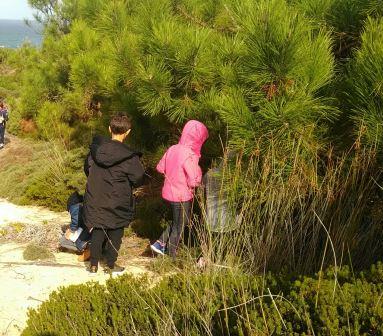
In Portugal the MARE Centre and Instituto Nacional de Investigação Agrária e Veterinária, I.P. (INIAV), in cooperation with Centro de Educação Ambiental – Torres Vedras organized outdoor visits to the sand dune habitats, located at Torres Vedras coastal zone (Portugal).
These visits are part of the EMC2 Project, focused on white crowberry plant – Corema album (L.) D. Don.
In October 2019, 20 pupils of the 3rd grade, and 18 pupils of 5th grade, 5 teachers and 1 researcher participated in outdoor environmental activities that highlighted some aspects of this plant bio-geography and its value as an Iberian endemic plant with white edible small fruits.
(in the picture: activities with children)


Be giants in the education work you do: the request of young people at 10WEEC

Around the world, young people are marching for action on climate change.
Around the world, students are striking.
Around the world, the youth are protesting for a better world.
Young people are standing up and asking to be heard. This is what democracy is about. Being heard.

Dear Congress organisers, Her Royal Highness, Princess Maha Chakri Sirindhorn, WEEC Committee, and conference delegates, thank you for this opportunity to stand up, speak up, and be heard. Thank you for this opportunity to be a part of this 2019 World Environmental Education Congress.

I am speaking on behalf of 68 students and teachers from Thailand, Taiwan, Nepal, Japan, Philippines and India. In a way, I am also speaking on behalf of all young people in those six countries and around the world.
It is an honour to have the chance to present the views of young people to this Congress.

I want to thank you all for the work you have done and the work you are doing in environment and education to make the world better. It is not young people Vs old people. The Earth is one country and we humans are its citizens. We are in this together and we youth want to help heal and protect the Earth.

Yesterday, students from the Youth Camp came up with messages for some of the main groups in this room.

To the people from schools and universities, please teach students to become aware of the problems and how to help. Then students can use their knowledge and skills to make the better world.
To community organisations, please keep doing what you are doing to care for people and the environment.
To the scientists and engineers, we ask you to keep doing good science and keep innovating new designs and materials for the betterment of the planet and the people.
To the business people, we ask you to use your platform as a foundation to promote environmental awareness and action.
To the politicians here today, please make good decisions so young people can enjoy being young and not worried about the future. We don’t want to protest. We want to be children.
Finally, to everyone here, please work together. A sustainable world depends on communication and collaboration of all groups in society.

Sir Isaac Newton, a famous scientist from the 17th century, once said, “If I have seen further than others, it is because I have stood on the shoulders of giants.”

We students at the Youth Camp will leave school soon. We will go to universities, we will go into the community, and we will go into the workforce. We ask you…

Please be giants.

Please be giants in the science and education work you do.

Please build a strong sustainability foundation that we can stand upon. Please be sustainability giants with strong shoulders that will help us see further and continue your work in building a world worth living in.

Please be giants.

Phansa Duangtip

Plutaluang Wittaya School, Chonburi Province, Thailand

see photos and video of the Youth Camp

Improvement of the environment and natural resources: the goal of the Chaipattana Foundation

May it please, Your Royal Highness, May I, Sumet Tantivejkul, Secretary-General of the Chaipattana Foundation, humbly request Your Royal Highness permission to deliver the introductory Remarks for the 10th World Environmental Education Congress. Your Royal Highness, On behalf of the Chaipattana Foundation and distinguished participants, I am greatly honored to express our deepest appreciation to Your Royal Highness for graciously presiding over the 10th World Environmental Education Congress today.

On this remarkable event, I have a privilege to announce that we are delighted to serve as one of the organizers that made this congress happen for the first time in Asia. It is also a wonderful experience for us to work with other two co-organizers, Kasetsart University and the World Environment Education Network. Established by His Majesty Late King Bhumibol Adulyadej, the Chaipattana Foundation has served, for 30 years, to provide prompt, timely and necessary responses to problems affecting the Thai people through various development projects. The Faculty of Environment Kasetsart University has long been providing vital assistance to the Chaipattana Foundation particularly in the areas of environment. Therefore, this serves as an excellent opportunity to host the Congress together with our co-organizers whose expertise will guide us through the worldwide discussions and exchanges of ideas that will lead to sustainability of the local and global connectivity.

The Chaipattana Foundation’s great concern has always been on the improvement of the environment and natural resources. Therefore, various royal development projects aiming at improving the quality of soil and water have been established around the nation that apply simple, affordable, and practical methods. Among these projects is the Laem Phak Bia Environmental Study Research and Development Project or LERD in Petchaburi Province. The main purpose is to provide environmental knowledge for local communities and organizations on how to implement simple natural methods to treat solid waste and wastewater. Extensive research and experiments to make the natural methods become more effective have been conducted by an academic team from the Faculty of Environment, Kasetsart University.

Throughout the years of implementation, the results on the application of the natural methods have been satisfactory and the LERD Project has become internationally recognized. Each year, the Project received numerous visitors from every part of the world. Collaborations with several academic institutions in the national and international levels were also established.

As the world is becoming smaller and our common future has become a common challenge, the Chaipattana Foundation is confident that the knowledge sharing is the key. The sharing that will happen during the conference will bring forth diverse bodies of knowledge from around the world to help formulate guidelines that will help ease the environmental problems that are becoming more severe. I personally believe that this meaningful congress will eventually play a significant part that helps our common future gear towards sustainability.

On this auspicious occasion, with Your Royal Highness’ gracious permission, I have a great honor to respectfully invite Your Royal Highness to graciously deliver an opening address and to preside over the opening ceremony of the 10th World Environmental Education Congress for all the success of this remarkable event.

Education is the key to create significant changes

It is a privilege to preside over the opening ceremony of the 10th World Environmental Education Congress hosted by the Chaipattana Foundation and Kasetsart University in collaboration with the World Environmental Education Network. I am delighted to welcome such a large and diverse audience which is gathered here today.

It is a great pleasure to witness the commitment of the international community to fight the increasing degradation of our environment. I believe that we are here today because we all need to understand the fragile state of our environment and the importance of its protection. It is apparent that everything around us is interconnected. We will lose our balance, if we break the chain of nature’s connectivity, and the impact to human beings and all living things would be tremendous.

One great effect that may occur will concern food. To keep up with the increasing world population, there is a greater demand for food. Natural resources such as soil and water are essential foundation for food production. Therefore, sustainable use and preservation of these resources is crucial in order for the food system to function properly. If the soil becomes infertile or the water becomes polluted, producing sufficient and good quality food to feed the global population would be another challenge.

The Chaipattana Foundation has conducted many projects related to environmental improvement and also in connection with the implementation of standardized food production for consumption. One example is the seed production project that emphasizes producing the finest quality seeds because we truly believe that by producing quality seeds, we also produce quality yields. In order to do so, seeds need to be grown in a good environment. This project focuses on the production of quality seeds with zero use of chemical substances, causing no harm to natural resources. In addition, the use of chemical pesticide was replaced by using natural methods. At present, this project benefits local villagers covering three provinces in different parts of the country.

Another example is the Tea Seed Oil Plant and Oil Crops Research and Development Center. The Chaipattana Foundation introduced tea seed cultivation that involves the process of reforestation in the northern part of Thailand in an attempt to restore arid land and to enable the local people to have stable incomes and to create vocational opportunities in a sustainable manner. The quality of tea seed oil is also rich in nutritional properties, which is beneficial for daily consumption.

Most of the projects under the responsibility of the Chaipattana Foundation including these two aforementioned projects aim at educating people. The interested public is welcome to learn from us. I believe that education is the key to create significant changes and it is best to educate the younger generation. Thus, many of our projects try to provide knowledge and understanding, as well as to raise the people’s awareness regarding environmental issues because us, human beings, are one of the factors that intentionally or unintentionally damaged the balance of nature. This congress, I believe, serves as an excellent platform that engages a diverse audience particularly the younger generation, to educate, and to give a floor to us all to share our experiences, case studies, and stories of success that have occured in different parts of the world.

I would like to extend my heartfelt thanks to all those whose dedication and commitment have made this conference happen. I would also like to convey my appreciation to every concerned organization that has contributed to assuring the success of the conference. Without all of your support, organizing this significant event would not have been possible.

With these remarks, may I now open the 10th Environmental Education Congress. I wish the congress every success and all that the participants will have a pleasant time in Thailand.

Thank you very much.

Her Royal Highness Princess Maha Chakri Sirindhorn