weecnetwork
  • Home
  • About
    • Who We Are
    • Charter of principles
    • Board and Past Socio-Scientific Committees
    • Secretary General
    • Permanent Secretariat
    • World Environmental Education Day
  • Congresses
  • No Limits To Hope
    • No Limits to Hope Forum
    • The seminal role of “No Limits to Learning” in 1979
    • Become a sponsor of the initiative
    • Promoters
    • Frequently Asked Questions
  • Partners
  • News
  • Newsletter
  • Search
  • Menu Menu
  • Facebook
  • Youtube
  • LinkedIn
  • Instagram

WEEC Network is granted consultative status at the UN

6 July 2022/in Press/by WEEC Network

Have you heard the incredible news?! WEEC Network has officially been granted ECOSOC (Economic and Social Council) Consultative Status with the United Nations!


From now on WEEC Network has the special consultative status with the Economic and Social Council at the UN. The consultative status is the core of a formal relationship between the UN and social organizations, which is also a key approach for social organizations to take initiatives and to be engaged in activities of the UN and international communities.

As a member of the WEEC Network, you can also take part in the initiatives: keep reading to find out more.

Become a representative at ECOSOC!

As NGO with ECOSOC status, WEEC Network can choose delegates to be represented by in the various occasions. If you are interested, apply to be a delegate, representing one of the most worldwide organizations in environmental education.

Contact us on secretariat@weecnetwork.org

The Economic and Social Council of the UN (ECOSOC)

Article 71 of the United Nations Charter, which established the Economic and Social Council (ECOSOC), states the following:

The Economic and Social Council may make suit able arrangements for consultation with non-governmental organizations which are concerned with matters within its competence. Such arrangements may be made with international organizations and, where appropriate, with national organizations after consultation with the Member of the United Nations concerned.

— United Nations Charter, Chapter X, Article 71

One of the six principal organs of the UN, the Economic and Social Council (ECOSOC) is the central UN forum for international economic and social issues. The Council coordinates the economic and social work of the UN system, which engages 70 percent of the system’s human and financial resources. All of the UN specialized agencies (e.g., the World Health Organization and the Food and Agriculture Organization), as well as all of the UN programs and funds (e.g., UNICEF and the World Food Program), report to ECOSOC.

The ECOSOC Council has eight functional Commissions:

  1. Commission on the Status of Women
  2. Commission for Social Development
  3. Commission on Population and Development
  4. Commission on Crime Prevention and Criminal Justice
  5. Commission on Narcotic Drugs
  6. Commission con Science and Technology for Development
  7. Statical Commission
  8. United Nations Forum on Forests

ECOSOC Regional Commissions:

➤ Economic Commission for Africa (ECA)

➤ Economic and Social Commission for Asia and the Pacific (ESCAP)

➤ Economic Commission for Europe (ECE)

➤ Economic Commission for Latin America and the Caribbean (ECLAC)

➤ Economic and Social Commission for Western Asia (ESCWA)

Other bodies:

  • Permanent Forum on Indigenous Issues
  • Sessional and standing committees
  • Expert, ad hoc, and related bodies


What we gained as NGO in consultative status

The ECOSOC Resolution 1996/31 specifies the non-governmental organizations (NGOs) in Consultative Status are entitled to:

  • Attend international conferences and events.
  • Make written and oral statements at these events.
  • Organize side events.
  • Enter United Nations premises.
  • Have opportunities to network and lobby.

NGOs that are accredited with ECOSOC can participate in a number of events, including, but not limited to, the sessions/meetings of ECOSOC, its functional commissions and its other subsidiary bodies. At these events, NGO may:

  • Attend official meetings
  • Submit written statements prior to sessions
  • Make oral statements
  • Meet official government delegations and other NGO representatives
  • Organize and attend parallel events that take place during the session; and
  • Participate in debates, interactive dialogues, panel discussions and informal meetings.

Click Here to learn more about what ECOSOC is

Click Here to learn about ECOSOC 2021 goals:
https://www.un.org/ecosoc/en/events/2021/ecosoc-high-level-segment-including-three-day-ministerial-segment-hlpf-convened-under
https://weecnetwork.org/wn/wp-content/uploads/2022/07/WEEC-Network-is-granted-consultative-status-at-the-UN.jpg 423 1210 WEEC Network https://weecnetwork.org/wn/wp-content/uploads/2025/02/WEEC-Logo_200.png WEEC Network2022-07-06 16:11:042023-08-02 15:02:40WEEC Network is granted consultative status at the UN

Nature in Mind, international conference in Rome

7 June 2022/in Press/by WEEC Network

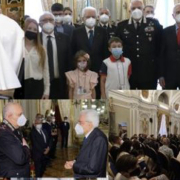
Nature in Mind, an international conference promoted by the Italian Carabinieri brought together voices from all over the world and from every sector. From Pope Francis to the President of the Italian Republic Sergio Mattarella, high-level interventions and networking. Wide presence of the WEEC network

Read more
https://weecnetwork.org/wn/wp-content/uploads/2022/06/nature-in-mind-report-from-the-international-conference-in-rome.jpg 423 1210 WEEC Network https://weecnetwork.org/wn/wp-content/uploads/2025/02/WEEC-Logo_200.png WEEC Network2022-06-07 17:53:132023-08-02 15:04:20Nature in Mind, international conference in Rome

Conferences, round tables and practical workshops in the Environmental Education Symposium of the City of Buenos Aires

27 May 2022/in News/by WEEC Network

From May 31 to June 2, conferences with international exhibitors, round tables and practical workshops will be held in the City of Buenos Aires with the aim of debating and reflecting with experts on the current climate and environmental scenario and the role of education for sustainability.

It aims to provide a space that allows teachers, educators, researchers  to delve into the debates and current pedagogical challenges in the field of Environmental Education and promote greater knowledge of environmental problems in order to enrich their approach at school.

The Symposium is organized by the Undersecretary of Educational Technology and Sustainability and the General Directorate of Educational Planning , and has the support of the Organization of Ibero-American States (OEI).

Environmental Education Context in Argentine

Since 2008, the City of Buenos Aires has adopted sustainability as a priority axis of its management. On the educational level, this commitment crystallized in 2010 with the creation of the Green Schools Program of the Ministry of Education, thus initiating an innovative policy on education for sustainability within the formal education system.

This current that puts sustainability in the focus of public policies, is accompanied by a series of laws that accompany the transformation that both the City and the rest of the country need to do in environmental matters. In 2005, the first Law No. 1687 on Environmental Education of the Autonomous City of Buenos Aires was enacted , which promotes the incorporation of Environmental Education in the formal, non-formal and informal educational system.

For its part, the Comprehensive Environmental Education Law No. 27,621 for the Implementation of Environmental Education in the Argentine Republic, sanctioned in 2021 , constitutes a milestone in national educational regulations, since it lays the foundations to consolidate environmental education as a state policy. In its Art.1, the law establishes the right to comprehensive environmental education, while in its Art. 2, it urges the development of a National Environmental Education Strategy that reaches all formal and non-formal areas of education.

 Comprehensive Environmental Education Law

With the aim of promoting environmental education and incorporating, in compliance with current legislation, the new paradigms of sustainability in the fields of formal and non-formal education, the Ministry of Environment and Sustainable Development (MAyDS) and the Ministry of Education (ME), together with the consensus of the provinces through the Federal Council for the Environment (COFEMA) and the Federal Council for Education (CFE), designed the Comprehensive Environmental Education Law .

The initiative allows the implementation of a national public policy on environmental education , whose main instrument is the National Strategy for Comprehensive Environmental Education (ENEAI) .

The ENEAI is the strategic planning instrument and, at the same time, a permanent and concerted national public policy that reaches all informal, non-formal and formal areas of environmental education. It is aimed at all ages, groups and social sectors, in order to territorialize environmental education through actions in the short, medium and long term, through the deployment of jurisdictional strategies that allow to implement and adapt its implementation at the provincial level and of the Autonomous City of Buenos Aires, through Jurisdictional Strategies for Comprehensive Environmental Education (EJEAIs).

0 0 WEEC Network https://weecnetwork.org/wn/wp-content/uploads/2025/02/WEEC-Logo_200.png WEEC Network2022-05-27 11:24:422022-05-27 11:24:42Conferences, round tables and practical workshops in the Environmental Education Symposium of the City of Buenos Aires

The Earth Prize 2023 competition: $5,000 prize for the three best Mentors

27 May 2022/in News/by WEEC Network

Potrebbe essere un'immagine raffigurante 2 persone e il seguente testo "we're we ooking for mentors ors"

The Earth Foundation is looking for university students passionate about sustainability and entrepreneurship to become MENTORS in The Earth Prize 2023 competition.

Following the successful first edition of The Earth Prize 2022 and a fantastic experience with our Mentors, The Earth Prize 2023 will now recognize not just one but three mentors with The Earth Prize Mentor of the Year award. The three best mentors, as voted by the competition’s Participants, will receive a $5,000 prize each.

The virtual mentoring will take place between September 1st, 2022 and January 31st, 2023 through The Earth Prize online platform. Mentors will contribute to the development of students’ innovative projects by offering them guidance on their projects and answering their questions.

If you know someone who might be interested in sharing their knowledge and making an impact, share this opportunity with them! You can find more information on The Earth Prize Mentors page.

0 0 WEEC Network https://weecnetwork.org/wn/wp-content/uploads/2025/02/WEEC-Logo_200.png WEEC Network2022-05-27 09:55:152022-05-27 09:55:15The Earth Prize 2023 competition: $5,000 prize for the three best Mentors

Deep-sea Atlas of the Eastern Mediterranean Sea

18 May 2022/in News/by WEEC Network

The IUCN Centre for Mediterranean Cooperation (IUCN-Med) and the Hellenic Centre for Marine Research present the Deep-sea Atlas of the Eastern Mediterranean Sea. Funded by the MAVA Foundation,  the Atlas is the first collective work to compile the existing knowledge about the deepest waters of the Eastern Mediterranean, focusing on the “hidden” biodiversity that it hosts and main threats. The report covers five sub-regions: the Eastern Ionian, the North and South Aegean, the Libyan and the Levantine Sea.

This publication has contributions of more than 48 experts  and aims to become a useful tool to support spatial and natural resource planning efforts and to contribute to the sustainable development of blue economy.

By combining information from other reports, expeditions, data on deep-sea bycatch and experimental fishing catches, as well as underwater videos, this new publication provides a general overview of the morphological and geological features, as well as data on the existing biodiversity and habitats, in particular benthic and pelagic communities. Over 46 seamounts and banks ridges, as well as the major marine canyons have been identified and described in this document. These areas can play a key role as hotspots of biodiversity, greatly affecting the productivity of offshore ecosystems and the distribution of pelagic top predators. In addition, potential sites of Essential Fish Habitats for five deep-water commercially exploited species have been identified.

“Although human has been related to the marine environment since the first steps of its evolution, our knowledge on the deep sea is extremely limited, and although great strides have been made in the last decades, the information has been very fragmented and covering just small snapshots” explains Chryssi Mytilineou, researcher of the Institute of Marine Biological Resources and Inland Waters of the Hellenic Centre for Marine Research. “The Atlas is the first step in concentrating our knowledge and identifying areas in the Eastern Mediterranean that we may need to protect”.

This report presents a first assessment of our knowledge about the vulnerable deep-sea ecosystems and has allowed to identify signs of high benthic biodiversity and other potential sites of conservation interest, that could require the establishment of binding protection areas or other effective conservation management measures.

“In the Eastern Mediterranean, enforcing the existing network of Marine Protected Areas requires increasing their coherence, connectivity and representativeness”, explains María del Mar Otero, Marine Biodiversity and Blue Economy manager at IUCN-Med. “Further designation of MPAs and Fishery Restricted Areas will be key to protect these vulnerable biodiversity hotspots, together with other measures to protect migratory and endangered fauna at open sea”.

The report also provided specific recommendations of potential measures to address some of the more pressing human activities that are presently or potentially impacting the vulnerable deep-sea ecosystems of the Eastern Mediterranean. Among these pressures are the significant concentrations of macroplastics identified in deep-sea areas, particularly near highly urbanised gulfs and submarine canyons.

Access to the publication here

0 0 WEEC Network https://weecnetwork.org/wn/wp-content/uploads/2025/02/WEEC-Logo_200.png WEEC Network2022-05-18 15:17:382022-05-18 15:17:38Deep-sea Atlas of the Eastern Mediterranean Sea

13th WEEC2026: the Call for bids is open!

29 April 2022/in Press/by WEEC Network

Who will be the host of the 13th WEEC in 2026?

The Call for Bids to submit the application is open and the deadline to submit the application is 30th September 2022.

The Permanent Secretariat would like to remind you that only the public or private non-profit organizations (universities, foundations, associations, …) can apply the candidacy of their own country as the seat of the 13th WEEC in 2026.

The candidatures will be assessed mostly according to the following criteria:

1. Having preferably close relationships with the WEEC congresses and the Network in the past, and, in any case, joining the Network and endorsing its mission, vision and strategy.
2. Guaranteeing the quality of the contents and the cultural project of the Congress, in continuity and total agreement with the heritage and the spirit of previous Congresses and in close cooperation with the Permanent Secretariat that will supervise and co-chair the congress.
3. Designing the final call for the congress and the programme according to the guidelines and the advice of the Secretariat and the International Socio-Scientific Committee established by the Secretariat.
4. Demonstrating they have relevant experience in the field of environmental education.
5. Demonstrating they have adequate experience in organizing events at local, national, regional, and international levels.
6. Demonstrating they have adequate congress facilities.
7. Demonstrating they are skilled in creating networks at different levels and getting various institutions and organizations (national authorities, local institutions, Higher, Secondary and Primary education institutions, parks, museums, NGOs, mass media, etc.) to be involved in the organization and participation to the Congress.
8. Demonstrating their ability to ensure broad national and international participation at the Congress.
9. Engaging to strengthen the WEEC International Network, inter alia by allocating a budget for the network’s activities.
10. Demonstrating they can mobilize the necessary resources at the local and national level (and possibly at the regional and international level as well) to guarantee the financial sustainability of the Congress.
11. Demonstrating their commitment to contain the costs of participation to the Congress and facilitate the participation of people from disadvantaged countries or categories (e.g. young people and students), by reducing the costs of participation and overnight stays as much as possible.
12. Engaging to offer sponsorships to an adequate number of delegates from developing countries (if the bidder is in a developed country).
13. Guaranteeing the cultural diversity and facilitating participation, also thanks to the use of several languages as English, French and Spanish at least both for the web site and during the Congress.
14. Guaranteeing the ecological consistency of the Congress by taking every measure to minimize the ecological/carbon footprint of the event and assuring its socio and eco-sustainability both as venues and as other aspects (i.e. accommodation, social program outside, and so on).
15. Accepting the time schedule proposed by the Permanent Secretariat.

The winner will be assigned indicatively by 31st December 2022.
The official announcement of the 13th WEEC will be at 12th WEEC 2024 in Abu Dhabi, on 1st February 2024

Please ask for the official application form to: secretariat@weecnetwork.org
or download it here:

Call for bids_2026

WEEC 2026_application form

https://weecnetwork.org/wn/wp-content/uploads/2022/04/13th-WEEC2026-the-Call-for-bids-is-open.jpg 423 1210 WEEC Network https://weecnetwork.org/wn/wp-content/uploads/2025/02/WEEC-Logo_200.png WEEC Network2022-04-29 11:59:432023-08-02 15:06:3813th WEEC2026: the Call for bids is open!

Nature in Mind: the value of biodiversity

28 April 2022/in Press/by WEEC Network

“By Leaves We Live”
“This is a green world, with animals comparatively few and small, and all dependent on
the leaves. By leaves we live. Some people have strange ideas that they live by money.
They think energy is generated by the circulation of coins. Whereas the world is mainly a
vast leaf colony, growing on and forming a leafy soil, not a mere mineral mass: and we
live not by the jingling of our coins, but by the fullness of our harvests.”
(Sir Patrick Geddes, 1854-1932)

On the occasion of the 30th anniversary of the Convention for Biological Diversity, signed on May 22 nd, 1992 in Rio de Janeiro,  Italian environmental police force, in collaboration with WEEC Network,  wants to celebrate, with a 2-day International Conference – Nature in mind – the value of biodiversity in the name of a greener and more sustainable future. 

International Day for Biological Diversity is the occasion to reflect on our responsibilities towards the environment and to consider the possibility of creating a new culture of nature.
The scientific comprehension of natural processes and the new awareness about the importance of the compliance of our behaviours with the law are two equally important and strictly integrated elements which aim at the conservation of nature.

Environmental education thus becomes education to environmental “legality”: a set of knowledge that becomes “culture”, environmental culture, that has to represent the fundamental part of the most deeply rooted education of citizenship, necessary to build a better future for the next generations.

The Conference Nature in Mind, which will be held in a mixed form (in person and remotely), will address various topics thanks to the interventions of distinguished Italian and international speakers
following the ideal path of seven Sessions:

  1. Opening Session
  2. One Health – Nature and Well-being
  3. At the Nature School
  4. Education and Nature
  5. School, city, territory
  6. Education, infosphere, mass culture and Nature
  7. Voices from the world

For the registration, have a look here.


https://weecnetwork.org/wn/wp-content/uploads/2022/04/Nature-in-Mind-the-value-of-biodiversity.jpg 423 1210 WEEC Network https://weecnetwork.org/wn/wp-content/uploads/2025/02/WEEC-Logo_200.png WEEC Network2022-04-28 10:49:252023-08-02 15:08:30Nature in Mind: the value of biodiversity

UNRWA: Enhance students’ awareness towards environment

26 April 2022/in News/by WEEC Network

For the World Health Day, UNRWA celebrates Ms. Obeid, named the 2022 Earth Prize Educator of the Year. Ms Obeid, a teacher at the UNRWA Sweileh Preparatory Girls’ School in Jordan, was selected by the WEEC’s Secretary General Professor Mario Salomone.

Dr Oroba Labadi, Chief pf the UNRWA Field Education Program, underlines the importance of raising students’ awareness towards global environmental causes, “which is not limited to provide basic education but also in enhancing their knowledge, skills and build positive trends towards global environmental causes”. 

Indeed, what encouraged Ms Obeid to take part in the competition together with her students was her belief that Palestine refugee students can participate in international competitions and affect change in both local and international communities. 

”This award shows the impact of the professional in-service trainings that UNRWA regularly provides to us.” Ms Obeid Said.  

UNRWA and SDG 13 – Climate Action

Across its fields of operation, the UNRWA plays a key role in addressing environmental protection issues within the Palestine refugee community and has an obligation to minimize the negative environmental impact of its own operations. In addition, the Agency is prioritizing a range of environmental protection efforts that include for instance the installation of energy saving equipment, such as solar panels, water heaters and LED fittings, in a number of schools, health centres and other installations, as well as safe disposal of medical waste.  

Measures to protect water resources and improve environmental health in Palestine refugee camps are also being undertaken including the development of an integrated solid waste management system that will serve all Palestine refugee camps in Lebanon and the installation of solar power systems in 80 schools and six health clinics in Gaza.  

The Agency is also exploring current environmental behaviours and teaching practices in its schools and classrooms in order to see how to strengthen and build upon these practices in a coordinated and coherent way. Developing capacity of Palestine refugee youth in the design, manufacture and servicing of renewable energy technology and energy efficiency devices is important for job creation and stimulating the green economy. UNRWA has recently introduced courses on energy efficiency at its vocational training centres in Gaza and will look to expand these to other fields based on lessons learned.  

About UNRWA 

Following the 1948 Arab-Israeli conflict, UNRWA was established by United Nations General Assembly Resolution 302 (IV) of 8 December 1949 to carry out direct relief and works programmes for Palestine refugees. The Agency began operations on 1 May 1950. 

In the absence of a solution to the Palestine refugee problem, the General Assembly has repeatedly renewed UNRWA’s mandate, most recently extending it until 30 June 2023 

The United Nations Relief and Works Agency for Palestine Refugees (UNRWA) is funded almost entirely by voluntary contributions from UN Member States. UNRWA also receives some funding from the Regular Budget of the United Nations, which is used mostly for international staffing costs. 

The Agency’s services encompass education, health care, relief and social services, camp infrastructure and improvement, microfinance and emergency assistance, including in times of armed conflict. 

0 0 WEEC Network https://weecnetwork.org/wn/wp-content/uploads/2025/02/WEEC-Logo_200.png WEEC Network2022-04-26 13:34:382022-04-26 13:34:38UNRWA: Enhance students’ awareness towards environment

Safaa Obeid, UNRWA teacher in Jordan, is the winner of the Earth Prize Educator of the Year

6 April 2022/in News/by WEEC Network

© 2022 UNRWA Photo by Dima Ismail

Following the legacy of the original award, WEEC’s  Secretary-General, Professor Mario Salomone selected Ms Safaa Obeid , a teacher at the UNRWA Sweileh Preparatory Girls’ School in Jordan,  as the Earth Prize Educator of the Year and awarded a prize of US$ 12,500.

Ms. Obeid entered her students in the Earth Prize competition – an environmental sustainability competition for students between the ages of 13-19 – under the themes of concern to them as Palestine refugees in Jordan. These include, desertification of the Dead Sea by 2030, making camps more environmentally friendly and managing food waste in Jordan.

Ms. Obeid said:

“I am very proud to represent UNRWA in this international contest on environment sustainability and be awarded the “Educator of the Year” title. This amplifies my sense of responsibility towards my environment, my community and my students. I have been very keen to integrate environmental sustainability in the classroom by creating an enriching an environmental activity kit, which is user-friendly and easy to implement for the purpose of increasing my students’ awareness of environmental causes.”

In addition to Ms. Obeid’s students, 34 teams from 24 UNRWA schools and one vocational training centre registered their projects in the competition. Two UNRWA schools were named in the top 34 Earth Prize Scholar teams, namely the UNRWA Amqa Secondary Co-educational School in Lebanon and the UNRWA Gaza Training Centre, in Gaza.

The Earth Prize 2022 Educator of the year nominees were:

Pauline Herbommez, french teacher at Eton College, in Berkshire, England.  With other members of the school staff, Ms Herbommez helped create the Belkshire Schools Eco Network (BSEN) and the Environmental Action Group (E@E). The BSEN and E@E attended COP26.

Imani Hudaa, teacher at Raila Educational Centre in Kibra, Nairob, Kenya.  She has been involved in a number of school activities related the environment by encouraging learners to draw, act, dance and even write poetry about environment.

Ram Chandra Dahal, a faculty member at the Druk Gylalpo’s Institute in Bhutan. He believes that education is the key to making people live in coherence with nature and assume responsibility for its protection. At the school, he acts as a teacher, mentor, and the Coordinator for Emotional Area of Development.

Luc Arvisals, a teacher at Our Lady of the Snows in Canmore, Alberta, Canada. He has supported student work on a variety of projects: planning for rewilding of urban areas, institutionalising the use of aeroponic growing gardens at the school, fundraising for a solar testing system to gauge the economic viability of installing solar panels on the school.

Ruth Parry, has taught at the Institute Le Rosey in Switzerland for nine years. She has built links with over 20 local and international charities to support environmental and humanitarian issues, and has helped develop a whole school curriculum to support Service Learning projects and skill development.

Laurence Myers is the K-12 Service Learning Coordinator at the American School of Dubai, United Arab Emirates. He supports student work on a variety of projects including the elimination of plastic water bottles, composting all landscaping and food waste, and establishing school-wide sustainability goal. He provides training and support educators in using systems-thinking for sustainability.


0 0 WEEC Network https://weecnetwork.org/wn/wp-content/uploads/2025/02/WEEC-Logo_200.png WEEC Network2022-04-06 11:00:362022-04-06 11:00:36Safaa Obeid, UNRWA teacher in Jordan, is the winner of the Earth Prize Educator of the Year

Submission for the Zayed Sustainability Prize 2023 are open!

30 March 2022/in News/by WEEC Network

The Zayed Sustainability Prize, an evolution of the Zayed Future Energy Prize, is the UAE’s pioneering global award in sustainability and a tribute to the legacy of the late founding father of the UAE, Sheikh Zayed bin Sultan Al Nahyan.

Established in 2008, this annual award recognises and rewards the achievements of those who are driving impactful, innovative and inspiring sustainability solutions across five distinct categories: Health, Food, Energy, Water and Global High Schools.

The Zayed Sustainability Prize has officially announced that the 2023 cycle is now open for submissions.  Entries will be accepted until 6 July 2022 through the Prize’s online portal.

For details on the submissions process and eligibility, visit the website or read the press release.

0 0 WEEC Network https://weecnetwork.org/wn/wp-content/uploads/2025/02/WEEC-Logo_200.png WEEC Network2022-03-30 13:47:192022-03-30 13:47:19Submission for the Zayed Sustainability Prize 2023 are open!
Page 12 of 47«‹1011121314›»

Last News

  • No Limits to Hope. Nature as Teacher: Dr. Perry’s Vision for Learning and Sustainability
  • ArtWay: Education for a Harmonious and Responsible Humanity
  • The Future of Learning and 13th WEEC 2026: What Comes Next?
  • Forest, Climate and Natural Resource Governance
  • Beyond the ‘Human Gap’: Transforming Education for Sustainable Futures

No Limits To Hope Forum

  • No Limits to Hope. Nature as Teacher: Dr. Perry’s Vision for Learning and Sustainability19 December 2025 - 18:39by: WEEC Network
  • ArtWay: Education for a Harmonious and Responsible Humanity16 November 2025 - 14:45by: Natalia Rojcovscaia-Tumaha
  • Towards a Planetary Alliance: A Symphony of Hope How could an educational surrealist methodology bring about such a transformation?12 October 2025 - 17:26by: Jacques de Gerlache
  • Integrating National Education Policy 2020 and Citizen Science: Empowering Young Environmental Stewards for Pro-environmental behavior8 October 2025 - 17:23by: Sudeepa Kumari
  • Pope Francis’ Hope as Praxis of Education: foregrounds hope not as an abstraction, but as an active education practice that decolonizes6 October 2025 - 17:17by: Deogratias Fikiri SJ
  • Recent Publications on Environmental Regeneration and Global Challenges4 October 2025 - 17:11by: Andre Francisco Pilon
  • Chanter la Terre, rêver le Monde2 October 2025 - 17:07by: Patricia Fetnan
  • La educación ambiental como pilar del desarrollo sostenible en la Universidad de La Habana30 September 2025 - 17:01by: Mirurgia Aguilar Velazquez
  • Four Years of Regenerative Learning: Reflections from the Regenerative Leadership Journey29 September 2025 - 16:49by: Judit Saez Gonzalvez
  • Values-based Transformative Learning International Environment Forum27 September 2025 - 16:40by: Arthur Dahl

International Secretariat

Via del Carmine, 15
10122 Torino – Italy
tel.+39 0114366522
secretariat@weecnetwork.org

LEGAL NOTICE

Privacy Policy
Cookies Policy
Facebook

Discover all the activities on our Facebook Page

Instagram

Follow our Instagram Profile!

Linkedin

Join our Linkedin world

Youtube

Join The Newsletter

Stay up to date with the latest news and trends in the digital world! Subscribe to our newsletter to receive exclusive content, practical tips, and updates directly in your inbox.

© Copyright - weecnetwork || Powered by 19.coop
  • Facebook
  • Youtube
  • LinkedIn
  • Instagram
Scroll to top