weecnetwork
  • Home
  • About
    • Who We Are
    • Charter of principles
    • Board and Past Socio-Scientific Committees
    • Secretary General
    • Permanent Secretariat
    • World Environmental Education Day
  • Congresses
  • No Limits To Hope
    • No Limits to Hope Forum
    • The seminal role of “No Limits to Learning” in 1979
    • Become a sponsor of the initiative
    • Promoters
    • Frequently Asked Questions
  • Partners
  • News
  • Newsletter
  • Search
  • Menu Menu
  • Facebook
  • Youtube
  • LinkedIn
  • Instagram

The future of humanity depends on enabling everybody’s capacity to learn

14 February 2024/0 Comments/in News, Press/by WEEC Network

The Fifth Element programme of The Club of Rome and The World Environmental Education Congress are joining forces to collaborate on a new project, sparked by the 45th anniversary of the report No Limits to Learning. The collaboration will focus on the transformative and regenerative function of learning at its full potential.

Overcoming the challenges that humanity is facing today will require a cultural transformation with collective learning at its heart. The Fifth Element’s vision is to explore and facilitate the recognition of blind spots and help catalyse the emergence of a revolution of mindsets towards equitable wellbeing on a healthy planet.

In the opening ceremony of the 12th edition of the World Environmental Education Congress (WEEC) in Abu Dhabi, the Secretary-General of the WEEC Permanent Secretariat, Mario Salomone, announced this collaboration between The Club of Rome and the WEEC Network to address the multidimensional challenges of the current “polycrisis”.

“Learning processes are essential. Through learning, we acquire the elements to move between the paths of history and the cases of life. We can learn well or poorly. We can become selfish and individualistic or supportive and cooperative. We can absorb conservative or innovative knowledge. Unlike material growth, which is impossible on a finite planet, learning has no limits.” commented Salomone.

45 years after the publication of the report to The Club of Rome No Limits to Learning, the words of Aurelio Peccei, founder of The Club of Rome, are still valid and powerful: “What we all need at this point in human evolution is to learn what it takes to learn what we should learn – and learn it.” This quote serves as the guiding inspiration for this new collaboration between The Club of Rome and the WEEC Network.

One of the aims is to understand better what is still blocking the potential of human communities everywhere to learn by themselves their pathways to regenerative and hence sustainable futures. As put forward by No Limits to Learning, making learning participatory, anticipatory, innovative and integrative would shape the responses we need for desirable futures.

Carlos Álvarez Pereira, Secretary General of The Club of Rome, commented: “The resonance between so many initiatives of transformational learning all around the world is critical. Resonance creates the conditions for mutual learning and will ultimately lead to systemic change towards equitable wellbeing within a healthy planet”.

In 2021 The Club of Rome published Learning New Ways of Becoming Human to reframe the current polycrisis as a failure in our collective capacity to learn and highlight at the same time the huge potential at our hands, provided that people are allowed to learn and address the existential challenges in their own ways. The future of humanity depends on how we bet today on the humanity and capacity of everybody.

The collaboration between The Club of Rome and the World Environmental Education Congress Network will unfold over two years and result in a new publication as an update to No Limits to Learning in the light of the transformations that have occurred since then. This new report will be presented at the WEEC 2026.

For more information or to arrange interviews contact:

Philippa Baumgartner  pbaumgartner@clubofrome.org

The Fifth Element is an initiative hosted by The Club of Rome which seeks to create a future of equitable wellbeing within a healthy ecosystem. We shift focus from stakeholders to human beings, fostering connections and creating space for people and organisations to engage in their own learning processes. Through engagements and initiatives based on a combination of traditional wisdom and leading-edge science, we are working to catalyse the emergence of a human revolution.

www.thefifthelement.earth

The Club of Rome is a platform of diverse thought leaders who identify holistic solutions to complex global issues and promote policy initiatives and action to enable humanity to emerge from multiple planetary emergencies. The organisation has prioritised five key areas of impact: Emerging New Civilisations; Planetary Emergency; Reframing Economics; Rethinking Finance; and Youth Leadership and Intergenerational Dialogues.

www.clubofrome.org 

The World Environmental Education Congress (WEEC) is an international network of environmental educators and organisations that promote education for sustainable development. The WEEC network aims to provide a platform for the exchange of ideas, experiences, and best practices in environmental education. The network organizes a biennial congress that brings together environmental educators, researchers, and practitioners from around the world to discuss and share their work. The congresses have been held in various locations around the world since the first one in 2003.
www.weecnetwork.org

https://weecnetwork.org/wn/wp-content/uploads/2024/02/The-future-of-humanity-depends-on-enabling-everybodys-capacity-to-learn-e1707904259840.png 732 1640 WEEC Network https://weecnetwork.org/wn/wp-content/uploads/2025/02/WEEC-Logo_200.png WEEC Network2024-02-14 10:51:592025-05-29 11:01:57The future of humanity depends on enabling everybody’s capacity to learn

WEEC2024: a global gathering for sustainable solutions

29 January 2024/0 Comments/in News, Press/by WEEC Network

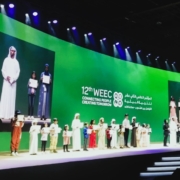
The twelfth edition of the World Environmental Education Congress (WEEC) kicks off in Abu Dhabi, United Arab Emirates.

The opening ceremony saw the participation of prominent figures, including H.E. Dr. Shaikha Al Dhaheri, Secretary-General of the Environment Agency – Abu Dhabi, UAE; H.H. Sheikha Shamma bint Sultan bin Khalifa Al Nahyan, President and CEO of the UAE Independent Climate Change Accelerators (UICCA); Mario Salomone, Secretary-General of the World Environmental Education Congress Network; and Elizabeth Wathuti, Kenyan youth activist, Founder, and Executive Director of Green Generation Initiative, Kenya.

The WEEC Network Secretary-General Mario Salomone addressed the theme of interdisciplinarity and transdisciplinarity, emphasizing that the environment represents the crossroads of perspectives and is the ideal ground for building such approaches. He highlighted that the challenge of environmental crises is not merely academic but involves Western science, the relationship between expert knowledge and traditional knowledge, raises ethical-political issues, and requires a profound restructuring of knowledge, structures, and laws. He announced a new collaboration between the Club of Rome and the global WEEC network, emphasizing the importance of demonstrating the centrality of environmental education. This collaboration aims to better understand the nature of learning today, based on the message conveyed by the Club of Rome’s report, “No Limits to Learning.”

Dr. Shaikha Al Dhaheri focused her speech on three crucial themes: climate change, biodiversity loss, and pollution. H.H. Sheikha Shamma bint Sultan bin Khalifa Al Nahyan, in her address, highlighted the importance of the involvement of women and youth, emphasized significant transformations in the United Arab Emirates, and underscored the transformative power of education.

Plenary 1: the triple planetary crisis – aligning EE and ESD

During subsequent plenary sessions, numerous national and international authorities contributed, including H.E. Razan Khalifa Al Mubarak, President of IUCN, who stated, “Government action alone is not sufficient; everyone’s help is needed. WEEC plays a crucial role, inspiring, empowering, and embracing the new economy.” She also announced a commitment to creating a roadmap for developing an educational set for young people.
Following H.E. Razan Khalifa Al Mubarak’s remarks, Jack Dangermond, President, Environmental Systems Research Institute (ESRI), USA, ha preso la parola.
Mr. Dangermond highlighted the success and challenges faced by our species, acknowledging the exponential growth in technology over the last 300 years. He expressed concern about the human footprint dominating the planet’s evolution and how it now poses a threat to our future, especially due to overpopulation. He stressed the critical need for understanding and collaboration to address the challenges ahead.

High level leaders’ panel discussion

After them, several other notable speakers took the stage during subsequent panel discussion:
Abdul-Majeid Haddad, Deputy Regional Director, UNEP, West Asia O¬ce, Lebanon, emphasized the importance of educators having an environmental spirit and transferring it to education. He discussed the role of educators as custodians for laws, needing to provide incentives for environmental education through both formal and informal approaches. Formal education would involve legal frameworks, while informal education would inspire youth to become champions and educators themselves.
Panelists:
H.E. Dr. Amna Al Dahak Al Shamsi, Minister of Climate Change and Environment, United Arab Emirates.
Dr. Al Shamsi emphasized that environmental education is not solely the responsibility of educators but of everyone. She highlighted the power and connectivity of education, reaching every household. To integrate environmental education into daily life, it must be instilled as part of people’s values, especially considering they are the future educators and scientists.

H.E. Mamo Boru Mamo, Director General, National Environment Management Authority (NEMA), Kenya.
Mr. Mamo discussed the need to supervise and coordinate environmental issues in Kenya due to limited resources. He emphasized the importance of laws and regulations in the constitution to manage and protect the environment. Addressing environmental quality should be both an individual and collective effort.
Lorenzo Fioramonti, Former Education Minister, Italy.
Mr. Fioramonti shared his experience encouraging students to strike for better education. He highlighted the difficulty of changing school curricula but stressed the importance of introducing environmental sustainability as an experiential subject. Investing in education is crucial for building a strong economy, with children being fundamental ambassadors of change.
Ginger Potter, Senior Education Specialist, Environmental Protection Agency – USA.
Ms. Potter addressed the challenge of environmental education not being mandated by the constitution in the USA, leading to only half of the states incorporating it into their curriculum. She emphasized the need for government investment and laws to ensure every student learns about the environment, framing it as a national security issue.

WEEC kicks off with great success and will continue until February 2, 2024. The World Environmental Education Congress represents a crucial catalyst for inspiring, empowering, and embracing the new economy, continuing to play a fundamental role in promoting a sustainable future through environmental education.

https://weecnetwork.org/wn/wp-content/uploads/2024/01/WhatsApp-Image-2024-01-29-at-08.10.34-1.jpeg 659 1248 WEEC Network https://weecnetwork.org/wn/wp-content/uploads/2025/02/WEEC-Logo_200.png WEEC Network2024-01-29 13:44:362024-01-29 13:52:42WEEC2024: a global gathering for sustainable solutions

Leveraging COP 28 consensus for inclusive socio-environmental transformation

22 January 2024/0 Comments/in News, Press/by WEEC Network

Brazil and paths after COP 28

by Dra. Vanessa Sousa de Oliveira, Dr. Marcos Vinicius Campelo Junior

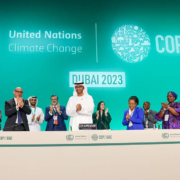
Between November 30 and December 12, 2023, the 28th Session of the Conference of the Parties (COP 28) of the United Nations Framework Convention on Climate Change (UNFCCC) took place in Dubai, United Arab Emirates. The 195 participating countries discussed strategies to reduce, mitigate, and control the emission of greenhouse gases, responsible for climate change.

The Conference of the Parties (COPs) is the most important international meetings to discuss climate change. The United Nations Framework Convention on Climate Change (UNFCCC) agreement establishes commitments and obligations for the signatory countries, where strategies to curb the acceleration of climate change are discussed and negotiated.

The final document of COP 28 can be analyzed from different perspectives. When assessing global responses to climate change, the goal of uniting efforts to ensure the stabilization of the planet’s warming at 1.5°C, as defined in the Paris Agreement, identified significant omissions in the commitments made, especially by developed countries. The existing advancements were considered timid and disjointed.

For the first time, the overall balance of the Paris Agreement explicitly addresses the reduction of production and consumption of fossil fuels, ensuring global consensus on an energy transition and assigning greater responsibility to developed countries. However, the reduction values and funding sources for decarbonization of energy systems were not defined.

Another achievement is the connection with the Convention on Biological Diversity (CBD) through issues directly related to the conservation of biodiversity, its sustainable use, and the fair and equitable sharing of genetic resources in the three levels categorized in the CBD: ecosystems, species, and genetic resources.

In its participation, Brazil focused on mediating consensus between developed countries and those that can develop in setting goals and fulfilling them in addressing climate change. It is certain that to achieve environmental justice, one must consider the historical gap between rich and poor nations. Proportionally, nations with greater economic power must initiate the process of abandoning fossil fuels, thinking about decarbonization within the set goals.

Given Brazil’s socio-environmental importance on the international stage and anticipating its role as the host country for COP 30 in Belém do Pará (PA) in the heart of the Brazilian Amazon in 2030, how can Brazil use the current established consensus to strengthen its actions domestically and present itself as a leader in the global environmental context with internal proposals that go beyond reducing deforestation in the Amazon Rainforest?

Brazil, as a strategic environmental actor, plays an important role in this context and can contribute with successful experiences and new models of socio-environmental management. These biomes present a significant representation of sociobiodiversity: forests, wildlife, and the presence of people who inhabit these spaces, such as quilombolas, indigenous peoples, riparian dwellers, rubber tappers, and others.

We believe that Brazil’s significant contribution to the international decarbonization process lies in public policies focused on resolving internal conflicts that directly affect the existence of indigenous and traditional peoples, as well as the quality of life in urban centers. Reducing socio-environmental inequalities, ensuring fundamental rights, and protecting biomes that are directly related.

Ensuring the legal protection of indigenous and quilombola lands and their way of life integrated with nature; Expediting agrarian reform, which constitutionally revolves around the social use of land. Expanding successful experiences of sustainable agriculture and livestock farming carried out by social movements in rural areas; Incorporating clean technologies produced in universities into urban mobility structures, construction, and educational processes for new generations.

Finally, it will be necessary to unite governments, civil society, researchers, and others in this endeavor, which may be our last chance to “postpone the end of the world” (a reference to the title of Ailton Krenak’s book). Thus, social justice, climate justice, and the reduction of inequalities form an inseparable triad that will underpin the processes of economic, social, and symbolic decarbonization. Above all, we need to decarbonize our thinking!

https://weecnetwork.org/wn/wp-content/uploads/2024/01/cop28_2256081713-1500x840-1.jpeg 840 1500 WEEC Network https://weecnetwork.org/wn/wp-content/uploads/2025/02/WEEC-Logo_200.png WEEC Network2024-01-22 11:10:572024-01-22 11:10:57Leveraging COP 28 consensus for inclusive socio-environmental transformation

The programme of WEEC2024: everything you need to know

16 January 2024/0 Comments/in News, Press/by WEEC Network

The 12th World Environmental Education Congress in Abu Dhabi, from January 29 to February 2, 2024 is about to be an incredibly meaningful and exciting experience for all Environmental Education enthusiasts attending. 5 days of presentations, discussions,  learning and networking opportunities, educational field trips and much more: we are looking forward to meeting in the capital city of the UAE in the name of sustainability. Let’s delve into this rich and articulate programme: here’s everything you need to know before the 12th WEEC Congress.

The Congress Sessions
During the congress, 287 sessions will take place. This number includes both plenary and parallel sessions: the former being important collective moments of discussions with some of the most esteemed personalities in the EE field, such as the opening session with Secretary General of WEEC Network, Mario Salomone and Secretary General of the Environment Agency – Abu Dhabi, Dr. Shaikha Salem Al Dhaheri; the latters comprising all of the different sessions where delegates will present their abstracts and works. The Parallel Sessions are divided into the four thematic groups: the Challenges, the Goals, the Dimensions and the Means. 

YEEC Congress
The Youth Environmental Education Conference (YEEC) is a dedicated program for participants aged 13–30 from around the world. Aligned with the WEEC Congress, this unique platform caters to youth interested in environmentalism, categorizing them into three groups: Youngsters (13–17 years), Young Adults (18–21 years), and Young Professionals (22–30 years). Here, participants have the opportunity to express their thoughts, articulate ideas, and contribute new energies to discussions on environmental education and sustainability. This setting also facilitates networking and connections with fellow environmental enthusiasts from various countries.

Honourable Speakers
In the history of the WEEC Congress, our network has consistently had the honor of hosting distinguished personalities in the field who share their insights with the Congress audience. This year is no exception: our esteemed panel of Honourable Speakers will provide unique and significant perspectives on Environmental Education throughout the entire duration of the Congress. The lineup includes young and passionate activists like Elizabeth Wathuti, esteemed and recognized professionals such as Lorenzo Fioramonti, influential authors like Gunter Pauli, and renowned artists like Ricki Kej. This diverse and eclectic group of speakers will shed light on the importance of environmentalism and education across various fields and sectors

Side events
Book launches, interactive activities, workshops, and engaging dialogues with other environmental organizations—these Side Events at WEEC2024 form a vibrant platform that illuminates the collaborative endeavors of diverse global organizations in the field of environmental education. The lineup of speakers, including students, spans across different regions and represents academia, intergovernmental bodies, governments, national and international institutions, and schools. This convergence serves the purpose of showcasing and celebrating the multifaceted initiatives undertaken to promote environmental education and awareness on a global scale.


Educational Field Trips
Integrating theory with hands-on experiences, the educational field trips during WEEC2024 offer an exciting opportunity to explore the diverse landscapes and environmental education landmarks in and around Abu Dhabi. Participants can tailor their experience by selecting from a variety of morning, afternoon, or full-day activities to actively engage in environmental education. Options include visits to breathtaking sights such as the Jubail Mangrove Park or Samaliya Island, or delving into the country’s efforts to preserve local flora and fauna at places like the Yas SeaWorld Research & Rescue Centre. Each field trip promises to be a thrilling and informative experience, contributing to the overall impact of WEEC2024 and ensuring it becomes an unforgettable educational journey for all participants.

https://weecnetwork.org/wn/wp-content/uploads/2024/01/Progetto-senza-titolo-9.png 1587 2245 WEEC Network https://weecnetwork.org/wn/wp-content/uploads/2025/02/WEEC-Logo_200.png WEEC Network2024-01-16 10:28:502024-01-16 10:28:50The programme of WEEC2024: everything you need to know

The 12th WEEC’s legacy: a commitment to sustainability

16 January 2024/0 Comments/in News, Press/by WEEC Network

The 12th World Environmental Education Congress (WEEC) is unwavering in its commitment to sustainability, with the Abu Dhabi National Exhibition Centre (ADNEC) playing a central role in championing green practices.

In the realm of sustainable event design, the WEEC adheres to ISO guidelines 20121:2012, incorporating practical strategies such as QR codes for menus, promotion of healthier options, and the use of eco-friendly materials for event accessories. Menus are thoughtfully crafted to be low in carbon emissions through comprehensive life cycle assessments.
ADNEC stands out as an institution committed to renewable energy utilization, significantly reducing greenhouse gas emissions. A power-down plan further contributes to energy conservation, aligning with the event’s eco-conscious approach.

Delving into nutritionally optimal menus, the WEEC ensures a balanced culinary experience with fresh ingredients, emphasizing low salt, sugar, and unnecessary fats for overall well-being. Sustainable food sourcing is a priority, with an emphasis on locally sourced produce and the inclusion of vegan options, thereby reducing environmental impact and fostering shorter supply chains.
Collaboration with the local community fosters a circular economy and reduced food miles, exemplified by a focus on seasonal local cuisine to reduce the carbon footprint associated with transportation.
Eco-friendly operations extend to biodegradable packaging, the conversion of used cooking oil into biodiesel, and campaigns aimed at eliminating plastic straws and reducing the use of disposable cups, showcasing a comprehensive approach to minimizing the ecological impact of the event.

Going beyond reduction efforts, the WEEC has engaged specialist consultants to monitor the carbon footprint of all delegates, encompassing travel and accommodation. This data will inform the planting of mangroves post-event to offset calculated carbon footprints.
This mangrove planting initiative serves as a tangible part of the WEEC’s legacy, aligning with the event’s commitment to environmental stewardship. Moreover, involving local schools provides students with a unique learning opportunity, engaging them in site selection, planting, and long-term monitoring of the mangroves.

Beyond environmental considerations, the WEEC prioritizes social sustainability by ensuring inclusivity and accessibility. The event’s website complies with Web Content Accessibility Guidelines (WCAG) 2.1 – W3C, while plenary sessions feature interpreters proficient in both Arabic and English sign language. Rigorous risk assessments at ADNEC ensure independent navigation for all participants, and individuals with special needs, referred to as “Persons of Determination“, actively contribute to the congress as speakers and workshop attendees.

In conclusion, the 12th WEEC is not just an event; it is a legacy in the making, integrating environmental and social considerations into every facet of its planning and execution. This discursive approach emphasizes the holistic commitment to sustainability that defines the essence of the congress.

https://weecnetwork.org/wn/wp-content/uploads/2024/01/Progetto-senza-titolo-11.png 1587 2245 WEEC Network https://weecnetwork.org/wn/wp-content/uploads/2025/02/WEEC-Logo_200.png WEEC Network2024-01-16 10:18:432024-01-16 11:18:43The 12th WEEC’s legacy: a commitment to sustainability

Call for Papers: Kurdish Studies journal welcomes submissions for 2024 issue

8 January 2024/0 Comments/in News, Press/by WEEC Network

The editorial team of Kurdish Studies journal is delighted to announce the Call for papers for the first issue of 2024. With ISSN 2051-4883, the journal invites scholars, researchers, and practitioners from diverse disciplines to contribute their original research, theoretical insights, and critical perspectives to enrich the field of Kurdish Studies.

About the journal: Kurdish Studies journal is a multidisciplinary platform dedicated to the exploration of Kurdish studies. Covering aspects such as history, culture, society, politics, language, literature, arts, economy, and diaspora, the journal welcomes contributions from anthropology, history, sociology, political science, linguistics, literature, gender studies, migration studies, human rights, business studies, and social sciences.

Submission guidelines: Original research articles, review articles, book reviews, and opinion pieces are invited for submission. Manuscripts should be in English, adhering to the journal’s guidelines available on the website. A stringent double-blind peer-review process will be conducted to uphold scholarly standards.

Important dates:

  • Deadline for submission: 15th January 2024
  • Notification of acceptance: Within one week
  • Expected publication date: January 2024

Submission process: Manuscripts can be submitted electronically via email to submissions@kurdishstudies.info. The editorial team will assist authors throughout the submission process, providing updates on the progress of their submissions.

Publication and open access: Kurdish Studies is an open-access journal, ensuring the broadest possible dissemination of scholarly research. Published articles will be freely available worldwide, promoting accessibility and impact.

Contact information: For inquiries or additional information, please contact the editorial team at submissions@kurdishstudies.info.

We eagerly anticipate your valuable contributions and active participation in advancing the diverse field of Kurdish studies. Submissions can be made following the guidelines on our website: https://kurdishstudies.net/.

https://weecnetwork.org/wn/wp-content/uploads/2024/01/Depositphotos_5371023_l-2015.jpg 1333 2000 WEEC Network https://weecnetwork.org/wn/wp-content/uploads/2025/02/WEEC-Logo_200.png WEEC Network2024-01-08 09:42:372024-01-08 09:42:37Call for Papers: Kurdish Studies journal welcomes submissions for 2024 issue

Integrating artificial intelligence in global environmental education: insights from COP28 and prospects at WEEC12

28 December 2023/0 Comments/in Press/by WEEC Network

The recent COP28 held in Dubai has raised concerns within the environmental education community due to the absence of the term “education” in the discussions and strategies outlined. It is crucial that the concept of education be meaningfully integrated into global climate strategies, and the opportunity to do so presents itself tangibly at the 12th World Congress on Environmental Education (WEEC12) to be held in Abu Dhabi.

In particular, special attention is sought for the use of Artificial Intelligence (AI) in the field of environmental education. The transformative potential of this technology in enhancing the effectiveness of global climate education is clearly evident. Events related to COP28 have preluded this discourse, highlighting the fundamental and innovative role of AI in making sustainability approaches accessible and engaging.

The debates arising from events connected to COP28 clearly demonstrate that AI can play a crucial role in making environmental knowledge more widespread and engaging. Collaboration between environmental education experts and technology developers can contribute to the development of innovative educational tools and resources that fully leverage the potential of AI.

WEEC12 represents a unique opportunity to place the central role of environmental education on the agenda, with a specific emphasis on the integration of Artificial Intelligence. Addressing this issue proactively and collaboratively could shape a more sustainable future, where environmental knowledge becomes a driving force in the global fight against climate change.

Join our network and become part of the conversation on COP28! Send your contributions to secretariat@weecnetwork.org and help shape the environmental dialogue.

COP28 reminds us all of the urgency to attend WEEC12 in Abu Dhabi!

by Dr. Costis Toregas, The George Washington University

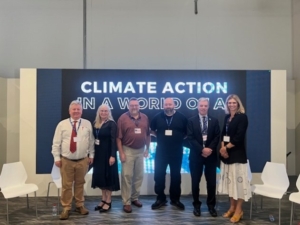
Left – right: Gerry Cunningham (EAGLES 2030) , Pat Cummens (Esri), Sean Breyer (Esri), Lee Mallon (Humanity), Erwin Rose (US State Dept), Valerie Hawley (Sorbonne Univ.)

The text that emerged from the lengthy discussions during COP28 just concluded in Dubai was hotly debated, and engaged the participants in difficult discussions of what language to include and which to exclude… and for some in the Environmental Education (EE) community, it rang a warning bell!  A quick key word search revealed that the word “Education” did not appear even once!  Of course no one will argue that education should be part of any global solution to climate change and the challenges of sustainability.  However, the modalities and strategies that will bring education as a supporting platform to the vital COP28 action verbs of Finance, Capacity Building and Technology Transfer must be rapidly deployed, discussed and agreed upon by relevant stakeholders.

And what a better place to do so than at WEEC12 in Abu Dhabi on January 29 through February 2, 2024!

To align the education agenda to the Technology Transfer actions, we can focus on the use of Artificial Intelligence (AI) in Environmental Education (EE), catalysing climate action  and contributing to environmental education.  In recent years the role of artificial intelligence (AI) has gained significant attention across the environmental and academic community.  The world is facing the triple planetary crisis – climate change, biodiversity loss and pollution – and technology and innovation has a key role to play in addressing these challenges.  There is an urgent need for innovative solutions to educate and engage the public in sustainable practices. This pathway will be amply demonstrated at WEEC12, with three sessions dedicated to the role of AI in enhancing the effectiveness of environmental education irrespective of geographic location, language barriers or technical infrastructural constraints.

To foreshadow these panels and underline the importance of EE, there were events at COP28 that addressed AI’s role in promoting new ways and tools for educators.

“AI is emerging as a powerful tool for how we learn about and interact with the environment, particularly through repackaging information and enhancing personalized learning experiences” said AI expert Lee Mallon, CTO of Humanity, Abu Dhabi at a COP28 side event on AI (see photo).  “Artificial Intelligence possesses the remarkable capability to transform extensive, 100-page reports on positive climate action into finely detailed narratives. This approach ensures that every individual across the globe can grasp the necessary steps for climate action. It tailors the information to align with the media channels that resonate most effectively with each person, enhancing their understanding and engagement in impactful environmental action”.

Other participants in the side event included US representative Erwin Rose who laid out a clear path for AI’s introduction as a powerful tool to support sustainability through the Climate Technology Centre and Network, eSRI representatives detailing location-based AI advances and EAGLES2030 chair Gerry Cunningham who offered practical strategies for implementation through collaboration.

https://weecnetwork.org/wn/wp-content/uploads/2023/12/cop28.jpg 646 1024 WEEC Network https://weecnetwork.org/wn/wp-content/uploads/2025/02/WEEC-Logo_200.png WEEC Network2023-12-28 12:41:522023-12-28 12:47:39Integrating artificial intelligence in global environmental education: insights from COP28 and prospects at WEEC12

Job opportunity at UQAM: professor position in environmental education with a focus on youth, environment, and education

20 December 2023/0 Comments/in Press/by WEEC Network

The Université du Québec à Montréal (UQAM) is pleased to announce the opening of a Professor position at the Department of didactics, specializing in environmental education, with a particular emphasis on “Youth, environment, education.” This opportunity aligns with the university’s commitment to renew its faculty and promote high-quality development across all areas of activity.

The selected individual is expected to commence duties on June 1, 2024, subject to budgetary approvals. This position offers a range of responsibilities, spanning from teaching to research development and mentoring students at the graduate level.

Key responsibilities:

  1. Teaching and course development: The selected candidate will be responsible for teaching and developing courses at the undergraduate and graduate levels in Environmental Education, particularly in teacher training and educational interventions for young people.
  2. Research in environmental education: Contribute to the development of research and the mobilization of knowledge in the field of Environmental Education, with a focus on “Youth, Environment, Education.”
  3. Supervision and direction of research: Provide guidance and supervision for theses, dissertations, and other research projects at the graduate level.
  4. Contribution to the research center: Actively participate in the activities of the Research Center in Environmental Education and Training (Centr’ERE).
  5. Academic engagement: Participate in departmental, faculty, inter-faculty, and inter-institutional academic activities.
  6. Interinstitutional cooperation: Contribute to the development of interinstitutional cooperation activities and collaborations with a variety of sectors.

Requirements:

  • Doctorate or doctoral studies in progress in the field of Environmental Education or another relevant field.
  • Expertise in teaching and research in Environmental Education.
  • Demonstrated ability to work collaboratively and manage team projects.
  • Skills in developing and fostering collaborations and partnerships.
  • Good knowledge of the local, regional, and international context in Environmental Education.
  • Proficiency in the French language, both oral and written.

Assets:

  • Knowledge and experience in the educational sector.
  • Proficiency in English and Spanish.

Priority will be given to Canadian citizens, Canadians, and permanent residents in accordance with Canadian immigration requirements.

Interested individuals are invited to submit a complete electronic dossier before January 15, 2024, at 5:00 PM. The dossier should include a signed cover letter, a detailed and signed curriculum vitae in French, excerpts from three relevant recent publications or achievements, teaching evaluation reports if available, written confirmation of the initial thesis submission (if applicable), and three letters of recommendation sent directly by the authors. An electronic version of the completed doctoral thesis or the accepted version of the thesis project should also be included.

UQAM encourages diversity and subscribes to an employment equality program, actively encouraging women, Inuit, Métis, First Nations members, visible minorities, ethnic minorities, and persons with disabilities to apply.

For more information on the application process and position details, please refer to the UQAM website at the following link: apply for this position

https://weecnetwork.org/wn/wp-content/uploads/2023/12/campuscentral.jpg 763 1080 WEEC Network https://weecnetwork.org/wn/wp-content/uploads/2025/02/WEEC-Logo_200.png WEEC Network2023-12-20 12:58:412023-12-20 15:57:20Job opportunity at UQAM: professor position in environmental education with a focus on youth, environment, and education

Illuminating the green future: distinguished speakers at the 12th WEEC in Abu Dhabi

14 December 2023/0 Comments/in Press/by WEEC Network

With the twelfth World Environmental Education Congress (WEEC) set to take place in Abu Dhabi from January 29 to February 2, the world will have the opportunity to listen and learn from a cadre of visionary experts and leaders in the environmental field. The Congress, which is already open for registrations, will serve as a catalyst for ideas and discussions aimed at shaping a greener and more sustainable future in the realm of education.

Spotlight on international visionaries

The speaker lineup comprises internationally renowned figures, experts, and industry thought leaders, all united by a common passion for environmental education and sustainable development.

H.E. Shaikha Al Dhaheri – Secretary-General, Environment Agency – Abu Dhabi

Dr. Shaikha Salem Al Dhaheri, Secretary-General of the Environment Agency – Abu Dhabi, will be among the distinguished speakers. With a Ph.D. in Wildlife Conservation and Protection from the University of Aberdeen in the United Kingdom, she is the first Emirati woman to achieve this accolade. Her leadership is crucial for safeguarding natural resources and promoting sustainable development in the emirate.

H.E. Razan Khalifa Al Mubarak – President, IUCN

Her Excellency Razan Khalifa Al Mubarak, President of the International Union for Conservation of Nature (IUCN), brings over twenty years of commitment to a sustainable future in the United Arab Emirates. Her election as the president of IUCN in September 2021 makes her the second woman to lead the organization in its 75-year history and its first president from West Asia.

Akpezi Ogbuigwe – Chairperson, Earth Charter International Council, and Regional Advisor for Africa, UNU/RCE’s

Dr. Akpezi Ogbuigwe, a respected practitioner in environmental law and education for global futures, will be present as the Chairperson of the Earth Charter International Council. Her diverse experience includes roles at the United Nations Environment Programme (UNEP) and as Adviser for the African Region at UNU-RCE’s.

Carlos Alvarez Pereira – Vice President, The Club of Rome, Spain

Carlos Alvarez Pereira, Vice President of The Club of Rome, will contribute his over 30 years of experience in research, innovation, entrepreneurship, and business management. His keen interest in complexity thinking and transdisciplinarity is vital for exploring the cultural transformation required for equitable human well-being within a healthy biosphere.

David Orr – Professor of Environmental Studies and Politics and Senior Adviser to the President of Oberlin College

Prof. David W. Orr, a Paul Sears Distinguished Professor of Environmental Studies and Politics and senior adviser to the president of Oberlin College, will bring his wisdom as a founding editor of the journal Solutions and as the executive director of the Oberlin Project, a collaborative effort for the resilience, prosperity, and sustainability of Oberlin.

Elizabeth Wathuti – Kenyan Environmentalist and Young Climate Leader, Kenya, and Founder of the Green Generation Initiative (GGI)

Elizabeth Wathuti, a dedicated environmentalist and dynamic young climate leader from Kenya, will be a strong voice for environmental preservation. As the Founder of the Green Generation Initiative, she played a crucial role in supporting the largest delegation of African youth at COP27 in Egypt.

Jeffrey Sachs – President of the UN Sustainable Development Solutions Network and Director of the Center for Sustainable Development, Columbia University

Prof. Jeffrey D. Sachs, University Professor and Director of the Center for Sustainable Development at Columbia University, will bring his extensive academic and advisory experience to promote sustainable development goals.

Judy Braus – Executive Director, North American Association for Environmental Education (NAAEE)

Judy Braus, with her wealth of experience in environmental education, assumes the role of Executive Director of the North American Association for Environmental Education. Her focus on diversity and inclusion is crucial for creating healthier and more sustainable communities through education.

Ricky Kej – Internationally Renowned Music Composer, Environmentalist and Professor

Three Times Grammy Award Winner, Awarded as the United Nations “Global Humanitarian Artist,” UNESCO MGIEP Ambassador, UNCCD “Land Ambassador,” UNICEF ‘Celebrity Supporter.’

Three-times Grammy Award-winning Indian music composer and environmentalist Ricky Kej will bring his passion through music. In addition to his musical achievements, Kej serves as a UNHCR “Goodwill Ambassador,” UNCCD Land Ambassador, and UNESCO – MGIEP “Global Ambassador for Kindness.”

Building a green future through environmental education

With such a prestigious lineup of speakers, the twelfth WEEC Congress promises to be a unique opportunity to inspire, enlighten, and trigger crucial discussions to shape a greener and more sustainable future in the field of education. Participation is open to all who share the mission of building a better world for everyone, based on a deep understanding of the environment and environmental education. Do not miss the opportunity to be part of this extraordinary experience.

For more information and registration details, visit WEEC 12 website

https://weecnetwork.org/wn/wp-content/uploads/2023/12/committee-header.jpg 387 1440 WEEC Network https://weecnetwork.org/wn/wp-content/uploads/2025/02/WEEC-Logo_200.png WEEC Network2023-12-14 12:55:002023-12-14 12:55:00Illuminating the green future: distinguished speakers at the 12th WEEC in Abu Dhabi

Speaking 4 the Planet 2024: youth voices resonate for wildlife conservation in Vietnam

13 December 2023/0 Comments/in Press/by WEEC Network

In a bid to spotlight grassroots initiatives addressing environmental challenges, Speaking 4 the Planet (S4P) 2024 is poised to unfold on January 21 and 22 at Vietnam’s Cat Tien National Park. While the event caters to students from Đồng Nai, Bình Phước, and Lâm Đồng provinces, its impact reverberates globally, highlighting the urgency of wildlife conservation. The theme, “Speaking for those unable to Speak,” guides participants as they delve into sub-topics like illegal wildlife trade and the symbiotic relationship between a green lifestyle and biodiversity.

Expressive narratives across categories
S4P’s four categories—Speech, Writing, Art, and Drama—serve as platforms for nuanced explorations of the chosen sub-topics. From persuasive speeches to catchy slogans and visually engaging artworks, each entry artfully intertwines the selected sub-topic with the broader theme. Drama, a dynamic category, unveils short performances shedding light on the intricacies of environmental challenges.

Recognition for creative advocacy
Judged by a discerning panel, entries are evaluated on creativity, relevance, and thematic alignment. The S4P competition, rooted in the belief that art and science complement each other in sustainability advocacy, offers prizes recognizing exceptional contributions. The winning team, crowned for their artistic and persuasive prowess, will receive 15,000,000 VND, with additional accolades for the second and third place. Individual achievements across categories will be celebrated with 1,500,000 VND each.

S4P: a blend of art, science, and global conversations
Beyond a conventional competition, Speaking 4 the Planet embodies an artistic journey into sustainability education. The fusion of science and the arts at S4P envisions science as the provider of essential data and the arts as transformative vehicles for societal change. As the 2024 competition unfolds, the Cat Tien National Park becomes a canvas for Vietnamese youth to articulate their perspectives on the planet’s health and their future. Speaking 4 the Planet 2024 transcends regional boundaries, fostering global conversations on the vital intersection of human actions, biodiversity, and environmental preservation.

https://weecnetwork.org/wn/wp-content/uploads/2023/12/slideshow-1-1280x480_c.webp 480 1280 WEEC Network https://weecnetwork.org/wn/wp-content/uploads/2025/02/WEEC-Logo_200.png WEEC Network2023-12-13 15:12:292023-12-13 15:12:29Speaking 4 the Planet 2024: youth voices resonate for wildlife conservation in Vietnam
Page 8 of 47«‹678910›»

Last News

  • No Limits to Hope. Nature as Teacher: Dr. Perry’s Vision for Learning and Sustainability
  • ArtWay: Education for a Harmonious and Responsible Humanity
  • The Future of Learning and 13th WEEC 2026: What Comes Next?
  • Forest, Climate and Natural Resource Governance
  • Beyond the ‘Human Gap’: Transforming Education for Sustainable Futures

No Limits To Hope Forum

  • No Limits to Hope. Nature as Teacher: Dr. Perry’s Vision for Learning and Sustainability19 December 2025 - 18:39by: WEEC Network
  • ArtWay: Education for a Harmonious and Responsible Humanity16 November 2025 - 14:45by: Natalia Rojcovscaia-Tumaha
  • Towards a Planetary Alliance: A Symphony of Hope How could an educational surrealist methodology bring about such a transformation?12 October 2025 - 17:26by: Jacques de Gerlache
  • Integrating National Education Policy 2020 and Citizen Science: Empowering Young Environmental Stewards for Pro-environmental behavior8 October 2025 - 17:23by: Sudeepa Kumari
  • Pope Francis’ Hope as Praxis of Education: foregrounds hope not as an abstraction, but as an active education practice that decolonizes6 October 2025 - 17:17by: Deogratias Fikiri SJ
  • Recent Publications on Environmental Regeneration and Global Challenges4 October 2025 - 17:11by: Andre Francisco Pilon
  • Chanter la Terre, rêver le Monde2 October 2025 - 17:07by: Patricia Fetnan
  • La educación ambiental como pilar del desarrollo sostenible en la Universidad de La Habana30 September 2025 - 17:01by: Mirurgia Aguilar Velazquez
  • Four Years of Regenerative Learning: Reflections from the Regenerative Leadership Journey29 September 2025 - 16:49by: Judit Saez Gonzalvez
  • Values-based Transformative Learning International Environment Forum27 September 2025 - 16:40by: Arthur Dahl

International Secretariat

Via del Carmine, 15
10122 Torino – Italy
tel.+39 0114366522
secretariat@weecnetwork.org

LEGAL NOTICE

Privacy Policy
Cookies Policy
Facebook

Discover all the activities on our Facebook Page

Instagram

Follow our Instagram Profile!

Linkedin

Join our Linkedin world

Youtube

Join The Newsletter

Stay up to date with the latest news and trends in the digital world! Subscribe to our newsletter to receive exclusive content, practical tips, and updates directly in your inbox.

© Copyright - weecnetwork || Powered by 19.coop
  • Facebook
  • Youtube
  • LinkedIn
  • Instagram
Scroll to top