Tag Archive for: Colombia

VIII Ibero-American Congress on Environmental Education: “Cultures and territories at peace with nature”

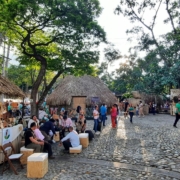
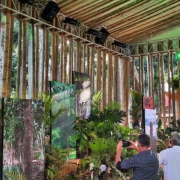
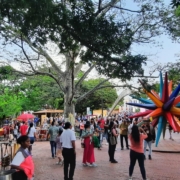
From October 16 to 18, 2024, Santiago de Cali, Colombia, hosted the VIII Ibero-American Congress on Environmental Education, a landmark event that brought together educators, policymakers, researchers, and community leaders from across the Ibero-American region. Under the theme “Cultures and territories at peace with nature” the congress reaffirmed its role as the most significant platform for advancing environmental education in the region.

Building on the legacy of seven previous editions held across Latin America since 1992, the congress showcased the strength of environmental education as a field of knowledge and practice. Participants revisited critical achievements, including advances in epistemology, policy frameworks, institutionalization, professionalization, and innovative pedagogies.

This year’s congress stood out for its focus on integrating diverse cultural and ecological perspectives, emphasizing the transformative power of education to address global environmental challenges and foster sustainability.

The event achieved several significant milestones, particularly in fostering environmental citizenship by emphasizing the role of education in developing a sense of responsibility, critical thinking, and proactive engagement among individuals. It also advanced policy integration by presenting concrete recommendations to embed environmental education into both national and international action plans, aligning them more closely with public policies. Furthermore, the congress provided a dynamic space for collaborative knowledge sharing, bringing together scientific, traditional, and community-based perspectives to address the complexities of environmental challenges.

The congress was also a showcase for sustainable event practices. Efforts included reducing waste, offsetting carbon emissions, and promoting local products and the circular economy. Participants actively engaged in social responsibility initiatives, leaving a positive impact on local communities in Cali. The congress led to several notable outcomes, including a strengthened commitment to fostering networks and collaborations throughout the Ibero-American region. It also resulted in the adoption of recommendations aimed at enhancing the role of environmental education within global environmental governance frameworks. Additionally, the event culminated in the creation of an open-access final report, which documented best practices, lessons learned, and strategic pathways for the future advancement of environmental education.

. By hosting the congress in Colombia, a megadiverse country, participants gained valuable insights into the current environmental challenges and conflicts faced by regions rich in biodiversity. The contributions from the congress served as critical inputs for discussions at COP16 on Biodiversity, ensuring that the role of environmental education was prominently addressed in global conservation strategies. The VIII Ibero-American Congress on Environmental Education left an indelible mark on the region’s approach to sustainability, equity, and peace. By bringing together diverse voices and championing a holistic view of environmental education, the event set the stage for meaningful action to address the intertwined crises of biodiversity loss, climate change, and social inequality.

Declaratoria de Lima

The crucial role of indigenous voices at COP16 and beyond

by Jason J. Pitman

The conversations at United Nations Biodiversity Conference (CBD COP16) in Cali, Colombia, held in October 2024, provided a powerful lens for the world to engage with the invaluable contributions of Indigenous communities to global environmental discourse. Through both formal, like those within the high-level discussions in the Blue Zone, and informal spaces curated and the dynamic community-based exchanges in the Green Zone, Indigenous voices echoed a collective call for the decolonisation and indigenisation of environmental education. This call emphasises the need to integrate Indigenous knowledge systems into educational frameworks to address global environmental challenges in a more holistic and inclusive manner.

At COP16, Indigenous leaders and activists were not mere bystanders to the discussions. They were, and have always been, key voices in the ongoing conversation about climate change, biodiversity loss, and sustainable environmental practices. Within the Blue Zone, formal panels offered a space for political and social commentary, where Indigenous perspectives shaped discussions on climate justice, environmental degradation, and sustainability. The stories shared in these panels brought attention to the long-standing relationship Indigenous peoples have with their lands and the urgent need for policies to respect and protect Indigenous territories, resources, and knowledge.

In the Green Zone, the energy shifted from formal discussions to grassroots, community-driven action. Here, a vibrant exchange of ideas took place, where Indigenous groups, community activists, and allies demonstrated how traditional ecological knowledge (TEK) is being applied in real-world contexts to solve environmental issues. These informal spaces underscored the relevance of Indigenous ways of knowing, seeing, and interacting with the environment. Evoking a deep connection between culture and biodiversity as a complex, living system to be nurtured and respected. The Green Zone’s emphasis on community engagement brought to the forefront the lived realities of Indigenous peoples and their innovative solutions to both local and global environmental challenges. Many of these conversations were candid and unfiltered, and while it is not my place to fully share those personal stories, one powerful message was repeated time and again. Indigenous women are leading the charge for biodiversity conservation, and it is time for all men to step aside and allow them to lead the way.

After two weeks of negotiations, delegates at COP16 reached a significant agreement to create a subsidiary body to include Indigenous peoples in future decision-making on nature conservation. This development marks an important step forward in the ongoing movement to recognise the critical role of Indigenous communities in protecting land and combating climate change. The decision underscores the growing recognition of Indigenous knowledge and leadership in environmental stewardship.

Following these efforts is the global call to also reclaim, revolutionise, decolonise, and indigenise education for the betterment of biodiversity. This is a pressing necessity in a world increasingly confronted with the devastating effects of climate change, loss of biodiversity, and environmental degradation. To address these crises, environmental education must evolve to meaningfully incorporate and acknowledge the wisdom and practices passed down through generations of Indigenous peoples. This process of decolonising and indigenising curricula and pedagogy involves more than just acknowledging Indigenous knowledge, it requires a fundamental shift in the way we think about education itself.

It is a privilege to learn from Indigenous knowledge systems as they are deeply rooted in millennia of observation, cultural practices, and spiritual beliefs. These systems offer invaluable insights into sustainable living and environmental stewardship. Often holistic, they emphasise the interconnectedness of all living beings, the importance of community, and the reciprocity between humans and nature. Yet, it is essential to recognise the wisdom Indigenous peoples share is not without its cost. Historically, their knowledge has been extracted without adequate recognition or compensation, and the economic payback for such contributions has been minimal. By embedding Indigenous knowledge and approaches into educational frameworks, we not only broaden the scope of environmental education but also promote a more inclusive and equitable approach to learning. Such approaches must honour the deep value of these contributions by ensuring Indigenous communities are compensated fairly and respected for revolutionising such educational frameworks.

Looking ahead, the 13th World Environmental Education Congress (WEEC) 2026, to be held in Western Australia, provides a timely and symbolic backdrop for furthering the international discourse on the importance of Indigenous voices in environmental education. Western Australia is home to a rich diversity of First Nations peoples whose deep knowledge of the land, seas, and skies stretches back tens of thousands of years. The inclusion of Indigenous perspectives in the 13th WEEC 2026 agenda will allow for a meaningful exchange of ideas on how to transform environmental education into a more inclusive, culturally relevant, and effective system for addressing global challenges.

Indigenous knowledge is particularly crucial in the Global South, where many of the world’s most vulnerable communities reside. As we move forward in addressing the environmental crises facing our world, it is crucial we not only hear Indigenous voices but also respect and integrate their knowledge into formal and in-formal education systems. Incorporating Indigenous perspectives in environmental education, from the classroom to the field, is not just a moral imperative. it is a critical step toward achieving true sustainability. As the world departs from COP16, and as we progress the next two years towards the 13th WEEC 2026, let us listen, learn, partner, and act upon the call of Indigenous peoples to shape a better world for future generations.

Education, youth empowerment, and global partnerships at the heart of biodiversity action

by Jason J. Pitman

As the world continues to confront the urgent challenges of biodiversity loss and environmental degradation, the importance of education as a key driver for change has never been clearer. At 2024 United Nations Biodiversity Conference (CBD COP16), held in Cali, Colombia in October, the global community came together to reaffirm the vital role of education in advancing the conservation goals outlined in the Kunming-Montreal Global Biodiversity Framework. With an eye toward 2026, this momentum will carry forward into the 13th World Environmental Education Congress (WEEC), hosted in Perth, Western Australia, where key themes around transformative educational approaches will be explored.

On Wednesday, 23rd October, the spotlight at COP16 was firmly on education, with a dedicated Education Day at the Kunming-Montreal Global Biodiversity Framework Pavilion. This event responded directly to the May 2024 request from the Convention on Biological Diversity’s Subsidiary Body on Implementation, who called for a Global Plan of Action for Education on Biodiversity. The day brought together over a hundred education experts, leaders, and importantly young people, from across the globe to discuss the essential frameworks, activities, and partnerships required to advance biodiversity education at local and global levels.

The Education Day underscored a clear message. Education is not a luxury, but a fundamental tool for achieving global biodiversity targets. The discussions highlighted how embedding education into national biodiversity strategies, curricula, and policies will be crucial to ensuring the long-term success of biodiversity conservation efforts. From formal to non-formal education, the call was made for all systems to integrate biodiversity education across every level of society, from classrooms to community spaces.

One of the most powerful moments of the day was the release of the Global Child Biodiversity Declaration, crafted by youth delegates from over 25 countries. The Declaration, produced as part of the EducationNatureNexus (#ENN) program run by the Centre for Global Education. In preparation for the Declaration, over 600 children aged 6-18 from around the world participated in a Global Student Environment Survey, sharing their personal experiences with nature, environmental education, and government policies. This Declaration represents a powerful call to action for the world to listen, and act upon, youth voices in the fight for biodiversity preservation. In their declaration, youth demanded government policies ensure every child’s right to high-quality biodiversity education, integration of Indigenous knowledge, and transformative curricula to encourage hands-on, nature-based learning.

The declaration also highlighted the rising tide of eco-anxiety among young people, with nearly 80% of students globally report feeling a deep concern for the planet’s future. But this also demonstrates their readiness to engage in transformative solutions as witness by the young people who spoke clearly and confidently in announcing the Declaration to an international audience. The energy and passion of these young changemakers will form the foundation for future efforts, including the call to action for education to become central in achieving the ambitious biodiversity targets set by COP16.

A major takeaway from the Education Day discussions was the power of partnerships. Educators, governments, organisations, and youth must work together, pooling resources and knowledge to drive the educational reforms needed for biodiversity conservation.

This spirit of collaboration will carry over into the 13th World Environmental Education Congress in 2026, where participants will continue to explore how partnerships can foster interdisciplinary and transdisciplinary approaches in education, enabling global cooperation for a more sustainable and biodiverse future. The next WEEC will be a platform for showcasing successful examples of cross-sector partnerships in education, and for inviting global partners to unite behind shared goals of educational transformation.

As momentum builds, the 13th WEEC 2026 in Perth will focus on two critical international calls to action address the needs identified at COP16. The first call, Empowering Learners as Change Agents will seek to inspire educational reforms to build agency in learners, enabling them to develop critical thinking, problem-solving, and leadership skills to actively participate in societal change and tackle environmental challenges. As witness in the Declaration prepared and voiced by international youth. The second call, Interdisciplinary Approaches for a Sustainable Future, will continue to amplify the need for education systems to integrate interdisciplinary and transdisciplinary approaches, breaking down silos between subjects, and fostering a holistic understanding of the interconnectedness of biodiversity, climate, and sustainable development. Through these actions, communities will be better equipped to respond to the multifaceted challenges of the biodiversity crisis.

As COP16 draws to a close, we have two years in preparation for the 13th WEEC 2026. With this, there is a growing call for global partners to get involved and continue in these critical conversation. Governments, NGOs, educational institutions, and the private sector all have a role to play in advancing education for biodiversity. However, perhaps the most important partners are young people. They are the future stewards of the planet, and their voices must be heard in every conversation about environmental education and action.

The Youth Environmental Education Congress 2026 will take place in conjunction with WEEC, and its sole-purpose is to amplify the diverse youth voices in environmental education. Further reigniting the need and call for young people to globally unite with educators, policymakers, and thought leaders to explore intergenerational wisdom and create space for youth-led solutions including:

  • Bridging the gap between youth and elders for educational transformation.
  • Challenging conventional educational structures and embracing ecological perspectives.
  • Ensuring inclusivity and amplifying marginalised or under-represented voices in educational spaces.
  • Pioneering change into the broader sustainability agenda.

As the global community continues critical conversations outside of the confines of conference walls, the action from COP16 is clear: we must prioritise education for biodiversity conservation, empower youth to take a leading role, and foster collaborative partnerships to achieve shared environmental goals. The declaration from youth at COP16 provides a powerful roadmap for the future of education and biodiversity, and the work will continue at 13th WEEC 2026, where we will collectively chart the path toward a more sustainable and biodiverse world. Therefore, we invite global partners, educational institutions, youth organisations, and environmental leaders to join us in this transformative journey. Together, we can create an educational ecosystem, one empowering learners, fosters collective action, and delivers tangible solutions for the planet’s future.

COP16, keys to biodiversity conservation

COP16 on Biodiversity took place in Cali, Colombia, from October 21 to November 1, 2024. This important event brought together representatives from around 200 nations, industry experts, activists, and members of indigenous communities. The conference focused on diverse ideas and strategies for protecting biodiversity, a topic that is increasingly vital in light of the ongoing ecological crisis.

During COP16, Jason J. Pitman, co-organizer of the WEEC 2026 congress scheduled for Perth, Australia, actively engaged in crucial discussions and initiatives surrounding environmental conservation. Stay connected with us on social media and subscribe to our newsletter for updates. Soon, you can read his article sharing insights and experiences from this significant international gathering.

Biodiversity crisis

Our planet’s biodiversity is facing unprecedented pressure. The IPBES (Intergovernmental Science-Policy Platform on Biodiversity and Ecosystem Services) reports that one million species are at risk of extinction. This is primarily due to climate change, habitat loss, pollution, and the introduction of invasive species. This crisis endangers not only the species themselves but also the ecosystem services that humans rely on for survival and well-being.

The upcoming COP16 conference occurs against the backdrop of the Kunming-Montreal Agreement and the Global Biodiversity Framework (GBF). These initiatives aim to halt biodiversity loss and restore ecosystems by 2030. COP16’s mission is to translate these ambitious goals into concrete, measurable actions.

Results of the conference

Advisory Body for Indigenous Peoples: One of the conference’s most significant outcomes was the establishment of a permanent advisory body for indigenous peoples. This new organization aims to ensure that indigenous communities have a voice in biodiversity conservation decisions. These communities, who hold extensive traditional knowledge and sustainable practices, are crucial for protecting ecosystems and managing natural resources.

Cali Fund: The conference approved the Cali Fund, designed to facilitate the sharing of benefits derived from digital genetic information. This fund is particularly relevant for the pharmaceutical industry, which often accesses genetic resources without providing adequate compensation to local communities. However, the voluntary nature of the payments from the fund raises concerns about its effectiveness in ensuring a fair return for these communities.

Protection of Marine Areas: Another important agreement was the recognition and protection of ecologically and biologically significant marine areas (EBSAs). This decision includes the creation of an international advisory group to coordinate conservation efforts in international waters. Protecting our oceans is vital, as they are essential for climate regulation and marine biodiversity.

Funding and Governance: Despite the progress made, COP16 revealed a significant impasse regarding the funding necessary for biodiversity conservation. Developing countries, which host the majority of the world’s biodiversity, called for the establishment of a new fund with fair governance. Distrust in the Global Environment Facility (GEF) complicated negotiations, making it challenging to reach an agreement on funding.

Unfortunately, the funding promises from developed countries have fallen short of meeting the needs expressed by developing nations.

Facing the crisis and challenges

COP16 highlighted not only the successes but also the enormous challenges that remain in biodiversity conservation. Initiatives like the Cali Fund and the inclusion of indigenous peoples are significant steps, but they are insufficient without robust financial support and concrete implementation measures.

Another challenge is the need to monitor and evaluate progress towards the established goals. Without clear monitoring mechanisms, it is difficult to ensure that the adopted policies have a real impact on biodiversity conservation. Furthermore, the implementation of conservation measures must be accompanied by strategies for adapting to climate change, as many ecosystems are already under pressure from this phenomenon.

The issue of accountability and transparency in the management of biodiversity funds is crucial. Developing countries have expressed concern that existing funds have not been used effectively and that governance is often influenced by external interests, creating a disparity in resource control and decision-making regarding conservation.

Towards a sustainable future? Reflections on COP16 and biodiversity prospects

As we reflect on the developments of COP16, it becomes evident that while significant progress has been achieved, the conference underscored the fragility of international agreements concerning biodiversity. The creation of an advisory body for indigenous peoples and the establishment of the Cali Fund are positive steps forward. However, the absence of a clear financing agreement raises concerns.

It is crucial for the international community to ramp up efforts to ensure that funding commitments lead to tangible actions. Biodiversity is not solely an environmental issue; it is also deeply intertwined with economic and social factors. Protecting biodiversity equates to investing in the future of our planet and the well-being of future generations.

Furthermore, the active involvement of indigenous communities is essential. These groups possess a profound understanding of their lands and resources, along with a cultural and spiritual connection to nature that is vital for effective conservation. It is imperative that their rights are upheld and their voices are amplified.

COP16 should serve as a wake-up call for all of us. The biodiversity crisis is a global challenge that affects every citizen. We must work together, both locally and globally, to safeguard biodiversity, combat climate change, and secure a sustainable future. The path ahead is long, but COP16 has demonstrated that international collaboration is not only possible but necessary.

COP16 as a catalyst for change

The COP16 on biodiversity served as an essential platform for addressing the challenges and opportunities in biodiversity conservation. While some progress has been made, significant obstacles remain due to the lack of clear funding agreements and binding mechanisms. The future of our planet’s biodiversity hinges on our ability to collaborate, innovate, and commit to protecting the ecosystems and species that sustain it. Only through collective and concerted efforts can we hope to overcome the challenges ahead and ensure a healthy and vibrant planet for future generations.

Call for Research Associate in Colombia

SEI (Stockholm Environment Institute) Latin America is recruiting a highly motivated early-career colleague (Research Associate) who is committed to conducting quantitative research to support the implementation of the Sustainable Development Goals (SDGs) in Latin American countries. The Research Associate will work under the leadership of the SEI Latin America SDGs program manager.

The main responsibilities will include:
– Contributing to SEI’s current portfolio of research projects, for example; reviewing literature, carrying out interviews and other socio-environmental data collection, data analysis and reporting
– Support the development of scientific research, models and tools related to topics covered by the SDGs
– Support the development and application of user-friendly tools and activities for stakeholder’s engagement, capacity building and decision making for SDG implementation, including organizing workshops and dialogues
– Support the preparation of reports, scientific publications, guides and manuals and presentations, among others.

The candidate’s profile
To succeed in this role, the candidate has to be organized, collaborative, solution oriented, proactive and have excellent communications skills in both Spanish and English. He/She must have the ability to work independently and is good at meeting dates and deadlines. The candidate should be able to, on occasion, work on the field (inside and outside of the country).

Qualifications and experience
B.Sc. in engineering, statistics, environmental- or earth sciences, with 1-3 years of work experience, or hold a relevant M.Sc. with no professional experience
Experience in quantitative research. Experience related to statistics, data and development is a plus
Familiarity with conducting desk research and navigating academic sources and online databases
Knowledge of network analysis software (e.g. Netdraw, Pajek and Gephi)
Excellent writing and communication skills in Spanish and English
Knowledge of socio-environmental conditions in Latin America is desired.

How to apply
Aapplications are reviewed on an ongoing basis so please submit your application as soon as possible, however no later than 8 February 2019 23:59 Colombia standard time.

Applications are accepted only through the recruitment system, you could apply online using this link and include cover letter highlighting relevant qualifications and experience, curriculum vitae.

2016 World Summit of Local and Regional Leaders

The 2016 World Summit of Local and Regional Leaders, themed ‘Local Voices for a Better World,‘ opened on Wednesday, 12 October 2016, in Bogotá, Colombia, and will continue through Saturday, 15 October. The World Summit, organized by United Cities and Local Governments (UCLG), is the largest global gathering of mayors, councilors, representatives of local governments, and other interested policymakers and practitioners.

Four major deliverables are expected from the 2016 World Summit. The Global Agenda of Local and Regional Governments for the 21st Century will reflect the discussions held in the Summit’s plenaries and policy dialogues, highlighting local and regional authorities’ priorities that are not currently included in global development negotiations surrounding Habitat III and the Sustainable Development Goals (SDGs).

Accompanying the Global Agenda will be the launch of the 4th Global Report on Local Democracy and Decentralization (GOLD IV), providing analysis, innovative examples and case studies from around the globe to support the recommendations of the Global Agenda. Another major output will be the Bogotá Statements, which will capture the major challenges that local and regional governments have identified during the Summit. The fourth and final expected outcome is the Key Recommendations of Local and Regional Governments to Habitat III.

To learn more visit here.