Tag Archive for: news from the network

Proceedings of the 12th WEEC in Abu Dhabi now officially published

We are pleased to announce that the proceedings of the 12th World Environmental Education Congress (WEEC), organized jointly with the Abu Dhabi Environment Agency, held in Abu Dhabi from January 29 to February 2, 2024, have been published and are freely available online.

📥 Download the full proceedings here:
👉 WEEC 2024 Proceedings PDF


About WEEC 2024

WEEC 2024 reaffirms the critical role of Environmental Education (EE) and Education for Sustainable Development (ESD) in humanity’s transformation toward a more sustainable world.

Held in Abu Dhabi, the Congress offered meaningful opportunities to connect educators, researchers, policymakers, and activists from across the globe to share, learn, and engage in dialogue around the latest developments in environmental and sustainability education.

The event explored education at all levels —formal, non-formal, and informal — and welcomed a rich variety of contributions. In addition to academic and practitioner abstracts, the Congress also embraced creative and interactive formats, including fiction, performances, games, and participatory workshops that reflected the diversity and innovation within the EE and ESD fields.


About the Proceedings

The published proceedings span over 400 pages, showcasing the intellectual and creative contributions that made WEEC 2024 such a dynamic event.

The document is structured around four thematic clusters:

  • The Challenges: addressing the triple planetary crisis—climate change, pollution, and biodiversity loss—and the water-food-energy nexus.

  • The Goals: highlighting global and local strategies for sustainability education, including school-based initiatives, ecosystem restoration, and engagement with the SDGs.

  • The Dimensions: exploring values, cultural diversity, indigenous knowledge, and the emotional and aesthetic dimensions of environmental education.

  • The Means: focusing on tools and strategies, such as artificial intelligence, early childhood education, and innovative technologies for environmental learning.

Each section includes a range of case studies, academic papers, and experiential learning models, offering both theoretical insights and practical applications from diverse global contexts.


Recognizing the Socio-scientific Committee

A special acknowledgment goes to the International and Local Socio-scientific Committee, whose dedicated work was instrumental to the success of WEEC 2024.

Their efforts included:

  • Reviewing over 700 submissions;

  • Acting as national and international liaisons;

  • Defining the Congress’s thematic structure;

  • Coordinating thematic niches and parallel sessions to ensure coherence and inclusiveness.

Their guidance greatly contributed to the scientific depth and overall coherence of the Congress, as clearly reflected in the breadth and quality of the published proceedings.


We hope this publication will serve as a valuable resource for educators, researchers, institutions, and all stakeholders committed to advancing sustainability through education. It is a testament to the global community’s shared commitment to ecological awareness, knowledge exchange, and transformative learning.

Stay connected with the WEEC Network as we continue moving forward — toward WEEC 2026 and beyond.

Blue Mediterranean Partnership. Spain pledges €8.5M to multi-donor sustainable blue economy fund

The UfM (Union for the Mediterranean) high-level session was held on Tuesday 10 June in the framework of the Mediterranean Day at the Third United Nations Oceans Conference in Nice (France).

The session focused on the leading role of the Mediterranean in promoting a sustainable blue economy. Among the main points was the formal commitment of Spain to contribute 8.5 million euros to the Blue Mediterranean Partnership (BMP), a multi-donor fund promoted by the UfM that mobilises investments in sustainable blue economy projects in the Southern Mediterranean and Red Sea areas. The first projects that will be developed are the Morocco’s first offshore windfarm, the restoration of a coral ecosystem in Jordan and the development of a wastewater treatment facility in Egypt.

“Charting the path towards sustainable blue economy: the Mediterranean leading the way” is a Union for the Mediterranean-led event on the region’s role in advancing the sustainable use of marine resources to promote socioeconomic development.
Government officials, development agencies, regional networks, private sector actors, and civil society showcased innovative financing mechanisms, cutting-edge technologies and replicable initiatives.
The event highlighted priority areas for cooperation among the 43 UfM Member States, including maritime clusters, decarbonisation, marine biodiversity, blue jobs, renewable energy, sustainable tourism, pollution prevention, and circular economy enterprises. More than €500M euros have been mobilised for over 250 regional projects in these domains since the first UfM Ministerial Declaration on Sustainable Blue Economy in 2015.
Among the speakers were European Commissioner Cóstas Kadis, Spanish Minister Sara Aagesen and UfM Secretary General Nasser Kamel.

“The Mediterranean sea plays a key role in setting the path towards a sustainable blue economy and can act as a model for other sea basins,” said EU Commissioner for Fisheries and Oceans Costas Kadis. “The Ocean Pact, just adopted by the Commission, underscores the importance of unlocking financial support from both private and public sources to boost investments in ocean related actions, supporting EU blue economy and innovation.”

“Since the inception of this initiative in 2015, the Sustainable Blue Economy has emerged as a transformative force for regional cooperation and partnership. It serves as a key to unlocking a wealth of environmental, social, and economic benefits across our basin. This is why the UNOC ‘Med Day’ provides an ideal platform to highlight our achievements and ongoing efforts,” said Aqaba Special Economic Zone Authority Commissioner Aiman Soleiman of Jordan.

“The Mediterranean Sea is not just a body of water—it’s a cradle of civilisation, a hub of biodiversity, and a vital source of livelihood for millions. The Mediterranean Sea shapes our past, present and future history, economy and identity,” said Spanish Minister for Ecological Transition Sara Aagesen.

“Our rich sustainable blue economy community undoubtedly serves as inspiration for other parts of the world,” said UfM Secretary General Nasser Kamel. “The UfM has played a pioneering role in establishing and strengthening the political and technical dialogue on Sustainable Blue Economy at regional level”.

Speaking 4 the Planet: creativity, courage, and a call for change

Speaking 4 the Planet (S4P) is an arts-based approach to sustainability education that empowers young people to become informed, passionate advocates for the Earth and its many species. Launched in 2013 as a competition for secondary school students, S4P has since evolved into a global platform where students express environmental concerns and hopes through creativity, critical thinking, and evidence-based advocacy.

Designed to celebrate youth voices on issues affecting the planet and their future, S4P invites participants to blend the humanities and sciences, to reflect on the philosophical dimensions of human impact, and to imagine a better world grounded in scientific understanding.

Over time, the initiative has expanded to include primary, secondary, and tertiary institutions, offering competitions in a variety of expressive formats—public speaking, art, writing, drama, video, memes, and STEM. These events not only help students develop their skills, but also emphasize the importance of having a voice and using it for change. S4P values creativity, critical inquiry, and unconventional solutions to some of the world’s most urgent environmental challenges.

Importantly, S4P helps young people recognize that they are not alone in their concern for the future. It builds local and global networks of students, schools, and communities united by a shared commitment to sustainability and social responsibility.

A timeline told through posters

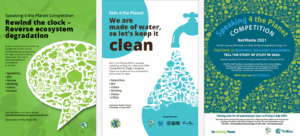
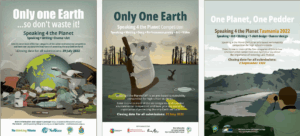
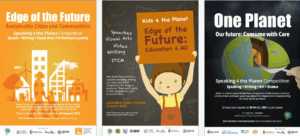
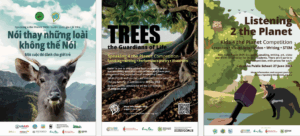
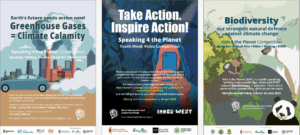
Each year, the competition is shaped by a new theme, as illustrated in its visual archive of event posters:

  • 2021: “Rewind the Clock – Reverse Ecosystem Degradation” encouraged students to reflect on the importance of ecosystems.

  • 2022: With events such as “Only One Earth… so don’t waste it!” and “One Planet, One Pedder”, the focus shifted to waste reduction and ecosystem restoration.

  • 2023: “One Planet. Our Future: Consume with Care” addressed sustainable consumption, while Kids 4 the Planet continued engaging younger students.

  • 2024: The largest S4P to date was held in Vietnam, giving voice to wildlife and biodiversity. In Uganda, the first African edition mobilized over 200 students from 11 school clubs, showcasing solutions through performances, displays, and debate.

  • 2025: “Greenhouse Gases = Climate Calamity”, hosted in Sydney, focused on air pollution and climate action through speaking, writing, visual and recycled art.

These posters not only capture annual themes—they mark the growth of a movement that continues to adapt to local contexts while remaining rooted in a shared global vision.

An invitation to join the movement

Educators, students, and organizations around the world are invited to take part in future editions of S4P. The project offers guidance and support for those interested in hosting their own competition, helping local communities create engaging, meaningful, and youth-driven sustainability events.

For more information, contact: phil@speaking4theplanet.org.au

Visit: https://speaking4theplanet.org.au

Let the next generation’s words, images, and ideas speak for the planet.

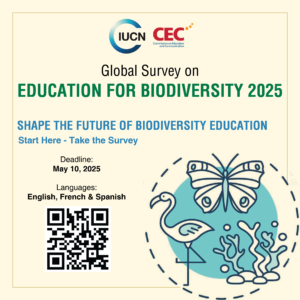
Join the IUCN CEC 2025 Global Survey on Education for Biodiversity

We invite you to participate in the IUCN Commission on Education and Communication (CEC) Survey on Education for Biodiversity 2025, led by the IUCN CEC Task Force on Nature-Based Education.

This marks the first global survey dedicated entirely to the educational aspects of:

  • Biodiversity conservation
  • Climate action
  • Sustainable development
  • Nature-based learning

The aim of this survey is to assess and document ongoing educational initiatives, identify current needs and opportunities, and exchange best practices and insights from across the globe.

Survey link: https://rb.gy/c6winm

Deadline: May 10, 2025

We encourage you to complete the survey. Your feedback is crucial in shaping the future of global nature education.

Our Ocean, Our Action: 10th Our Ocean Conference launches today in Busan, Republic of Korea

Today, April 28, 2025, marks the opening of the 10th Our Ocean Conference (OOC) in Busan, Republic of Korea, bringing together more than 1,000 leaders, policymakers, scientists, youth representatives, and advocates from across the globe to accelerate ocean action and climate solutions.

Under the theme “Our Ocean, Our Action” the conference reflects on a decade of progress in ocean protection and looks ahead to the urgent challenges still facing the marine environment. Participants will share successful initiatives, evaluate the impact of commitments made over the past 10 years, and forge new alliances for the decade to come.

“The tenth Our Ocean Conference offers a vital opportunity to celebrate achievements and chart a new course for stronger international cooperation,” said Do-hyung Kang, Minister of Oceans and Fisheries of the Republic of Korea, during the opening ceremony.

Since its inception in 2014, the Our Ocean Conference has generated over 2,600 voluntary commitments, contributing to the creation of marine protected areas, the fight against illegal fishing, and the promotion of a sustainable blue economy. Nearly half of the world’s marine protected areas were first announced at OOC events.

For the first time, a full analysis of these commitments will be presented, with a report by the World Resources Institute showing that more than $133 billion in funding has already been mobilized out of the $160 billion pledged. These investments support critical efforts such as marine biodiversity conservation, combating illegal fishing, and ocean-climate solutions that contribute to reducing global emissions.

The conference comes at a crucial time. Despite major achievements, ocean ecosystems continue to suffer from climate change, overexploitation, and pollution. Scientists warn that immediate action and greater investment are essential to reverse the damage and ensure the ocean’s vital role in climate regulation, food security, and economic development.

The Republic of Korea recently became the 21st country to ratify the High Seas Treaty, a milestone agreement aimed at protecting international waters. Building on this momentum, the Busan conference is expected to energize global efforts ahead.

For more information:
https://ourocean2025.kr
www.ouroceanconference.org

Press contact details:
Our Ocean Conference: ourocean2025media@korea.kr
Patricia Roy: patricia@communicationsinc.co.uk, Tel: +34 696 905 907

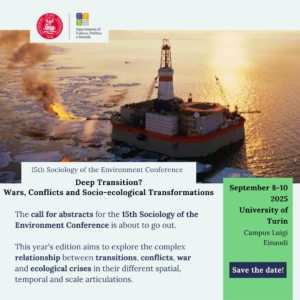
Turin hosts the 15th Conference of Environmental Sociologists. Deep Transition? Wars, conflicts and socio-ecological transformations

From September 8 to 10, 2025, the University of Turin will become a focal point for scientific debate on contemporary environmental and social challenges as it hosts the XV Conference on Environmental Sociology at the Luigi Einaudi Campus. Organized by the Department of Cultures, Politics, and Society, the event will explore “Deep Transitions” — the profound societal transformations driven by wars, conflicts, and ecological crises.

A timely and crucial theme

The 2025 conference will examine the complex interplay between ecological transitions, armed conflicts, and socio-economic changes, investigating how these factors influence one another at both local and global levels. A call for abstracts, set to be released in the coming months, will invite researchers, academics, and professionals to contribute their perspectives across a range of disciplines.

Objectives and key themes

The conference aims to foster interdisciplinary dialogue, generating fresh insights into how conflicts and crises shape ecological transitions. The main thematic areas will include:

  • Energy transitions and geopolitical conflicts: exploring how the competition for natural resources intensifies international and local tensions.
  • Climate crisis and forced migrations: analyzing migratory flows triggered by extreme weather events and environmental degradation.
  • Circular economy and alternative development models: proposing pathways toward post-growth and post-carbon societies.
  • Social movements and environmental justice: investigating the role of civil society in influencing public policies for sustainability.
  • Global governance and environmental policies: examining the role of international institutions in addressing environmental challenges and fostering cooperation.

A  platform for international exchange

The conference will welcome leading scholars and researchers from universities and research centers worldwide. The program will include plenary sessions, thematic panels, roundtables, and participatory workshops, offering participants a rich opportunity to engage deeply with various aspects of socio-ecological transitions.

Among the expected speakers are experts in political ecology, environmental sociology, conflict studies, and sustainability sciences, who will share their research and help shape a constructive debate on future trajectories.

Bridging research and action

One of the conference’s key strengths will be its emphasis on translating academic research into practical recommendations for policymakers and environmental activists. By facilitating the exchange of knowledge and experiences, the event aims to identify innovative solutions to pressing environmental and social issues, encouraging collaboration between academia, institutions, and local communities.

An essential event for scholars and society

The XV Conference on Environmental Sociology offers a unique opportunity to reflect on the role of sociology in understanding and navigating ecological transitions and global conflicts. The event aspires to stimulate critical knowledge production and promote more just and sustainable social and ecological practices.

For those eager to contribute, the upcoming call for abstracts will provide a platform to present research proposals and innovative projects. Details on submission deadlines and procedures will soon be available on the university’s official website.

In an era marked by unprecedented environmental challenges, moments of collective dialogue like this are vital for imagining and constructing alternative futures.

Save the date and join us for an event poised to leave a lasting impact on both the scientific community and society at large.

👉 For more information and to participate in the call for abstracts, CLICK HERE to download the full document.

Rey Juan Carlos University to host the VII International Congress on environmental education: advancing sustainability and ecological transformation

13-16 de Marzo 2025 | Universidad Rey Juan Carlos (Fuenlabrada, Madrid)

“Educación Ambiental para la transformación social y ecológica: de la conciencia a la acción. Sembrando cambios, cultivando futuros”.

From March 13 to 16, 2025, Rey Juan Carlos University in Fuenlabrada, Madrid, will host the VII International Congress on Environmental Education, held in conjunction with the VII Ibero-American Congress on Environmental Education for Sustainability. The event, titled “Environmental Education for Social and Ecological Transformation: From Awareness to Action. Sowing Change, Cultivating Futures,” aims to provide a collaborative platform for participants and partner organizations to discuss and promote environmental education and sustainability strategies.

Objectives of the VII International Congress on Environmental Education

The congress will focus on several key objectives, including:
Raising public awareness and fostering citizen participation in building a sustainable future.
Highlighting the connection between human health and the environment while promoting sustainable lifestyles.
Strengthening the professional role of environmental educators as essential agents of ecological transformation and sustainable development.

Evaluating the current status of environmental education in the education system to identify challenges and needs.
Encouraging collaboration and networking among local and international organizations to address the eco-social crisis.
Organizers and ParticipantsThe congress is organized by the Spanish Association for Environmental Education (AEEA) in partnership with Rey Juan Carlos University. It represents a significant opportunity for researchers, educators, and professionals to engage in meaningful discussions on sustainability and eco-social transformation.

The scientific committee is chaired by Dr. Aurelio Santiesteban Cimarro from the Autonomous University of Madrid and includes distinguished experts from various institutions such as the Complutense University of Madrid, the University of Valencia, the University of Granada, the University of Valladolid, UNICEPES in Mexico, and Enrique José Varona University in Cuba. The organizing committee is led by María Roca Carrera, supported by a team of dedicated professionals.

The inaugural speech will be delivered by María Novo from the UNESCO Chair on Environmental Education and Sustainable Development at UNED, who is also a member of the WEEC network.

Key topics and activities

  • The congress will address critical topics such as:
  • Circular economy and responsible consumption.
  • The link between environmental health and human well-being.
  • Integrating environmental education into school curricula.
  • The active role of citizens in environmental protection.

Attendees will have the opportunity to participate in plenary sessions, interactive workshops, expert presentations, and discussions featuring leading educators and researchers. The event’s comprehensive program will facilitate knowledge exchange and foster collaboration in building a more sustainable future.

Registration and additional information

For further details and to register for the congress, visit the official event website. The VII International Congress on Environmental Education promises to be a landmark event, inspiring actionable change in environmental education and sustainability efforts worldwide.

The crucial role of indigenous voices at COP16 and beyond

by Jason J. Pitman

The conversations at United Nations Biodiversity Conference (CBD COP16) in Cali, Colombia, held in October 2024, provided a powerful lens for the world to engage with the invaluable contributions of Indigenous communities to global environmental discourse. Through both formal, like those within the high-level discussions in the Blue Zone, and informal spaces curated and the dynamic community-based exchanges in the Green Zone, Indigenous voices echoed a collective call for the decolonisation and indigenisation of environmental education. This call emphasises the need to integrate Indigenous knowledge systems into educational frameworks to address global environmental challenges in a more holistic and inclusive manner.

At COP16, Indigenous leaders and activists were not mere bystanders to the discussions. They were, and have always been, key voices in the ongoing conversation about climate change, biodiversity loss, and sustainable environmental practices. Within the Blue Zone, formal panels offered a space for political and social commentary, where Indigenous perspectives shaped discussions on climate justice, environmental degradation, and sustainability. The stories shared in these panels brought attention to the long-standing relationship Indigenous peoples have with their lands and the urgent need for policies to respect and protect Indigenous territories, resources, and knowledge.

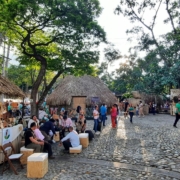
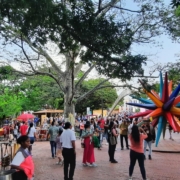
In the Green Zone, the energy shifted from formal discussions to grassroots, community-driven action. Here, a vibrant exchange of ideas took place, where Indigenous groups, community activists, and allies demonstrated how traditional ecological knowledge (TEK) is being applied in real-world contexts to solve environmental issues. These informal spaces underscored the relevance of Indigenous ways of knowing, seeing, and interacting with the environment. Evoking a deep connection between culture and biodiversity as a complex, living system to be nurtured and respected. The Green Zone’s emphasis on community engagement brought to the forefront the lived realities of Indigenous peoples and their innovative solutions to both local and global environmental challenges. Many of these conversations were candid and unfiltered, and while it is not my place to fully share those personal stories, one powerful message was repeated time and again. Indigenous women are leading the charge for biodiversity conservation, and it is time for all men to step aside and allow them to lead the way.

After two weeks of negotiations, delegates at COP16 reached a significant agreement to create a subsidiary body to include Indigenous peoples in future decision-making on nature conservation. This development marks an important step forward in the ongoing movement to recognise the critical role of Indigenous communities in protecting land and combating climate change. The decision underscores the growing recognition of Indigenous knowledge and leadership in environmental stewardship.

Following these efforts is the global call to also reclaim, revolutionise, decolonise, and indigenise education for the betterment of biodiversity. This is a pressing necessity in a world increasingly confronted with the devastating effects of climate change, loss of biodiversity, and environmental degradation. To address these crises, environmental education must evolve to meaningfully incorporate and acknowledge the wisdom and practices passed down through generations of Indigenous peoples. This process of decolonising and indigenising curricula and pedagogy involves more than just acknowledging Indigenous knowledge, it requires a fundamental shift in the way we think about education itself.

It is a privilege to learn from Indigenous knowledge systems as they are deeply rooted in millennia of observation, cultural practices, and spiritual beliefs. These systems offer invaluable insights into sustainable living and environmental stewardship. Often holistic, they emphasise the interconnectedness of all living beings, the importance of community, and the reciprocity between humans and nature. Yet, it is essential to recognise the wisdom Indigenous peoples share is not without its cost. Historically, their knowledge has been extracted without adequate recognition or compensation, and the economic payback for such contributions has been minimal. By embedding Indigenous knowledge and approaches into educational frameworks, we not only broaden the scope of environmental education but also promote a more inclusive and equitable approach to learning. Such approaches must honour the deep value of these contributions by ensuring Indigenous communities are compensated fairly and respected for revolutionising such educational frameworks.

Looking ahead, the 13th World Environmental Education Congress (WEEC) 2026, to be held in Western Australia, provides a timely and symbolic backdrop for furthering the international discourse on the importance of Indigenous voices in environmental education. Western Australia is home to a rich diversity of First Nations peoples whose deep knowledge of the land, seas, and skies stretches back tens of thousands of years. The inclusion of Indigenous perspectives in the 13th WEEC 2026 agenda will allow for a meaningful exchange of ideas on how to transform environmental education into a more inclusive, culturally relevant, and effective system for addressing global challenges.

Indigenous knowledge is particularly crucial in the Global South, where many of the world’s most vulnerable communities reside. As we move forward in addressing the environmental crises facing our world, it is crucial we not only hear Indigenous voices but also respect and integrate their knowledge into formal and in-formal education systems. Incorporating Indigenous perspectives in environmental education, from the classroom to the field, is not just a moral imperative. it is a critical step toward achieving true sustainability. As the world departs from COP16, and as we progress the next two years towards the 13th WEEC 2026, let us listen, learn, partner, and act upon the call of Indigenous peoples to shape a better world for future generations.

Education, youth empowerment, and global partnerships at the heart of biodiversity action

by Jason J. Pitman

As the world continues to confront the urgent challenges of biodiversity loss and environmental degradation, the importance of education as a key driver for change has never been clearer. At 2024 United Nations Biodiversity Conference (CBD COP16), held in Cali, Colombia in October, the global community came together to reaffirm the vital role of education in advancing the conservation goals outlined in the Kunming-Montreal Global Biodiversity Framework. With an eye toward 2026, this momentum will carry forward into the 13th World Environmental Education Congress (WEEC), hosted in Perth, Western Australia, where key themes around transformative educational approaches will be explored.

On Wednesday, 23rd October, the spotlight at COP16 was firmly on education, with a dedicated Education Day at the Kunming-Montreal Global Biodiversity Framework Pavilion. This event responded directly to the May 2024 request from the Convention on Biological Diversity’s Subsidiary Body on Implementation, who called for a Global Plan of Action for Education on Biodiversity. The day brought together over a hundred education experts, leaders, and importantly young people, from across the globe to discuss the essential frameworks, activities, and partnerships required to advance biodiversity education at local and global levels.

The Education Day underscored a clear message. Education is not a luxury, but a fundamental tool for achieving global biodiversity targets. The discussions highlighted how embedding education into national biodiversity strategies, curricula, and policies will be crucial to ensuring the long-term success of biodiversity conservation efforts. From formal to non-formal education, the call was made for all systems to integrate biodiversity education across every level of society, from classrooms to community spaces.

One of the most powerful moments of the day was the release of the Global Child Biodiversity Declaration, crafted by youth delegates from over 25 countries. The Declaration, produced as part of the EducationNatureNexus (#ENN) program run by the Centre for Global Education. In preparation for the Declaration, over 600 children aged 6-18 from around the world participated in a Global Student Environment Survey, sharing their personal experiences with nature, environmental education, and government policies. This Declaration represents a powerful call to action for the world to listen, and act upon, youth voices in the fight for biodiversity preservation. In their declaration, youth demanded government policies ensure every child’s right to high-quality biodiversity education, integration of Indigenous knowledge, and transformative curricula to encourage hands-on, nature-based learning.

The declaration also highlighted the rising tide of eco-anxiety among young people, with nearly 80% of students globally report feeling a deep concern for the planet’s future. But this also demonstrates their readiness to engage in transformative solutions as witness by the young people who spoke clearly and confidently in announcing the Declaration to an international audience. The energy and passion of these young changemakers will form the foundation for future efforts, including the call to action for education to become central in achieving the ambitious biodiversity targets set by COP16.

A major takeaway from the Education Day discussions was the power of partnerships. Educators, governments, organisations, and youth must work together, pooling resources and knowledge to drive the educational reforms needed for biodiversity conservation.

This spirit of collaboration will carry over into the 13th World Environmental Education Congress in 2026, where participants will continue to explore how partnerships can foster interdisciplinary and transdisciplinary approaches in education, enabling global cooperation for a more sustainable and biodiverse future. The next WEEC will be a platform for showcasing successful examples of cross-sector partnerships in education, and for inviting global partners to unite behind shared goals of educational transformation.

As momentum builds, the 13th WEEC 2026 in Perth will focus on two critical international calls to action address the needs identified at COP16. The first call, Empowering Learners as Change Agents will seek to inspire educational reforms to build agency in learners, enabling them to develop critical thinking, problem-solving, and leadership skills to actively participate in societal change and tackle environmental challenges. As witness in the Declaration prepared and voiced by international youth. The second call, Interdisciplinary Approaches for a Sustainable Future, will continue to amplify the need for education systems to integrate interdisciplinary and transdisciplinary approaches, breaking down silos between subjects, and fostering a holistic understanding of the interconnectedness of biodiversity, climate, and sustainable development. Through these actions, communities will be better equipped to respond to the multifaceted challenges of the biodiversity crisis.

As COP16 draws to a close, we have two years in preparation for the 13th WEEC 2026. With this, there is a growing call for global partners to get involved and continue in these critical conversation. Governments, NGOs, educational institutions, and the private sector all have a role to play in advancing education for biodiversity. However, perhaps the most important partners are young people. They are the future stewards of the planet, and their voices must be heard in every conversation about environmental education and action.

The Youth Environmental Education Congress 2026 will take place in conjunction with WEEC, and its sole-purpose is to amplify the diverse youth voices in environmental education. Further reigniting the need and call for young people to globally unite with educators, policymakers, and thought leaders to explore intergenerational wisdom and create space for youth-led solutions including:

  • Bridging the gap between youth and elders for educational transformation.
  • Challenging conventional educational structures and embracing ecological perspectives.
  • Ensuring inclusivity and amplifying marginalised or under-represented voices in educational spaces.
  • Pioneering change into the broader sustainability agenda.

As the global community continues critical conversations outside of the confines of conference walls, the action from COP16 is clear: we must prioritise education for biodiversity conservation, empower youth to take a leading role, and foster collaborative partnerships to achieve shared environmental goals. The declaration from youth at COP16 provides a powerful roadmap for the future of education and biodiversity, and the work will continue at 13th WEEC 2026, where we will collectively chart the path toward a more sustainable and biodiverse world. Therefore, we invite global partners, educational institutions, youth organisations, and environmental leaders to join us in this transformative journey. Together, we can create an educational ecosystem, one empowering learners, fosters collective action, and delivers tangible solutions for the planet’s future.

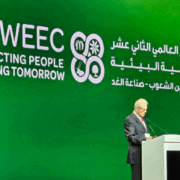
COP16, keys to biodiversity conservation

COP16 on Biodiversity took place in Cali, Colombia, from October 21 to November 1, 2024. This important event brought together representatives from around 200 nations, industry experts, activists, and members of indigenous communities. The conference focused on diverse ideas and strategies for protecting biodiversity, a topic that is increasingly vital in light of the ongoing ecological crisis.

During COP16, Jason J. Pitman, co-organizer of the WEEC 2026 congress scheduled for Perth, Australia, actively engaged in crucial discussions and initiatives surrounding environmental conservation. Stay connected with us on social media and subscribe to our newsletter for updates. Soon, you can read his article sharing insights and experiences from this significant international gathering.

Biodiversity crisis

Our planet’s biodiversity is facing unprecedented pressure. The IPBES (Intergovernmental Science-Policy Platform on Biodiversity and Ecosystem Services) reports that one million species are at risk of extinction. This is primarily due to climate change, habitat loss, pollution, and the introduction of invasive species. This crisis endangers not only the species themselves but also the ecosystem services that humans rely on for survival and well-being.

The upcoming COP16 conference occurs against the backdrop of the Kunming-Montreal Agreement and the Global Biodiversity Framework (GBF). These initiatives aim to halt biodiversity loss and restore ecosystems by 2030. COP16’s mission is to translate these ambitious goals into concrete, measurable actions.

Results of the conference

Advisory Body for Indigenous Peoples: One of the conference’s most significant outcomes was the establishment of a permanent advisory body for indigenous peoples. This new organization aims to ensure that indigenous communities have a voice in biodiversity conservation decisions. These communities, who hold extensive traditional knowledge and sustainable practices, are crucial for protecting ecosystems and managing natural resources.

Cali Fund: The conference approved the Cali Fund, designed to facilitate the sharing of benefits derived from digital genetic information. This fund is particularly relevant for the pharmaceutical industry, which often accesses genetic resources without providing adequate compensation to local communities. However, the voluntary nature of the payments from the fund raises concerns about its effectiveness in ensuring a fair return for these communities.

Protection of Marine Areas: Another important agreement was the recognition and protection of ecologically and biologically significant marine areas (EBSAs). This decision includes the creation of an international advisory group to coordinate conservation efforts in international waters. Protecting our oceans is vital, as they are essential for climate regulation and marine biodiversity.

Funding and Governance: Despite the progress made, COP16 revealed a significant impasse regarding the funding necessary for biodiversity conservation. Developing countries, which host the majority of the world’s biodiversity, called for the establishment of a new fund with fair governance. Distrust in the Global Environment Facility (GEF) complicated negotiations, making it challenging to reach an agreement on funding.

Unfortunately, the funding promises from developed countries have fallen short of meeting the needs expressed by developing nations.

Facing the crisis and challenges

COP16 highlighted not only the successes but also the enormous challenges that remain in biodiversity conservation. Initiatives like the Cali Fund and the inclusion of indigenous peoples are significant steps, but they are insufficient without robust financial support and concrete implementation measures.

Another challenge is the need to monitor and evaluate progress towards the established goals. Without clear monitoring mechanisms, it is difficult to ensure that the adopted policies have a real impact on biodiversity conservation. Furthermore, the implementation of conservation measures must be accompanied by strategies for adapting to climate change, as many ecosystems are already under pressure from this phenomenon.

The issue of accountability and transparency in the management of biodiversity funds is crucial. Developing countries have expressed concern that existing funds have not been used effectively and that governance is often influenced by external interests, creating a disparity in resource control and decision-making regarding conservation.

Towards a sustainable future? Reflections on COP16 and biodiversity prospects

As we reflect on the developments of COP16, it becomes evident that while significant progress has been achieved, the conference underscored the fragility of international agreements concerning biodiversity. The creation of an advisory body for indigenous peoples and the establishment of the Cali Fund are positive steps forward. However, the absence of a clear financing agreement raises concerns.

It is crucial for the international community to ramp up efforts to ensure that funding commitments lead to tangible actions. Biodiversity is not solely an environmental issue; it is also deeply intertwined with economic and social factors. Protecting biodiversity equates to investing in the future of our planet and the well-being of future generations.

Furthermore, the active involvement of indigenous communities is essential. These groups possess a profound understanding of their lands and resources, along with a cultural and spiritual connection to nature that is vital for effective conservation. It is imperative that their rights are upheld and their voices are amplified.

COP16 should serve as a wake-up call for all of us. The biodiversity crisis is a global challenge that affects every citizen. We must work together, both locally and globally, to safeguard biodiversity, combat climate change, and secure a sustainable future. The path ahead is long, but COP16 has demonstrated that international collaboration is not only possible but necessary.

COP16 as a catalyst for change

The COP16 on biodiversity served as an essential platform for addressing the challenges and opportunities in biodiversity conservation. While some progress has been made, significant obstacles remain due to the lack of clear funding agreements and binding mechanisms. The future of our planet’s biodiversity hinges on our ability to collaborate, innovate, and commit to protecting the ecosystems and species that sustain it. Only through collective and concerted efforts can we hope to overcome the challenges ahead and ensure a healthy and vibrant planet for future generations.