 The journal Education for the Environment: Regards – Recherches – Réflexions will host the proposals for articles from a paper presented at the World Environmental Education Congress. Recognized as a reference journal by the High Council for the Evaluation of Research and Higher Education (HCERE) in France, it is supported by the Center for Research in Education and Training related to environment and eco-citizenship (Centr’ERE of the University of Quebec in Montreal). It is also supported by the Social Sciences and Humanities Research Council of Canada (SSHRC) and the Fonds de recherche du Québec – Society and Culture (FRQSC).
To submit your article proposal, you need to send the following information in a Word document:
A significant title (maximum of 15 words);
A summary of your article (maximum 250 words) accompanied by three main bibliographical references;
Your name and the name of your institution, research unit or home organization.
The management committee will be aware of the information provided and will ensure that your proposal is consistent with the guidelines of the journal. A notice will be sent to you within three weeks. If you receive a favorable opinion, you will be asked to write your article according to the publication guidelines. Your article will then be evaluated anonymously by three people.
The articles will be posted online in autumn 2020 on the journal’s website
For more information or to submit an article proposal: revue.ere@uqam.ca
FR
La revue Éducation relative à l’environnement : Regards – Recherches – Réflexions accueillera les propositions d’article issues d’une communication présentée dans le cadre du Congrès mondial en éducation relative à l’environnement. Reconnue comme une revue référente par le Haut conseil de l’évaluation de la recherche et de l’enseignement supérieur (HCERE) en France, elle est soutenue par le Centre de recherche en éducation et formation relatives à l’environnement et à l’écocitoyenneté (Centr’ERE de l’Université du Québec à Montréal). Elle a également l’appui du Conseil de recherches en sciences humaines du Canada (CRSH) et du Fonds de recherche du Québec – Société et Culture (FRQSC).
Pour soumettre votre proposition d’article, il s’agit de nous acheminer les informations suivantes, dans un document Word :
Un titre significatif (maximum de 15 mots);
Un résumé de votre article (maximum 250 mots) accompagné de trois principales références bibliographiques;
Votre nom et le nom votre institution, unité de recherche ou organisation d’attache.
Le comité de direction prendra alors connaissance des informations transmises et s’assurera ainsi que votre proposition cadre avec les lignes directrices de la revue. Un avis vous sera envoyé dans les trois semaines suivantes. Si vous recevez un avis favorable, vous serez invité à rédiger votre article en respectant les directives de publication. Votre article sera alors évalué de façon anonyme par trois personnes.
Les articles reçus seront mis en ligne à l’automne 2020 sur le site de la revue
Pour plus d’information ou pour soumettre une proposition d’article: revue.ere@uqam.ca

 The WEEC Permanent Secretariat is very proud to announce that UNESCO and UNEP agencies gave – once again – their patronage to the World Environmental Education Congress, that will be held in Bangkok from 3 to 7 November 2019.
 Take a look of our last edition,
 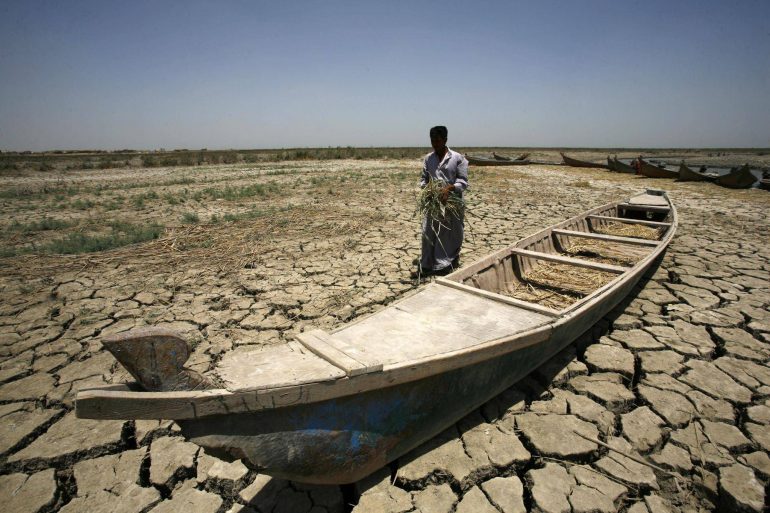 Water quality and quantity are very crucial for sustaining life in many parts of the world. In many parts of the world communities are suffering from water scarcity due to population growth, climate change and technological development.
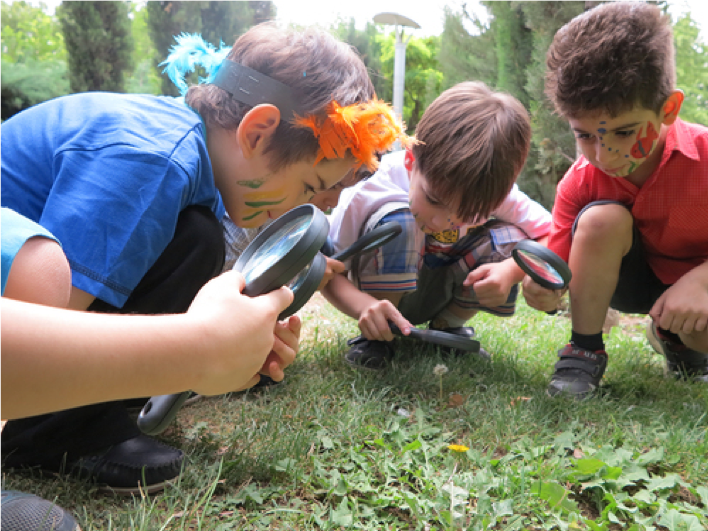 Environmental attitudes and knowledge have been shown to have very different effects on behavior change depending, among others, on geographic contextual factors (Braun, Cottrell & Dierkes, 2017). Place-based education (PBE) approaches not only promote greater awareness of local environments, culture and history, but they can engender the individual attachment to nature. It was shown by Orr (1994) and Kudryavtsev, et al (2012) that place attachment can help promoting pro-sustainable behavior.
 Prof. Wladyslaw W. Szymanski serves as retired member at the Faculty of Physics, University of Vienna, Austria. For many years he headed the Aerosol Physics and Environmental Physics Group. He is active as a lecturer at leading international universities.
 Robert Brian Shutes is Emeritus Professor of Ecotechnology at Middlesex University, London. He was Vice-Chair of the International Water Association (IWA) Specialist Group on ‘The use of Wetlands for Water Pollution Control’ (1996-2008).
 Ronghuai Huang is a Professor in Faculty of Education of Beijing Normal University (BNU). He has being engaged in the research on smart learning environment, artificial intelligence in education, educational technology as well as knowledge engineering. He received ‘Chang Jiang Scholar’ award in 2016, which is the highest academic award presented to an individual in higher education by the Ministry of Education of China. He serves as Co-Dean of Smart Learning Institute, Director of UNESCO International Rural Educational and Training Centre, and Director of China National Engineering Lab for Cyberlearning Intelligent Technology. He is very active in academic organizations both at home and abroad. He is also Committeeman of the Science Subject Expert Committee of the National Textbook Committee, Vice-chairman of China Educational Technology Association, Deputy Director of Teaching Guidance Committee of Educational Technology at Institutions of Higher Education (MOE), Vice-Chairman of Beijing Education Informatization Expert Committee, and Expert of MOE AI Innovation Panel. During 2013 to 2018, he serves as General Chair for International Conference on Advanced Learning Technology (ICALT). He is also Executive Committeeman of The Global Chinese Society for Computers in Education, Vice President of International Association of Smart Learning Environments (IASLE), and Editor-in-Chief of Springer’s Journal of Smart Learning Environment and Journal of Computers in Education. Till now, he has accomplished and is working on over 100 projects, and his ideas have been widely spread, with about 400 academic papers and over 40 books published at home and aboard.
 The journal Education for the Environment: Regards – Recherches – Réflexions will host the proposals for articles from a paper presented at the World Environmental Education Congress. Recognized as a reference journal by the High Council for the Evaluation of Research and Higher Education (HCERE) in France, it is supported by the Center for Research in Education and Training related to environment and eco-citizenship (Centr’ERE of the University of Quebec in Montreal). It is also supported by the Social Sciences and Humanities Research Council of Canada (SSHRC) and the Fonds de recherche du Québec – Society and Culture (FRQSC).
 Thai Airways International Public Company Limited. is pleased to serve the delegates for the
  The anthropogenic transformations of ecosystems called Anthropocene is forcing scientists to recognize not only the inextricable interfusion of nature and human society (Malm and Hornborg, 2014), but also the fact that it is becoming a perfect marker and multiplier of differences and inequalities. The appropriation of nature under current capitalism conditions, which is at the core of the current geological troubles, is entailing some correlated processes such as the intensification of the processes of labour’s exploitation, the dispossession of peasants’ lands, the indiscriminate extraction of raw materials, and the racialization of all these processes (With the notion of racialization, we mean the process by which different groups or clusters of people are discriminated in some way because of their natural characters – skin color, gender, age – or of cultural features that are naturalized and crystallized – religion, language, dressing).