Tag Archive for: sustainability

“No limits to hope”: an international research project for a new educational paradigm

WEEC Network, Club of Rome, and The Fifth Element join forces to tackle global challenges through transformative learning.

Announced during the 12th World environmental education congress held in early 2024 in Abu Dhabi, the international research initiative “No Limits to Hope: Transforming Learning for Better Futures” officially begins. This ambitious project arises from the collaboration between WEEC Network, the Club of Rome, and The Fifth Element.

Forty-five years after the publication of the Club of Rome’s 7th report, titled “No Limits to Learning: Bridging the Human Gap”, the Club of Rome, The Fifth Element, and WEEC Network are launching a new global initiative. This research project is designed to inspire educators, students, and global citizens to foster a shift in educational and learning paradigms to address the pressing challenges of our time.

FIND OUT MORE ABOUT THE PROJECT, CLICK HERE

Rethinking how we learn and act

We live in an era marked by environmental crises, social inequalities, and geopolitical tensions. Overcoming these challenges requires rethinking how we learn and act. “No Limits to Hope” aims to transform mindsets and promote a more equitable and sustainable world through innovative collaborative approaches to learning and problem-solving.

The roots of the project

In the 1979 report, Aurelio Peccei highlighted how human progress was often “frantic and disorderly,” emphasizing the need to bridge the gap between the human condition and the natural environment. Today, more than ever, it is urgent to address his critical question: “Can we bridge this gap before it is too late?”

The response lies in:

  • Drawing on vision and creativity.
  • Mobilizing moral energy for change.
  • Objectives of “No Limits to Hope”

The project aspires to…

  • Catalyze cultural change: transform the ways we think and act to build a healthier planet and create equitable opportunities for all.
  • Facilitate transformative learning: harness the power of education to inspire innovation and break down barriers to change.
  • Generate new knowledge: update and expand the original Club of Rome report to reflect current global challenges and provide new insights for the future.

Call to action

The Club of Rome, The Fifth Element, and WEEC Network invite researchers, educators, and professionals to contribute research proposals, articles, and case studies exploring new educational paradigms capable of fostering systemic transformation at local and global levels.

Deadlines:

  • March 31, 2025: Submission of proposals.
  • November 30, 2025: Notification of selected contributions.

Benefits:

  • Publication of contributions in a high-impact book.
  • Collaboration with international experts and participation in webinars, conferences, and global campaigns.
  • Contribution to a global movement for educational transformation.

READ THE CALL FOR CONTRIBUTORS, CLICK HERE

Join the change

For more information and to participate in the “No limits to hope” project, contact:

Project partners

  • Club of Rome: An international network of leaders and thinkers committed to holistic solutions for planetary emergencies. Since 1968, it has promoted research and policies for a sustainable future.
  • The Fifth Element: An initiative that combines traditional wisdom and cutting-edge science to catalyze human and environmental change.
  • WEEC Network: A global reference point for environmental education and sustainable development, with over 20 years of experience in sharing best educational practices.

Together, let’s make a difference by transforming education to create a more just and sustainable future.
 

VIII Ibero-American Congress on Environmental Education: “Cultures and territories at peace with nature”

From October 16 to 18, 2024, Santiago de Cali, Colombia, hosted the VIII Ibero-American Congress on Environmental Education, a landmark event that brought together educators, policymakers, researchers, and community leaders from across the Ibero-American region. Under the theme “Cultures and territories at peace with nature” the congress reaffirmed its role as the most significant platform for advancing environmental education in the region.

Building on the legacy of seven previous editions held across Latin America since 1992, the congress showcased the strength of environmental education as a field of knowledge and practice. Participants revisited critical achievements, including advances in epistemology, policy frameworks, institutionalization, professionalization, and innovative pedagogies.

This year’s congress stood out for its focus on integrating diverse cultural and ecological perspectives, emphasizing the transformative power of education to address global environmental challenges and foster sustainability.

The event achieved several significant milestones, particularly in fostering environmental citizenship by emphasizing the role of education in developing a sense of responsibility, critical thinking, and proactive engagement among individuals. It also advanced policy integration by presenting concrete recommendations to embed environmental education into both national and international action plans, aligning them more closely with public policies. Furthermore, the congress provided a dynamic space for collaborative knowledge sharing, bringing together scientific, traditional, and community-based perspectives to address the complexities of environmental challenges.

The congress was also a showcase for sustainable event practices. Efforts included reducing waste, offsetting carbon emissions, and promoting local products and the circular economy. Participants actively engaged in social responsibility initiatives, leaving a positive impact on local communities in Cali. The congress led to several notable outcomes, including a strengthened commitment to fostering networks and collaborations throughout the Ibero-American region. It also resulted in the adoption of recommendations aimed at enhancing the role of environmental education within global environmental governance frameworks. Additionally, the event culminated in the creation of an open-access final report, which documented best practices, lessons learned, and strategic pathways for the future advancement of environmental education.

. By hosting the congress in Colombia, a megadiverse country, participants gained valuable insights into the current environmental challenges and conflicts faced by regions rich in biodiversity. The contributions from the congress served as critical inputs for discussions at COP16 on Biodiversity, ensuring that the role of environmental education was prominently addressed in global conservation strategies. The VIII Ibero-American Congress on Environmental Education left an indelible mark on the region’s approach to sustainability, equity, and peace. By bringing together diverse voices and championing a holistic view of environmental education, the event set the stage for meaningful action to address the intertwined crises of biodiversity loss, climate change, and social inequality.

Declaratoria de Lima

WEEC Network Joins Campaign to Protect Right to a Clean, Healthy, and Sustainable Environment

We are pleased to announce that WEEC Network has officially joined the collective effort to advocate for the protection of the right to a clean, healthy, and sustainable environment across Europe.

In response to ongoing environmental challenges and the escalating triple planetary crisis, civil society organizations and social movements from various sectors are uniting to call upon the Member States of the Council of Europe to recognize and safeguard this fundamental human right through an additional protocol to the European Convention on Human Rights.

The importance of this initiative has already been recognized by international bodies such as the UN Human Rights Council and the UN General Assembly, as well as by over 160 countries worldwide. However, the Council of Europe, representing 46 Member States and over 700 million citizens, has yet to officially acknowledge this right within its legal framework.

By endorsing this campaign, WEEC Network joins dozens of organizations across Europe in urging European governments to take concrete steps to protect the environment and ensure the well-being of current and future generations.

The lack of adequate protection of the right to a healthy environment under the European Human Rights framework remains a pressing issue, particularly considering the significant public health impacts of air pollution and the disproportionate effects of climate change on vulnerable communities.

The proposed additional protocol would not only strengthen existing legal frameworks but also empower the European Court of Human Rights to safeguard environmental rights effectively. Furthermore, it would signal Europe’s commitment to addressing the environmental crisis and providing its citizens with enforceable environmental protections.

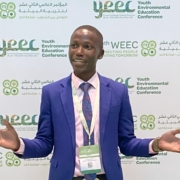
Empowering Uganda’s youth: Muyunga Bruno’s quest to Speaking 4 the Planet

In the heart of Uganda, Muyunga Bruno, an IT Officer, Environmental Activist, and student mentor at St. Mark’s College Namagoma, is passionately leading a movement to safeguard the natural world for future generations.
Bruno’s love for preserving the environment traces back to his childhood, surrounded by Uganda’s stunning landscapes. However, he’s witnessed a troubling trend of environmental decline over the years. “Gone are the days when you could hear frogs in the evening,” he mourns, pointing to the loss of once-vibrant habitats due to human activities.

Recently returning from the 12th World Environmental Education Congress (WEEC) in Abu Dhabi, Bruno is reinvigorated. “Numerous factors, especially climate change, have profoundly impacted our environment,” he observes, stressing the urgent need for education and action.

At the WEEC, Bruno noted a critical knowledge gap, especially among younger community members. “Children and youths must learn the importance of preserving our environment,” he insists, noting the lack of guidance from previous generations on conservation efforts.

With this insight, Bruno is launching the “Speaking 4 the Planet” Environmental Speaking Competition at St. Mark’s College Namagoma. Set for April 13, 2024, the event aims to empower students to tackle environmental challenges using their voices and beliefs. It will involve various school clubs, including debate, wildlife, Red Cross, Interact, Scripture Union, mathematics, ICT, entrepreneurship, Swahili (East African Community), and cultural clubs.

Inspired by Mr. Phil Smith, who leads “Speaking 4 the Planet,” Bruno envisions expanding this initiative beyond his school. “I don’t plan to limit this to just our competition,” he shares, detailing ambitions to reach more schools, communities and neighboring countries.

Bruno dreams of a future where the younger generation is not only knowledgeable but also passionate about conserving and protecting the natural environment. “We must raise a generation capable of advocating for the planet,” he stresses.

In his mission to effect change, Bruno humbly seeks support. “This email is a humble request for any assistance—financial, advisory, or knowledge-based,” he appeals, hopeful for partnerships and resources to advance his cause.

As Uganda’s landscape faces mounting challenges from human impact, voices like Muyunga Bruno’s are crucial in paving the way for a sustainable future. Through initiatives such as the “Speaking 4 the Planet” competition, he aims to inspire, educate, and ignite a fervor for environmental conservation among Uganda’s youth.

For those interested in supporting Bruno’s cause or learning more about the “Speaking 4 the Planet” competition, inquiries are welcome at his email (muyungabruno@gmail.com). Together, we can advocate for the planet and cultivate a brighter, greener tomorrow for all.

Leveraging COP 28 consensus for inclusive socio-environmental transformation

Brazil and paths after COP 28

by Dra. Vanessa Sousa de Oliveira, Dr. Marcos Vinicius Campelo Junior

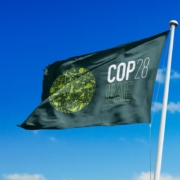
Between November 30 and December 12, 2023, the 28th Session of the Conference of the Parties (COP 28) of the United Nations Framework Convention on Climate Change (UNFCCC) took place in Dubai, United Arab Emirates. The 195 participating countries discussed strategies to reduce, mitigate, and control the emission of greenhouse gases, responsible for climate change.

The Conference of the Parties (COPs) is the most important international meetings to discuss climate change. The United Nations Framework Convention on Climate Change (UNFCCC) agreement establishes commitments and obligations for the signatory countries, where strategies to curb the acceleration of climate change are discussed and negotiated.

The final document of COP 28 can be analyzed from different perspectives. When assessing global responses to climate change, the goal of uniting efforts to ensure the stabilization of the planet’s warming at 1.5°C, as defined in the Paris Agreement, identified significant omissions in the commitments made, especially by developed countries. The existing advancements were considered timid and disjointed.

For the first time, the overall balance of the Paris Agreement explicitly addresses the reduction of production and consumption of fossil fuels, ensuring global consensus on an energy transition and assigning greater responsibility to developed countries. However, the reduction values and funding sources for decarbonization of energy systems were not defined.

Another achievement is the connection with the Convention on Biological Diversity (CBD) through issues directly related to the conservation of biodiversity, its sustainable use, and the fair and equitable sharing of genetic resources in the three levels categorized in the CBD: ecosystems, species, and genetic resources.

In its participation, Brazil focused on mediating consensus between developed countries and those that can develop in setting goals and fulfilling them in addressing climate change. It is certain that to achieve environmental justice, one must consider the historical gap between rich and poor nations. Proportionally, nations with greater economic power must initiate the process of abandoning fossil fuels, thinking about decarbonization within the set goals.

Given Brazil’s socio-environmental importance on the international stage and anticipating its role as the host country for COP 30 in Belém do Pará (PA) in the heart of the Brazilian Amazon in 2030, how can Brazil use the current established consensus to strengthen its actions domestically and present itself as a leader in the global environmental context with internal proposals that go beyond reducing deforestation in the Amazon Rainforest?

Brazil, as a strategic environmental actor, plays an important role in this context and can contribute with successful experiences and new models of socio-environmental management. These biomes present a significant representation of sociobiodiversity: forests, wildlife, and the presence of people who inhabit these spaces, such as quilombolas, indigenous peoples, riparian dwellers, rubber tappers, and others.

We believe that Brazil’s significant contribution to the international decarbonization process lies in public policies focused on resolving internal conflicts that directly affect the existence of indigenous and traditional peoples, as well as the quality of life in urban centers. Reducing socio-environmental inequalities, ensuring fundamental rights, and protecting biomes that are directly related.

Ensuring the legal protection of indigenous and quilombola lands and their way of life integrated with nature; Expediting agrarian reform, which constitutionally revolves around the social use of land. Expanding successful experiences of sustainable agriculture and livestock farming carried out by social movements in rural areas; Incorporating clean technologies produced in universities into urban mobility structures, construction, and educational processes for new generations.

Finally, it will be necessary to unite governments, civil society, researchers, and others in this endeavor, which may be our last chance to “postpone the end of the world” (a reference to the title of Ailton Krenak’s book). Thus, social justice, climate justice, and the reduction of inequalities form an inseparable triad that will underpin the processes of economic, social, and symbolic decarbonization. Above all, we need to decarbonize our thinking!

The 12th WEEC’s legacy: a commitment to sustainability

The 12th World Environmental Education Congress (WEEC) is unwavering in its commitment to sustainability, with the Abu Dhabi National Exhibition Centre (ADNEC) playing a central role in championing green practices.

In the realm of sustainable event design, the WEEC adheres to ISO guidelines 20121:2012, incorporating practical strategies such as QR codes for menus, promotion of healthier options, and the use of eco-friendly materials for event accessories. Menus are thoughtfully crafted to be low in carbon emissions through comprehensive life cycle assessments.
ADNEC stands out as an institution committed to renewable energy utilization, significantly reducing greenhouse gas emissions. A power-down plan further contributes to energy conservation, aligning with the event’s eco-conscious approach.

Delving into nutritionally optimal menus, the WEEC ensures a balanced culinary experience with fresh ingredients, emphasizing low salt, sugar, and unnecessary fats for overall well-being. Sustainable food sourcing is a priority, with an emphasis on locally sourced produce and the inclusion of vegan options, thereby reducing environmental impact and fostering shorter supply chains.
Collaboration with the local community fosters a circular economy and reduced food miles, exemplified by a focus on seasonal local cuisine to reduce the carbon footprint associated with transportation.
Eco-friendly operations extend to biodegradable packaging, the conversion of used cooking oil into biodiesel, and campaigns aimed at eliminating plastic straws and reducing the use of disposable cups, showcasing a comprehensive approach to minimizing the ecological impact of the event.

Going beyond reduction efforts, the WEEC has engaged specialist consultants to monitor the carbon footprint of all delegates, encompassing travel and accommodation. This data will inform the planting of mangroves post-event to offset calculated carbon footprints.
This mangrove planting initiative serves as a tangible part of the WEEC’s legacy, aligning with the event’s commitment to environmental stewardship. Moreover, involving local schools provides students with a unique learning opportunity, engaging them in site selection, planting, and long-term monitoring of the mangroves.

Beyond environmental considerations, the WEEC prioritizes social sustainability by ensuring inclusivity and accessibility. The event’s website complies with Web Content Accessibility Guidelines (WCAG) 2.1 – W3C, while plenary sessions feature interpreters proficient in both Arabic and English sign language. Rigorous risk assessments at ADNEC ensure independent navigation for all participants, and individuals with special needs, referred to as “Persons of Determination“, actively contribute to the congress as speakers and workshop attendees.

In conclusion, the 12th WEEC is not just an event; it is a legacy in the making, integrating environmental and social considerations into every facet of its planning and execution. This discursive approach emphasizes the holistic commitment to sustainability that defines the essence of the congress.

Conferences, round tables and practical workshops in the Environmental Education Symposium of the City of Buenos Aires

From May 31 to June 2, conferences with international exhibitors, round tables and practical workshops will be held in the City of Buenos Aires with the aim of debating and reflecting with experts on the current climate and environmental scenario and the role of education for sustainability.

It aims to provide a space that allows teachers, educators, researchers  to delve into the debates and current pedagogical challenges in the field of Environmental Education and promote greater knowledge of environmental problems in order to enrich their approach at school.

The Symposium is organized by the Undersecretary of Educational Technology and Sustainability and the General Directorate of Educational Planning , and has the support of the Organization of Ibero-American States (OEI).

Environmental Education Context in Argentine

Since 2008, the City of Buenos Aires has adopted sustainability as a priority axis of its management. On the educational level, this commitment crystallized in 2010 with the creation of the Green Schools Program of the Ministry of Education, thus initiating an innovative policy on education for sustainability within the formal education system.

This current that puts sustainability in the focus of public policies, is accompanied by a series of laws that accompany the transformation that both the City and the rest of the country need to do in environmental matters. In 2005, the first Law No. 1687 on Environmental Education of the Autonomous City of Buenos Aires was enacted , which promotes the incorporation of Environmental Education in the formal, non-formal and informal educational system.

For its part, the Comprehensive Environmental Education Law No. 27,621 for the Implementation of Environmental Education in the Argentine Republic, sanctioned in 2021 , constitutes a milestone in national educational regulations, since it lays the foundations to consolidate environmental education as a state policy. In its Art.1, the law establishes the right to comprehensive environmental education, while in its Art. 2, it urges the development of a National Environmental Education Strategy that reaches all formal and non-formal areas of education.

 Comprehensive Environmental Education Law

With the aim of promoting environmental education and incorporating, in compliance with current legislation, the new paradigms of sustainability in the fields of formal and non-formal education, the Ministry of Environment and Sustainable Development (MAyDS) and the Ministry of Education (ME), together with the consensus of the provinces through the Federal Council for the Environment (COFEMA) and the Federal Council for Education (CFE), designed the Comprehensive Environmental Education Law .

The initiative allows the implementation of a national public policy on environmental education , whose main instrument is the National Strategy for Comprehensive Environmental Education (ENEAI) .

The ENEAI is the strategic planning instrument and, at the same time, a permanent and concerted national public policy that reaches all informal, non-formal and formal areas of environmental education. It is aimed at all ages, groups and social sectors, in order to territorialize environmental education through actions in the short, medium and long term, through the deployment of jurisdictional strategies that allow to implement and adapt its implementation at the provincial level and of the Autonomous City of Buenos Aires, through Jurisdictional Strategies for Comprehensive Environmental Education (EJEAIs).

The Earth Prize 2023 competition: $5,000 prize for the three best Mentors

Potrebbe essere un'immagine raffigurante 2 persone e il seguente testo "we're we ooking for mentors ors"

The Earth Foundation is looking for university students passionate about sustainability and entrepreneurship to become MENTORS in The Earth Prize 2023 competition.

Following the successful first edition of The Earth Prize 2022 and a fantastic experience with our Mentors, The Earth Prize 2023 will now recognize not just one but three mentors with The Earth Prize Mentor of the Year award. The three best mentors, as voted by the competition’s Participants, will receive a $5,000 prize each.

The virtual mentoring will take place between September 1st, 2022 and January 31st, 2023 through The Earth Prize online platform. Mentors will contribute to the development of students’ innovative projects by offering them guidance on their projects and answering their questions.

If you know someone who might be interested in sharing their knowledge and making an impact, share this opportunity with them! You can find more information on The Earth Prize Mentors page.

Submission for the Zayed Sustainability Prize 2023 are open!

The Zayed Sustainability Prize, an evolution of the Zayed Future Energy Prize, is the UAE’s pioneering global award in sustainability and a tribute to the legacy of the late founding father of the UAE, Sheikh Zayed bin Sultan Al Nahyan.

Established in 2008, this annual award recognises and rewards the achievements of those who are driving impactful, innovative and inspiring sustainability solutions across five distinct categories: Health, Food, Energy, Water and Global High Schools.

The Zayed Sustainability Prize has officially announced that the 2023 cycle is now open for submissions.  Entries will be accepted until 6 July 2022 through the Prize’s online portal.

For details on the submissions process and eligibility, visit the website or read the press release.

Prague: flying to a more sustainable airport

Prague Airport welcomes WEEC delegates with major improvements in terms of sustainability.
Together with other airports, airlines and aircraft manufacturers, the airport has committed itself to reducing the environmental impact of aviation in the pan-European Destination 2050 initiative and introduced a commitment to reach carbon neutrality on all flights across Europe and beyond by 2050.

Airlines are phasing out older aircraft and replacing them with new, much greener and more environmentally friendly models. In about the next ten years, Prague Airport plans to execute several long-term development and sustainable projects, which include, for example, the expansion of the Terminal 2 building. In the preparatory phase of the terminal capacity increase project, very close coordination with Správa železnic (The Railway Administration) is pursued regarding a train connection to Václav Havel Airport Prague. The goal is to provide a more environmentally-friendly and more convenient way of transport to the airport” Vaclav Rehor, Chairman of the Prague Airport Board of Directors, said.

Terminal capacities will also be expanded in a sustainable way. The intention is to minimise the overall impact of the construction on the environment, for example by using recycled materials, retaining and subsequently using rainwater, etc. Another goal is to ensure a quality indoor and outdoor environment for users, reduce the use of non-renewable natural energy sources for the implementation and operation of the building and, in terms of energy concept, strive for the building maximum energy self-sufficiency. “During the next development stages of the building design, we will reduce the energy, water and material consumption requirements. Wherever possible, we will look to generate these sources locally. Similarly, we will promote the use, for example, of renewable solar energy, heat pumps and other sources with minimal environmental impact,” Soňa Hykyšová, Prague Airport Environmental Protection Director, added.

Prague Airport also supports environmental protection projects in the surrounding municipalities and city districts. Since 2004, over 380 million crowns were invested in environmental projects under the “Living in Harmony” grant programme.

Examples of Prague Airport “Green” Achievements:
-Long-term reduction of CO2 emissions
– Since 2019, 100% green electricity.
– Biomonitoring (using bees, fruit and crop). Honey produced by airport bees has an excellent quality. It has won the Gold Medal in the Czech Honey contest for the seventh time in a row.
– Taking care of over 3,000 mature trees and shrubs and of about 580 hectares of grassed areas. In terms of species, there are 42 species of woody plants.
– Since 2012, replacing conventional light sources with LED lights. The 2020 electricity cost savings exceeded seven million Czech crowns.
– Limiting the use of disposable plastics.