Tag Archive for: WEEC

Blue Mediterranean Partnership. Spain pledges €8.5M to multi-donor sustainable blue economy fund

The UfM (Union for the Mediterranean) high-level session was held on Tuesday 10 June in the framework of the Mediterranean Day at the Third United Nations Oceans Conference in Nice (France).

The session focused on the leading role of the Mediterranean in promoting a sustainable blue economy. Among the main points was the formal commitment of Spain to contribute 8.5 million euros to the Blue Mediterranean Partnership (BMP), a multi-donor fund promoted by the UfM that mobilises investments in sustainable blue economy projects in the Southern Mediterranean and Red Sea areas. The first projects that will be developed are the Morocco’s first offshore windfarm, the restoration of a coral ecosystem in Jordan and the development of a wastewater treatment facility in Egypt.

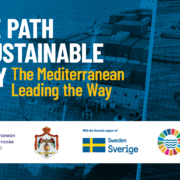
“Charting the path towards sustainable blue economy: the Mediterranean leading the way” is a Union for the Mediterranean-led event on the region’s role in advancing the sustainable use of marine resources to promote socioeconomic development.
Government officials, development agencies, regional networks, private sector actors, and civil society showcased innovative financing mechanisms, cutting-edge technologies and replicable initiatives.
The event highlighted priority areas for cooperation among the 43 UfM Member States, including maritime clusters, decarbonisation, marine biodiversity, blue jobs, renewable energy, sustainable tourism, pollution prevention, and circular economy enterprises. More than €500M euros have been mobilised for over 250 regional projects in these domains since the first UfM Ministerial Declaration on Sustainable Blue Economy in 2015.
Among the speakers were European Commissioner Cóstas Kadis, Spanish Minister Sara Aagesen and UfM Secretary General Nasser Kamel.

“The Mediterranean sea plays a key role in setting the path towards a sustainable blue economy and can act as a model for other sea basins,” said EU Commissioner for Fisheries and Oceans Costas Kadis. “The Ocean Pact, just adopted by the Commission, underscores the importance of unlocking financial support from both private and public sources to boost investments in ocean related actions, supporting EU blue economy and innovation.”

“Since the inception of this initiative in 2015, the Sustainable Blue Economy has emerged as a transformative force for regional cooperation and partnership. It serves as a key to unlocking a wealth of environmental, social, and economic benefits across our basin. This is why the UNOC ‘Med Day’ provides an ideal platform to highlight our achievements and ongoing efforts,” said Aqaba Special Economic Zone Authority Commissioner Aiman Soleiman of Jordan.

“The Mediterranean Sea is not just a body of water—it’s a cradle of civilisation, a hub of biodiversity, and a vital source of livelihood for millions. The Mediterranean Sea shapes our past, present and future history, economy and identity,” said Spanish Minister for Ecological Transition Sara Aagesen.

“Our rich sustainable blue economy community undoubtedly serves as inspiration for other parts of the world,” said UfM Secretary General Nasser Kamel. “The UfM has played a pioneering role in establishing and strengthening the political and technical dialogue on Sustainable Blue Economy at regional level”.
Speaking 4 the Planet: creativity, courage, and a call for change

Speaking 4 the Planet (S4P) is an arts-based approach to sustainability education that empowers young people to become informed, passionate advocates for the Earth and its many species. Launched in 2013 as a competition for secondary school students, S4P has since evolved into a global platform where students express environmental concerns and hopes through creativity, critical thinking, and evidence-based advocacy.

Designed to celebrate youth voices on issues affecting the planet and their future, S4P invites participants to blend the humanities and sciences, to reflect on the philosophical dimensions of human impact, and to imagine a better world grounded in scientific understanding.

Over time, the initiative has expanded to include primary, secondary, and tertiary institutions, offering competitions in a variety of expressive formats—public speaking, art, writing, drama, video, memes, and STEM. These events not only help students develop their skills, but also emphasize the importance of having a voice and using it for change. S4P values creativity, critical inquiry, and unconventional solutions to some of the world’s most urgent environmental challenges.

Importantly, S4P helps young people recognize that they are not alone in their concern for the future. It builds local and global networks of students, schools, and communities united by a shared commitment to sustainability and social responsibility.

A timeline told through posters

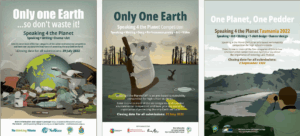
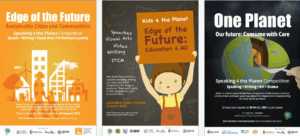
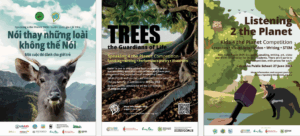
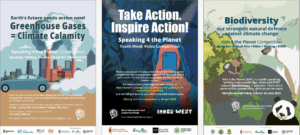
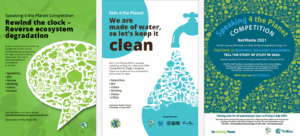
Each year, the competition is shaped by a new theme, as illustrated in its visual archive of event posters:

  • 2021: “Rewind the Clock – Reverse Ecosystem Degradation” encouraged students to reflect on the importance of ecosystems.

  • 2022: With events such as “Only One Earth… so don’t waste it!” and “One Planet, One Pedder”, the focus shifted to waste reduction and ecosystem restoration.

  • 2023: “One Planet. Our Future: Consume with Care” addressed sustainable consumption, while Kids 4 the Planet continued engaging younger students.

  • 2024: The largest S4P to date was held in Vietnam, giving voice to wildlife and biodiversity. In Uganda, the first African edition mobilized over 200 students from 11 school clubs, showcasing solutions through performances, displays, and debate.

  • 2025: “Greenhouse Gases = Climate Calamity”, hosted in Sydney, focused on air pollution and climate action through speaking, writing, visual and recycled art.

These posters not only capture annual themes—they mark the growth of a movement that continues to adapt to local contexts while remaining rooted in a shared global vision.

An invitation to join the movement

Educators, students, and organizations around the world are invited to take part in future editions of S4P. The project offers guidance and support for those interested in hosting their own competition, helping local communities create engaging, meaningful, and youth-driven sustainability events.

For more information, contact: phil@speaking4theplanet.org.au

Visit: https://speaking4theplanet.org.au

Let the next generation’s words, images, and ideas speak for the planet.

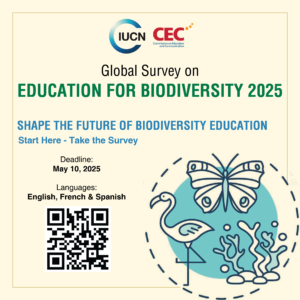
Join the IUCN CEC 2025 Global Survey on Education for Biodiversity

We invite you to participate in the IUCN Commission on Education and Communication (CEC) Survey on Education for Biodiversity 2025, led by the IUCN CEC Task Force on Nature-Based Education.

This marks the first global survey dedicated entirely to the educational aspects of:

  • Biodiversity conservation
  • Climate action
  • Sustainable development
  • Nature-based learning

The aim of this survey is to assess and document ongoing educational initiatives, identify current needs and opportunities, and exchange best practices and insights from across the globe.

Survey link: https://rb.gy/c6winm

Deadline: May 10, 2025

We encourage you to complete the survey. Your feedback is crucial in shaping the future of global nature education.

Our Ocean, Our Action: 10th Our Ocean Conference launches today in Busan, Republic of Korea

Today, April 28, 2025, marks the opening of the 10th Our Ocean Conference (OOC) in Busan, Republic of Korea, bringing together more than 1,000 leaders, policymakers, scientists, youth representatives, and advocates from across the globe to accelerate ocean action and climate solutions.

Under the theme “Our Ocean, Our Action” the conference reflects on a decade of progress in ocean protection and looks ahead to the urgent challenges still facing the marine environment. Participants will share successful initiatives, evaluate the impact of commitments made over the past 10 years, and forge new alliances for the decade to come.

“The tenth Our Ocean Conference offers a vital opportunity to celebrate achievements and chart a new course for stronger international cooperation,” said Do-hyung Kang, Minister of Oceans and Fisheries of the Republic of Korea, during the opening ceremony.

Since its inception in 2014, the Our Ocean Conference has generated over 2,600 voluntary commitments, contributing to the creation of marine protected areas, the fight against illegal fishing, and the promotion of a sustainable blue economy. Nearly half of the world’s marine protected areas were first announced at OOC events.

For the first time, a full analysis of these commitments will be presented, with a report by the World Resources Institute showing that more than $133 billion in funding has already been mobilized out of the $160 billion pledged. These investments support critical efforts such as marine biodiversity conservation, combating illegal fishing, and ocean-climate solutions that contribute to reducing global emissions.

The conference comes at a crucial time. Despite major achievements, ocean ecosystems continue to suffer from climate change, overexploitation, and pollution. Scientists warn that immediate action and greater investment are essential to reverse the damage and ensure the ocean’s vital role in climate regulation, food security, and economic development.

The Republic of Korea recently became the 21st country to ratify the High Seas Treaty, a milestone agreement aimed at protecting international waters. Building on this momentum, the Busan conference is expected to energize global efforts ahead.

For more information:
https://ourocean2025.kr
www.ouroceanconference.org

Press contact details:
Our Ocean Conference: ourocean2025media@korea.kr
Patricia Roy: patricia@communicationsinc.co.uk, Tel: +34 696 905 907

The 12th WEEC’s legacy: a commitment to sustainability

The 12th World Environmental Education Congress (WEEC) is unwavering in its commitment to sustainability, with the Abu Dhabi National Exhibition Centre (ADNEC) playing a central role in championing green practices.

In the realm of sustainable event design, the WEEC adheres to ISO guidelines 20121:2012, incorporating practical strategies such as QR codes for menus, promotion of healthier options, and the use of eco-friendly materials for event accessories. Menus are thoughtfully crafted to be low in carbon emissions through comprehensive life cycle assessments.
ADNEC stands out as an institution committed to renewable energy utilization, significantly reducing greenhouse gas emissions. A power-down plan further contributes to energy conservation, aligning with the event’s eco-conscious approach.

Delving into nutritionally optimal menus, the WEEC ensures a balanced culinary experience with fresh ingredients, emphasizing low salt, sugar, and unnecessary fats for overall well-being. Sustainable food sourcing is a priority, with an emphasis on locally sourced produce and the inclusion of vegan options, thereby reducing environmental impact and fostering shorter supply chains.
Collaboration with the local community fosters a circular economy and reduced food miles, exemplified by a focus on seasonal local cuisine to reduce the carbon footprint associated with transportation.
Eco-friendly operations extend to biodegradable packaging, the conversion of used cooking oil into biodiesel, and campaigns aimed at eliminating plastic straws and reducing the use of disposable cups, showcasing a comprehensive approach to minimizing the ecological impact of the event.

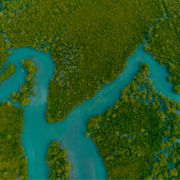
Going beyond reduction efforts, the WEEC has engaged specialist consultants to monitor the carbon footprint of all delegates, encompassing travel and accommodation. This data will inform the planting of mangroves post-event to offset calculated carbon footprints.
This mangrove planting initiative serves as a tangible part of the WEEC’s legacy, aligning with the event’s commitment to environmental stewardship. Moreover, involving local schools provides students with a unique learning opportunity, engaging them in site selection, planting, and long-term monitoring of the mangroves.

Beyond environmental considerations, the WEEC prioritizes social sustainability by ensuring inclusivity and accessibility. The event’s website complies with Web Content Accessibility Guidelines (WCAG) 2.1 – W3C, while plenary sessions feature interpreters proficient in both Arabic and English sign language. Rigorous risk assessments at ADNEC ensure independent navigation for all participants, and individuals with special needs, referred to as “Persons of Determination“, actively contribute to the congress as speakers and workshop attendees.

In conclusion, the 12th WEEC is not just an event; it is a legacy in the making, integrating environmental and social considerations into every facet of its planning and execution. This discursive approach emphasizes the holistic commitment to sustainability that defines the essence of the congress.

WEEC Network is granted consultative status at the UN

Have you heard the incredible news?! WEEC Network has officially been granted ECOSOC (Economic and Social Council) Consultative Status with the United Nations!


From now on WEEC Network has the special consultative status with the Economic and Social Council at the UN. The consultative status is the core of a formal relationship between the UN and social organizations, which is also a key approach for social organizations to take initiatives and to be engaged in activities of the UN and international communities.

As a member of the WEEC Network, you can also take part in the initiatives: keep reading to find out more.

Become a representative at ECOSOC!

As NGO with ECOSOC status, WEEC Network can choose delegates to be represented by in the various occasions. If you are interested, apply to be a delegate, representing one of the most worldwide organizations in environmental education.

Contact us on secretariat@weecnetwork.org

The Economic and Social Council of the UN (ECOSOC)

Article 71 of the United Nations Charter, which established the Economic and Social Council (ECOSOC), states the following:

The Economic and Social Council may make suit able arrangements for consultation with non-governmental organizations which are concerned with matters within its competence. Such arrangements may be made with international organizations and, where appropriate, with national organizations after consultation with the Member of the United Nations concerned.

— United Nations Charter, Chapter X, Article 71

One of the six principal organs of the UN, the Economic and Social Council (ECOSOC) is the central UN forum for international economic and social issues. The Council coordinates the economic and social work of the UN system, which engages 70 percent of the system’s human and financial resources. All of the UN specialized agencies (e.g., the World Health Organization and the Food and Agriculture Organization), as well as all of the UN programs and funds (e.g., UNICEF and the World Food Program), report to ECOSOC.

The ECOSOC Council has eight functional Commissions:

  1. Commission on the Status of Women
  2. Commission for Social Development
  3. Commission on Population and Development
  4. Commission on Crime Prevention and Criminal Justice
  5. Commission on Narcotic Drugs
  6. Commission con Science and Technology for Development
  7. Statical Commission
  8. United Nations Forum on Forests

ECOSOC Regional Commissions:

➤ Economic Commission for Africa (ECA)

➤ Economic and Social Commission for Asia and the Pacific (ESCAP)

➤ Economic Commission for Europe (ECE)

➤ Economic Commission for Latin America and the Caribbean (ECLAC)

➤ Economic and Social Commission for Western Asia (ESCWA)

Other bodies:

  • Permanent Forum on Indigenous Issues
  • Sessional and standing committees
  • Expert, ad hoc, and related bodies


What we gained as NGO in consultative status

The ECOSOC Resolution 1996/31 specifies the non-governmental organizations (NGOs) in Consultative Status are entitled to:

  • Attend international conferences and events.
  • Make written and oral statements at these events.
  • Organize side events.
  • Enter United Nations premises.
  • Have opportunities to network and lobby.

NGOs that are accredited with ECOSOC can participate in a number of events, including, but not limited to, the sessions/meetings of ECOSOC, its functional commissions and its other subsidiary bodies. At these events, NGO may:

  • Attend official meetings
  • Submit written statements prior to sessions
  • Make oral statements
  • Meet official government delegations and other NGO representatives
  • Organize and attend parallel events that take place during the session; and
  • Participate in debates, interactive dialogues, panel discussions and informal meetings.

Click Here to learn more about what ECOSOC is

Click Here to learn about ECOSOC 2021 goals:
https://www.un.org/ecosoc/en/events/2021/ecosoc-high-level-segment-including-three-day-ministerial-segment-hlpf-convened-under

Nature in Mind: the value of biodiversity

“By Leaves We Live”
“This is a green world, with animals comparatively few and small, and all dependent on
the leaves. By leaves we live. Some people have strange ideas that they live by money.
They think energy is generated by the circulation of coins. Whereas the world is mainly a
vast leaf colony, growing on and forming a leafy soil, not a mere mineral mass: and we
live not by the jingling of our coins, but by the fullness of our harvests.”
(Sir Patrick Geddes, 1854-1932)

On the occasion of the 30th anniversary of the Convention for Biological Diversity, signed on May 22 nd, 1992 in Rio de Janeiro,  Italian environmental police force, in collaboration with WEEC Network,  wants to celebrate, with a 2-day International Conference – Nature in mind – the value of biodiversity in the name of a greener and more sustainable future. 

International Day for Biological Diversity is the occasion to reflect on our responsibilities towards the environment and to consider the possibility of creating a new culture of nature.
The scientific comprehension of natural processes and the new awareness about the importance of the compliance of our behaviours with the law are two equally important and strictly integrated elements which aim at the conservation of nature.

Environmental education thus becomes education to environmental “legality”: a set of knowledge that becomes “culture”, environmental culture, that has to represent the fundamental part of the most deeply rooted education of citizenship, necessary to build a better future for the next generations.

The Conference Nature in Mind, which will be held in a mixed form (in person and remotely), will address various topics thanks to the interventions of distinguished Italian and international speakers
following the ideal path of seven Sessions:

  1. Opening Session
  2. One Health – Nature and Well-being
  3. At the Nature School
  4. Education and Nature
  5. School, city, territory
  6. Education, infosphere, mass culture and Nature
  7. Voices from the world

For the registration, have a look here.


UNRWA: Enhance students’ awareness towards environment

For the World Health Day, UNRWA celebrates Ms. Obeid, named the 2022 Earth Prize Educator of the Year. Ms Obeid, a teacher at the UNRWA Sweileh Preparatory Girls’ School in Jordan, was selected by the WEEC’s Secretary General Professor Mario Salomone.

Dr Oroba Labadi, Chief pf the UNRWA Field Education Program, underlines the importance of raising students’ awareness towards global environmental causes, “which is not limited to provide basic education but also in enhancing their knowledge, skills and build positive trends towards global environmental causes”. 

Indeed, what encouraged Ms Obeid to take part in the competition together with her students was her belief that Palestine refugee students can participate in international competitions and affect change in both local and international communities. 

”This award shows the impact of the professional in-service trainings that UNRWA regularly provides to us.” Ms Obeid Said.  

UNRWA and SDG 13 – Climate Action

Across its fields of operation, the UNRWA plays a key role in addressing environmental protection issues within the Palestine refugee community and has an obligation to minimize the negative environmental impact of its own operations. In addition, the Agency is prioritizing a range of environmental protection efforts that include for instance the installation of energy saving equipment, such as solar panels, water heaters and LED fittings, in a number of schools, health centres and other installations, as well as safe disposal of medical waste.  

Measures to protect water resources and improve environmental health in Palestine refugee camps are also being undertaken including the development of an integrated solid waste management system that will serve all Palestine refugee camps in Lebanon and the installation of solar power systems in 80 schools and six health clinics in Gaza.  

The Agency is also exploring current environmental behaviours and teaching practices in its schools and classrooms in order to see how to strengthen and build upon these practices in a coordinated and coherent way. Developing capacity of Palestine refugee youth in the design, manufacture and servicing of renewable energy technology and energy efficiency devices is important for job creation and stimulating the green economy. UNRWA has recently introduced courses on energy efficiency at its vocational training centres in Gaza and will look to expand these to other fields based on lessons learned.  

About UNRWA 

Following the 1948 Arab-Israeli conflict, UNRWA was established by United Nations General Assembly Resolution 302 (IV) of 8 December 1949 to carry out direct relief and works programmes for Palestine refugees. The Agency began operations on 1 May 1950. 

In the absence of a solution to the Palestine refugee problem, the General Assembly has repeatedly renewed UNRWA’s mandate, most recently extending it until 30 June 2023 

The United Nations Relief and Works Agency for Palestine Refugees (UNRWA) is funded almost entirely by voluntary contributions from UN Member States. UNRWA also receives some funding from the Regular Budget of the United Nations, which is used mostly for international staffing costs. 

The Agency’s services encompass education, health care, relief and social services, camp infrastructure and improvement, microfinance and emergency assistance, including in times of armed conflict. 

WEEC2022: “2G” policy for the onsite participation

Three months remain to the 11th World Environmental Education Congress in Prague.  Despite our hopes, the world still struggles with the global pandemia of COVID-19. In Central Europe, we experience the new wave of this infection. At the same time, we have more reasons for optimism than a year ago. The new vaccines provide a reasonable level of protection against severe illness. Based on the previous experience and the contemporary pandemic speed, we have good reasons to expect the situation to improve by the end of winter.
After consideration, we decided to keep the hybrid form of WEEC as it is planned. You are welcome to participate in either online or onsite forms. You may also use the mix of both worlds – you can register onsite but participate online in plenary sessions or other parts of congress. Please, find the way that works best for you.
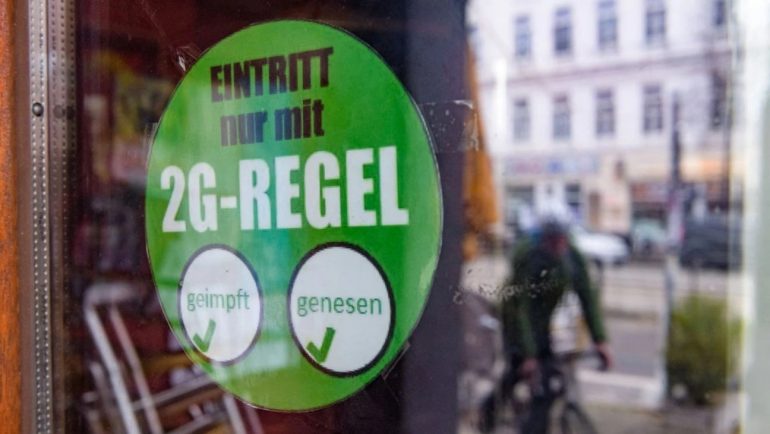
For the onsite participation, we adopt the “2G” policy. As a result, we will ask participants to prove that they are either fully vaccinated or have recently recovered from COVID-19. We hope you understand this requirement – we want to make our meeting safe for everyone. We are looking forward to meeting you – either online or in Prague – in March 2022! Keep safe and healthy

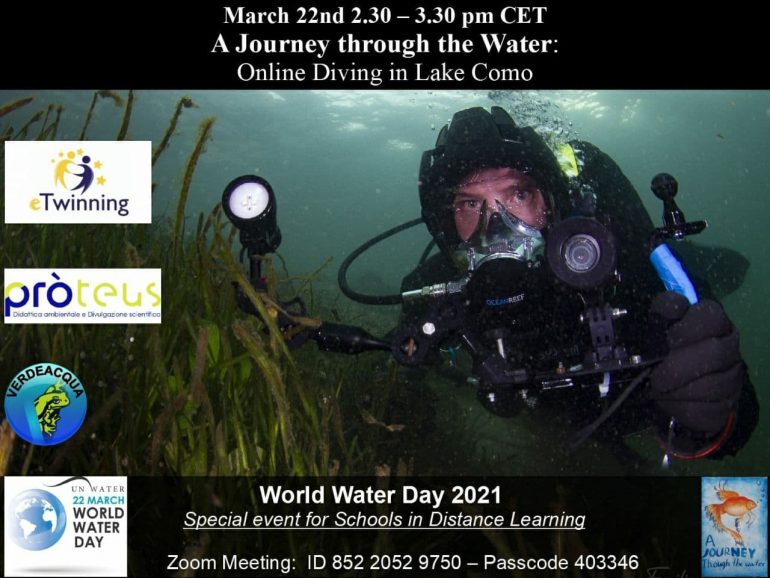
A journey through the Water: Online Diving in Lake Como

Today a special event for World Water Day 2021!
Poland, Croatia, Greece, Lithuania, Spain, Portugal, Turkey, Armenia, Slovenia, Bulgaria, North Macedonia, Italy. These are the countries that today will join the meeting “A Journey through the Water: Online Diving in Lake Como“.
Children from primary schools of these countries are participating in this wonderful event that presents Como Lake to the World thanks to the project Etwinning.
Here you can find the information to join the meeting: