Environmental Education empowers in Vancouver

The 9th World Environmental Education Congress (WEEC 2017), which occurred in Vancouver from the 9th to the 13th of September 2017, filled up with participants, meetings, ideas and even emotions sharing.

Almost 1000 participants, come from all over the world (around 60 nationalities were there from Europe, Asia, America, Africa and Oceania), shared and enjoyed together the 9th WEEC in the Vancouver Convention Centre.

The WEEC continues to be a unique reference in the Environmental Education field.

Co-organised by the Permanent Secretariat of the WEEC Network and the Institute for Environmental Learning it is supported by international institutions, such as UNESCO and UNEP.

Structured in plenary and parallel sessions, the Congress’ works analysed all the different aspects of the environmental education. Very interesting, according to participants, the interactive poster sessions, a new format that allowed stronger dialogues between each other.

During the final ceremony the works were summarized by the ‘rapporteurs’. The interactive sessions, the multiculturalism, the empowerment of people and the transition towards a new economical paradigm have been the focal points of the congress.

The main question we should be asking is how is my work contributing to dealing with the urgency of our situation – are we tinkering in a space where things are comfortable – or will we look, as David Suzuki reminded us, to exploit every opportunity we can to ensure our work help us to make the paradigm shift we need?

Mario Salomone, Secretary General of the WEC Permanent Secretariat greeted UNEP and UNESCO for their constant support and presence, and all the other networks and associations who presented their initiatives and fed this WEEC edition. The Secretary wishes to give continuity to this experience between the congresses, and value partnership, relationships and important political decisions that have been made during the 9th WEEC.

David Zandvliet, Co-Chair of the Congress, expressed his feelings towards the big participation from all around the world, the importance to create dialogue and relations and take inspiration from others.

A strong role was given to the youth throughout all the congress and in the very last intervention they took the lead. The panelists concluded with remarks of hope and action. Young people from universities, schools and the indigenous community shared their thoughts on how everybody’s life is truly interconnected with the environment and the nature, the importance of balacing elements and values around us. Beside the natural aspects, also the cultural choices influence our connection. For example the use of the language and its impact on our lives was one of the focus.

The next edition of WEEC, the 10th will be held in Bangkok, Thailand, November 3-7 2019. The local host is the Faculty of Environment, Kasetsart University.

The World Environmental Education Congress continues his journey and arrives for the first time in Asia. Save the date!

Canada joins CleanSeas campaign to combat plastic pollution in the ocean

During the  World Environmental Education Congress the Canadian Government announced a clear commitment to tackle plastic marine debris in the ocean by joining the United Nations CleanSeas campaign.
With approximately 8 million tonnes of plastic ending up in the ocean every year, the CleanSeas campaign is working with governments, the private sector and the general public to phase out the production and consumption of single-use plastics and microbeads within the next five years.
If no action is taken, there could be more plastic than fish in the oceans by 2050.

Canada has the longest coastline in the world and has been at the forefront of international efforts to protect the marine environment. In June, the Canadian Government published the Microbeads in Toiletries Regulations prohibiting the manufacture, import and sale of toiletries used to exfoliate or cleanse that contain plastic microbeads. Canada will contribute to the campaign though initiatives that target pollution prevention, conducting research of the impact of micro plastics in the aquatic environment and biota, and funding community-based programs, including shorefront cleanups.
«Our coastlines are important environmental links to the diversity of life on our planet. For Canadians, they define much of the natural beauty we hold dear. We are firm in our resolve to protect and enhance Canada’s coastlines and its oceans, and to play a leadership role internationally in addressing existing and emerging environmental concerns» said Jonathan Wilkinson, Parliamentary Secretary to the Minister of Environment and Climate Change Canada.
Erik Solheim, head of UN Environment said that «Canada’s continued commitment confirms that we are heading in the right direction with the fight against marine pollution. We look forward to working together to turn the tide on plastic pollution in our oceans».
The CleanSeas campaign recognizes the importance of environmental education and ocean literacy as tools to change knowledge, attitudes and practices with regards to the production and consumption of single use plastics. UN Environment has developed an online executive course on marine litter while programs such as Ocean Wise provide direct learning opportunities reaching about 400,000 people every year.

CleanSeas furthers a critically important message, said John Nightingale, CEO and president of Ocean Wise, one that is in line with the organization’s own mission. “As founder of the Great Canadian Shoreline Cleanup — which sees Canadians clean up shorelines in every territory and province — and now home to a major ocean plastic research laboratory, Ocean Wise applauds Canada’s commitment. We look forward to working even more closely with the Government of Canada across the country and around the world as part of the global UN CleanSeas campaign.”

The CleanSeas campaign also contributes to the goals of the Global Partnership on Marine Litter, a voluntary open-ended partnership for international agencies, governments, businesses, academia, local authorities and non-governmental organizations hosted by UN Environment.

Read more:
CleanSeas campaign’s website
Global partnership on marine litter
Ocean Wise

12.000 live views of the Opening session

Almost 12.000 views for the live Facebook Opening plenary session, in Vancouver.

Participate with us to the plenary sessions of the 9th WEEC congress. Let’s share and comment the event in a new format: it’s the first time in the history of the WEEC congresses that it’s possible to have a look of the sessions by social media.

And if you are attending the WEEC Congress in Vancouver you can send us photos and videos. We will share it on the WEEC FB page and on our Twitter account.

Live from Vancouver

The Princess speech


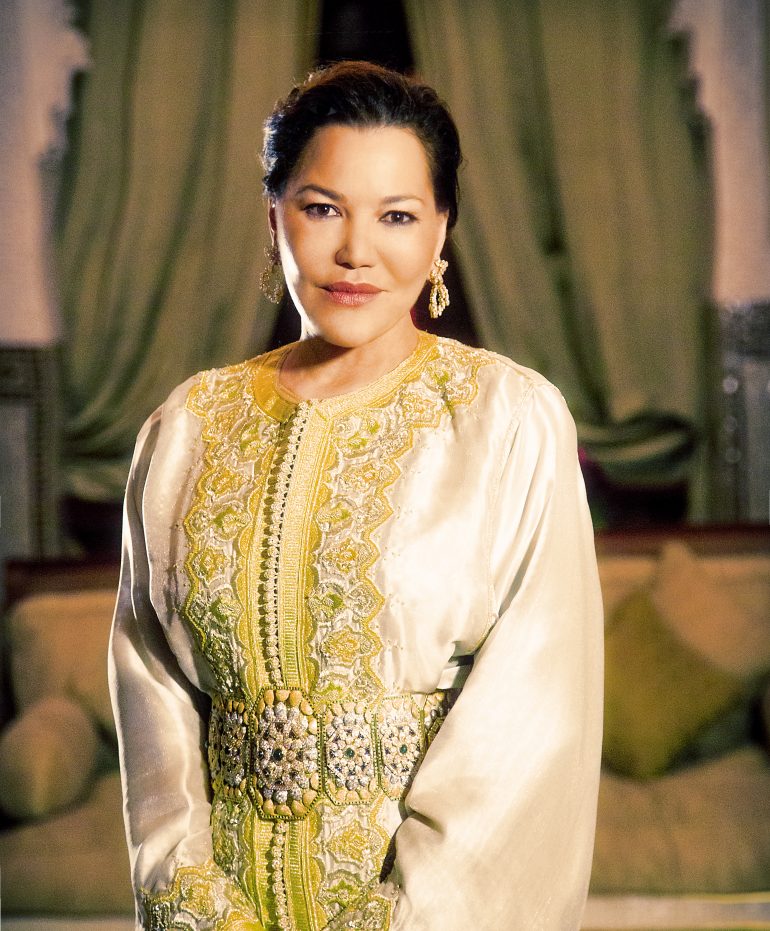
In her speech of the 9th WEEC at Vancouver, the Princess Lalla Hasnaa highlighted Morocco’s irreversible commitment to the environment, as host of COP22 in Marrakech, and its support to countries most vulnerable to global warming, including Africa and small island countries. «A staunch advocate of coexistence and dialogue since time immemorial, my country – Morocco – remains at the forefront of such an endeavor, which is based on international solidarity» she said.

Morocco promulgated a charter for the environment, which is part of a national Sustainable Development Strategy for 2030, a tool to consolidate public policies and transition towards a green and inclusive economy.

The Mohammed VI Foundation for Environmental Protection has aligned with this strategy since 2001, with its pilot programs for clean beaches, air quality, restoration of historic gardens, etc., which enable persistent work for education for sustainable development and diffusion of a culture of the environment, especially among the young ones.
The success of these programs, which combine concrete action and awareness raising, is based on the mobilization and joint work, under decisive coordination by the Foundation, and support from partners from a wide range of backgrounds: administrations, companies, associations, universities, etc.

In her speech, Her Royal Highness Princess Lalla Hasnaa supported the purpose of the Foundation’s programs, which is to help «learn or relearn essential acts to save resources, safeguard nature, protect biodiversity and promote solidarity.» in order to develop a culture of the environment.
This echoes the theme of the WEEC 9th edition, which is being held from September 9 -15, 2017 at the joint initiative of the WEEC International Secretariat and the Vancouver Institute for Environmental Education on the theme: “Culture and environment: weaving new connections”.
The Mohammed VI Foundation for Environmental Protection participates every two years in WEEC. It co-organized the 7th edition of 2013 in Marrakech, under the theme: “Environmental education in cities and rural areas: seeking greater harmony”.

Native indigenous, politicians and activists open the 9th WEEC


The 9th World Environmental Education Congress has been inaugurated on Saturday, September 9th, in the Vancouver Convention Centre (Canada).

The main theme of the Congress is Culture and Environmentand the Opening Ceremony has been opened by the traditional welcome and acknowledgement with Elder Shane Pointe. The congress has been honored to have the Royal Welcomes of the honourable Judith Guichon, OBC (Lieutenant governor of British Columbia and of Her Royal Highness Princess Lalla Hasnaa, President of the Mohammed VI Foundation for the Protection of the Environment.

The co-Chairs and organisers of the Congress are David Zandvliet, director of the Institute for Environmental Learning (Simon Fraser University) and Mario Salomone, Secretary General of the WEEC Network.

The 9thWEEC Congress celebrates two significant anniversaries: Tbilisi+40 and Brundtland report+30 and more momentous events (Greenpeace was founded in Vancouver in 1971, and in the Nineties of the past century the Ecological Footprint indicator was created at the University of British Columbia).

To celebrate Tbilisi +40 the Opening Ceremony has been honored to host Ekaterine Grigalava, Deputy Minister of Environment and Natural Resources Protection of Georgia and Tamar Aladashvili, Department of Environmental Policy and International Relations of Georgia.

The WEEC Congress is organised under the patronage of UNESCO and UNEP agencies. During the Opening Ceremony Elliott Harris (UNEP), Julia Heiss (UNESCO) and Charles Hopkins(UNESCO Chair, York University) spoke about the main issues for a better education and a deeper sustainability development.

«We must improve the environmental education enhancing research and action says Mario Salomone – we must enhance our networks, we must remember to all actors the pivot role of education, knowledge, culture as basic drivers of human societies and activities. We must fight both for peace and environmental protection».

For this reason, the WEEC Network is launching an international campaign for a World Environmental Education Day, to be celebrated each year on 14th October. Why this date?

«Because on 14thOctober 1977 the Tbilisi Conference opened – continues Salomone – so now we can jointly celebrate Tbilisi+40 and the birth of a global, even if ideal, annual meeting which everybody can organize himself and everywhere, all over the world».

Read  the Mario Salomone’s speech Vancouver 9th WEEC_MARIO SALOMONE opening speech

Live from Vancouver

The social WEEC

The countdown began: only a few days are left to the 9th World Environmental Education Congress Opening Ceremony.

We wait for you to the WEEC Permanent Secretariat desk, near the reception area.

Here you can write your wish for the environment, take a picture and share photos, comments and every kind of impressions on your social media.

The main theme is the connections between culture and environment, but during the congress various formats are envisioned for the sharing of research and practice, divided in 14 sub-themes. These will include a number of symposia, novel format, paper sesions, round tables and interactive poster sessions.

Launch of the SDG Accord at WEEC 2017

The Environmental Association for Universities and Colleges (EAUC) has launched the Sustainable Development Goal Accord.
The purpose of the SDG Accord is twofold:

~ First it is to inspire, celebrate and advance the critical role that education has in delivering the Sustainable Development Goals (SDGs) and the value it brings to governments, business and wider society.

~Secondly, the Accord is a commitment learning institutions are making to one another to do more to deliver the goals, to annually report on each signatories progress and to do so in ways which share the learning with each other both nationally and internationally. An objective is that sector SDG reporting metrics will be presented at the annual UN High Level Political Forum.

Over the last 9 months a growing number of the worlds University and student sustainability networks have collaborated to create a unifying collaborative global mechanism to help step up to the challenge and the opportunity of the SDGs.

It represents a rare and powerful opportunity for WEEC delegates to support and learn from each other and raise the profile of education in delivering the SDG’S and a sustainable future for us all.

Please check more information here.