Local Democratic Challenges: Environment, Inequalities and Resilient Cultural Mediation

The INTERNATIONAL SOCIOLOGICAL ASSOCIATION’s research committee on sociotechnics and sociological practice (isa-26) and the working group on global-local relations (ISA-WG01) in cooperation with the Sociology of Work and Employment Lab, Sociology Department, University of the Aegean, Lesvos, Greece and its partner, the Observatory on Combating Discrimination, Greek Center of Social Research (EKKE) organize the Conference Local Democratic Challenges: Environment, Inequalities and Resilient Cultural Mediation in Fragile / Transitional Communities (Sept. 9-11, 2019, Conference Center, Cooperative Bank of Chania, Chania, Crete, Greece), supported by the Cooperative Bank of Chania, with the patronage of the WEEC Network.

The ISA is interested in relating participation to a socio-technical process whereby local community cohesion issues emerge as dominant forms impressed by globalization forces on the one side, but also by new knowledge forms, such as info-technology, which require symmetries in the manner of holistic approaches to be co-founded at local level.

Territoriality becomes important as local labor needs to organize new forms of organization where info-technology becomes key for bio sciences, including services suchas, labor mobility. Tourism, culinary culture and gaming are cases in point. However, the key issue remains the social reproduction issues which are needed by the community. A dynamic knowledge based trusted network akin to an Orchestra maybe the key to communal sustainability. This requires local partnership and trusted political mediation, from the bottom, to reconcile divisions and galvanize the community.
«We are seeking papers whereby different forms of participation, inclusion/exclusion issues, empowerment, cooperation, define forms of social and rural developmentat local levelin order to bridge “separate” and often conflictual political communities of interest».

The problems of fragile and rural communities are of interest here.
How do power relationships allow for inclusion and how such partnerships can become more effective tools for sustainable local governance? What is the of sociological practice mediation and how such mediation can be recognized technicity, as management? Are welcomed papers focused on these issues leading to the overall consideration of the role of social capital, social economyand its role on local public (general interest) policy formation.

Organiser: Prof. George O. Tsobanoglou, Sociology of Labour Laboratory, University
of the Aegean, Lesvos, Vice-President, Research Committee RC26 Sociotechnics –
Sociological Practice, International Sociological Association.
Send your abstract (up to 250 words) along with your coordinates (Name, Prof. Association and a brief bio (up to 50 words) by July 1, 2019 to the following addresses:
Email: g.tsobanoglou@soc.aegean.gr and necoud@otenet.gr

Beat Air Pollution. Unep campaign for the World Environment Day 2019

World Environment Day cannot succeed without everybody’s participation. Each year, thousands of cities, schools, non-governmental organizations, businesses and groups organize creative and fun events to inspire further action.
For this year’s World Environment Day, UN Environment will be calling on everyone, everywhere to come together to Beat Air Pollution, which is now the biggest public health crisis on the planet.
«We want to work with our partners in education and youth to take this message into the classroom, campus and community to raise awareness and take action around air pollution, which causes asthma and other respiratory illnesses in young people.
We would like to beat last year’s record and get thousands of events organized with our education partners and we hope that the materials and activations will inspire you to get your sleeves up and ready to join in!» This is the message of the Unep.

What you can do

1. Make June 5 a Beat Air Pollution Day:
a. Bring in an “Air-expert”: Bring in a local air pollution expert to talk about air quality and its impact in the community during either a school assembly or lecture to raise awareness around this issue.
b. Teach it: Ask teachers and professors to teach a whole day on air quality for World Environment Day. Check out this list of Air Quality-related lecture notes and teaching resources. Explore the materials to discuss questions with students such as:
• What are the biggest sources of air pollution?
• How many different sources of air pollution are they exposed to on their way to school/university?
• How can they reduce or avoid these sources of pollution?
• How do they personally contribute to air pollution?
• What can they do to reduce their own “dirty air-print”?
c. Walk / Bike to School Day: Consider implementing a “Walk / Bike to School Day” to encourage leaving the car at home.
d. Tree planting for air and wildlife: Investing in biodiversity can help clean the air and provide habitats for wildlife. Host a tree-planting event on World Environment Day and ask students to bring in seedlings for their own plants in an effort to replenish this valuable resource.
2. Then, register your event online: Go to the World Environment Day site to get all the help you need and register your event so we can see what you are doing online and put you on our real-time map. All those that register will be awarded a World Environment Day participation certificate by UN Environment.
3. Finally, show your support on social: This year, we want to inspire millions of people to share their concern about air quality by getting involved in the #BeatAirPollution social media campaign. We will be going all out with the campaign on May 22. It’s quick to do and will take just 3 minutes to show your support, all you need to do is:
• First, put a mask (or scarf, wrap) around your face / mouth
• Take a selfie
• Then share your commitment as to what you will do to take action on air quality in your own life
• Then share it using the hashtag #beatairpollution on your social media channels tagging three others to do the same
If you would like further feedback or guidance around any of these suggested ideas, or if you’d like to explore alternative options: unenvironment-yea@un.org

VIDEO Take a mask and act!

Learning and networking for sustainable development in the Alps

YOUrALPS’ partners have the pleasure to invite you to the international conference for the presentation of the two main outputs of the project: the Alpine School Model and the OurAlps Network. The conference will gather together professionals of education, mountain education and mountain activities in the Alps; policymakers and public authorities; representatives of associations, protected areas and networks; as  well as young people passionate about  the Alps.

During the Alpine School Model presentation, the experiences of schools and non-formal organizations who tested the model during the project will be highlighted. A round table will also be held to discuss with international and national policymakers about Alpine education and about the possibility of assuring the model’s sustainability in the future.
During the round table dedicated to OurAlps, we will discuss together the importance of an international network of mountain education in the Alps, in relation to international strategies aimed at Youth.
On day 2 of the conference, workshops in small groups will allow an operational exchange on targeted themes for mountain education and the OurAlps network.

Register here

The conference is organised in the frame of the INTERREG Alpine Space Project YOUrALPS

YOUrALPS_Conference_Morbegno2019_VF

Green jobs in Latin America: a webinar on March 26th

The Department of Green Jobs of the International Labor Organization invites you to participate in the webinar Green Jobs in Latin America, what is the situation and what tools allow us to move towards a Just Transition?
What is the situation of Green Jobs in Latin America? What are the main challenges of the Just Transition in the region? How can we evaluate the effect of green policies on employment? What is the role of Triangular South-South cooperation as a tool for the Just Transition?

Tuesday, March 26 | 9 am – 10:15 am (Mexico Time, UTC-6) | 4 pm – 5:15 pm (CET, UTC + 1)

Speakers:
– Ana Sánchez, Regional Specialist in Green Jobs, ILO / Green Jobs.
– Santiago Lorenzo, Director of Sustainable Finance, Climate Action Network.
– Joaquim Bento, Professor at the Higher School of Agriculture Luiz de Queiroz, University of São Paulo, Brazil.
– Anita Amorim, Director of the Special and Emerging Alliances Unit of the ILO.

Assistance: Register using this link
You will find it also in the brochure: 5º GAIN Webinar – Empleos Verdes en Latinoamérica, 26 Marzo.
Then you will have the link to access the session. Open said link in the day and time of the Webinar.

For any questions, contact greenjobs@ilo.org


Nature as a solution to respond to climate change challenges

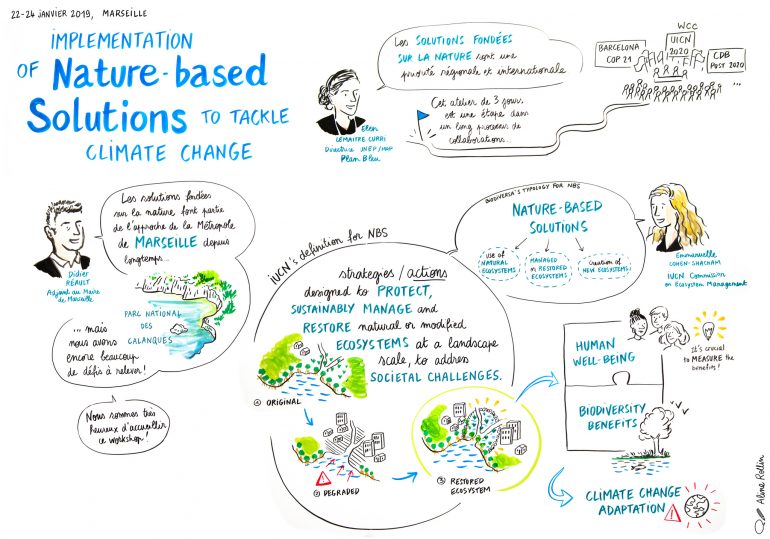
Researchers, practitioners and policy makers from the Mediterranean region and the European Union met to discuss the benefits and challenges of implementing Nature Based Solutions (NbS). From 22 to 24 January, 2019, the city of Marseille  hosted the workshop entitled “Implementation of Nature-based Solutions(NbS) to Tackle Climate Change: Focus on the Mediterranean Region”. The event provided attendees with an opportunity to identify new collaborations while sharing European and Mediterranean best practices and challenges related to NbS. It also provided policy-makers with increased awareness regarding the importance of healthy ecosystems for effective adaptation to climate change. Organized by Plan Bleu, IUCN Centre for Mediterranean Cooperation, the IUCN French Committee, Conservatoire du Littoral, Tour du Valat, MedWet and Wetlands International, the workshop bring together a diverse group of more than 100 participants from the Mediterranean region and the European Union, including researchers, practitioners, policy-makers, local authorities, civil society, and NGOs. Participants had a chance to share and discuss their perspectives regarding opportunities and challenges related to implementation of Nature-based Solutions.
Mediterranean societies are currently facing a wide range of challenges stemming from unsustainable urbanization and impacts on health, including degradation and loss of biodiversity, lack of clean air, water and soil, and climate change impacts which are resulting in an alarming increase of natural disasters. However, through actions that restore natural or modified ecosystems, nature itself can provide adaptive solutions that address societal challenges. These nature-based solutions offer sustainable, economical, versatile and flexible alternatives to the more traditional civil engineering developments or technologies. They can also help create new jobs and stimulate growth, all while protecting or enhancing biodiversity. For more information visit the website.

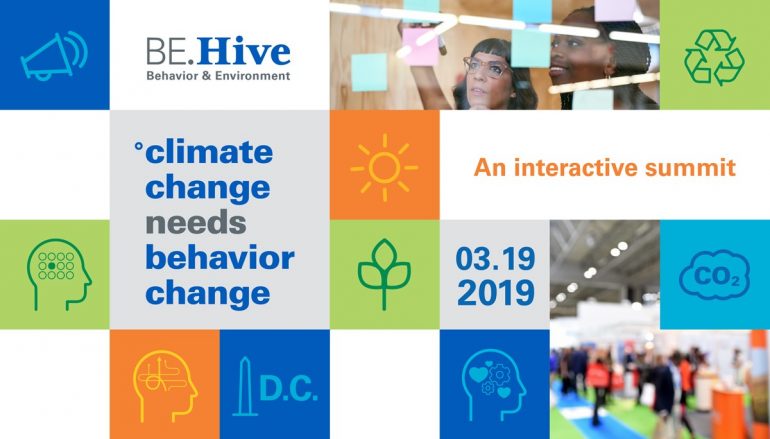
BE.Hive: Climate Change Needs Behavior Change

BE.Hive: Climate Change Needs Behavior Change is a one-day summit to explore global climate change through the lens of human behavior.
Climate change is the most pressing threat facing our species and our planet. Human behavior lies at the center of the challenge. But it also may be the solution. At the BE.Hive: Climate Change Needs Behavior Change summit, you will learn about the latest insights from behavioral science, get inspired by the world’s leading environmentalists, be ignited by artists, storytellers and explorers, and tap into some of the most promising approaches for shifting human behavior to reduce greenhouse gas emissions.
Whether you’re looking to change yourself, nudge your peers, or move society,  join a growing community of environmental changemakers, behavioral scientists, conservationists, designers and thought leaders at this one-day summit at the intersection of behavior-centered design and climate change.
Register here

School strike for climat, Greta and the others

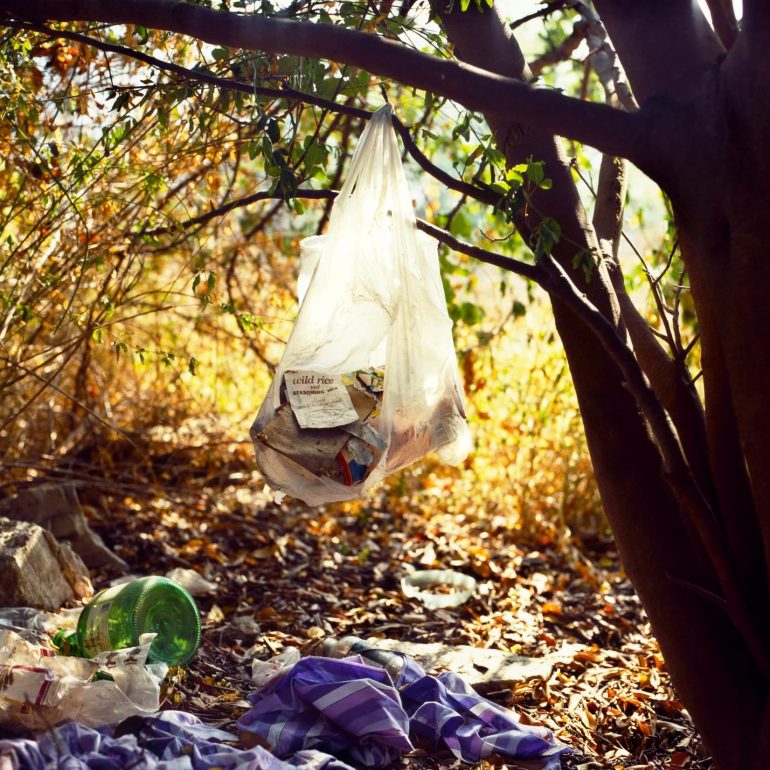
Tout a commencé en août dernier quand une jeune suédoise de 15 ans (elle en a 16 aujourd’hui) désormais célèbre, Greta Thunberg (photo) a décidé de faire la « grève de l’école pour le climat » au motif que pour un jeune cela n’a aucun sens de préparer son avenir alors que l’inaction des adultes quant à la crise climatique prive précisément la jeunesse d’avenir.
Dans le sillage de Greta

Comme une véritable héroïne, elle était seule assise sur les marches du parlement suédois. Elle est revenue avec sa pancarte semaine après semaine. Puis elle a été rejointe, puis des élèves en Australie ont fait grève eux aussi, puis elle est allée à la coop 24 où elle a eu des parole fortes, puis des élèves en Allemagne, en Suisse, en Belgique… se sont mis en grève et on manifesté pour le climat en se revendiquant de ce mouvement de grève de l’école pour le climat, agissant de façon explicite dans le sillage de Greta. Cela n’est pas encore enclenché dans la réalité en France mais les décisions sont prises, ça va bouger. Les jeunes belges sont en particulier impressionnants. Ils ont décidé de se mobiliser tous les jeudis. Ils sont passés de 3 000 à 35 000 en 3 semaines à défiler pour le climat à Bruxelles. Certains manifestants n’ont pas plus de 10 ou 12 ans ! Greta à fait sensation à Davos, le mouvement ne cesse de se renforcer. A l’appel de Greta, le 15 mars sera une journée internationale de grève de l’école pour le climat.

Les profs entrent en action

En France un collectif des enseignants pour la planète s’est constitué. Ils se sont rencontrés dans le tout nouveau mouvement extinction rébellion. Ils disent « L’urgence écologique n’est plus à démontrer. Elle est à enseigner, et elle doit nous mobiliser à chaque instant, dans nos salles de classe, salles des profs mais aussi dans la rue et dans nos luttes! C’est le sens de la création de ce collectif Enseignant.e.s pour la planète! » Ils sont déjà en quelques semaines près de 3 000 à avoir signé.

Un appel circule dans les milieux de l’éducation

“…nous déclarons que nous ne voulons plus être les instruments d’une propagande rassurante, qui rend invisible la catastrophe écologique. Nous devons au contraire dire à nos élèves que la situation est gravissime, sur le climat qui s’emballe, la biodiversité qui disparaît, la pollution qui pénètre jusque dans nos cellules, et qu’aucun diplôme ni aucune formation ne les protégera contre cela…”. L’excellent quotidien de l’écologie Reporterre a publié un article sur le sujet.

Le développement durable en question

Nous pouvons aussi lire dans l’appel : “…Les médias, les scientifiques nous l’ont assez répété. Nous le savons mais nous nous taisons. Dans nos salles de classe, nous avons accepté trop longtemps d’enseigner le « développement durable », entretenant chez les élèves l’illusion que la situation était sous contrôle, prise au sérieux par les gouvernements du monde…”. Beaucoup d’acteurs de l’éducation à l’environnement apprécieront cette remise en question du développement durable. Ce concept, parachuté du haut dans les années 90, a encombré les réflexions, les échanges et les actions en faveur de l’environnement dans le monde éducatif depuis plus de 20 ans. Adoptons pour de bon le terme « transition » qui lui vient de la base et clairement aujourd’hui, à toutes et tous, s’impose.

Les Educations nationales n’ont pas assuré

De voir tous ces enfants et ces jeunes dans l’émoi cela devrait nous alarmer au plus haut point. Ils disent l’incapacité des adultes à mettre en œuvre ce qu’il faut pour stopper l’effondrement que nous vivons. Il n’y a pas qu’en France, il semble bien que ce soit dans tous les pays que les systèmes éducatifs étatiques n’ont pas assuré. Ils n’ont pas tenu compte des recommandations faites par les grandes conférences internationales sur l’environnement. Dés à Stockholm en 1972, il avait été dit et acté dans le principe 19 qu’il est  « essentiel de dispenser un enseignement sur les questions d’environnement aux jeunes générations aussi bien qu’aux adultes … »cela n’a pas été fait ou alors vraiment du bout des doigts. Il faut totalement repenser l’éducation.

En nous, on le sent, l’espoir renait

Nous n’avons pas besoin de jeunes obéissants qui savent apprendre par cœur et bardés de diplômes. Nous avons besoin de jeunes autonomes, confiants en eux, sachant prendre des initiatives, sachant travailler en groupe, des jeunes créatifs, proches de la nature pour l’avoir beaucoup fréquenté dès leur plus tendre enfance. Il y va maintenant de la survie de l’espèce humaine. Soit nous savons prendre les bonnes initiatives, nous-mêmes, pour notre économie domestique et celle de nos territoires locaux partout dans le monde ou alors nous continuerons d’aller à la catastrophe. Avec Greta, avec ces dizaines de milliers de jeunes qui se lèvent dans tous les pays, en nous, on le sent, l’espoir renait, aidons les !

Roland GERARD

The street photography of Anthony Hernandez

Fundación MAPFRE is launching its 2019 season with the first exhibition to be held in Spain on the American photographer Anthony Hernandez (born Los Angeles, 1947), which will also be the first major retrospective devoted to him. Featuring more than 110 photographs, “The confusing gaze of Anthony Hernandez” will offer an extensive survey of Hernandez’s lengthy and prolific career while also celebrating his distinctive and unique style of street photography and its significant evolution over time.
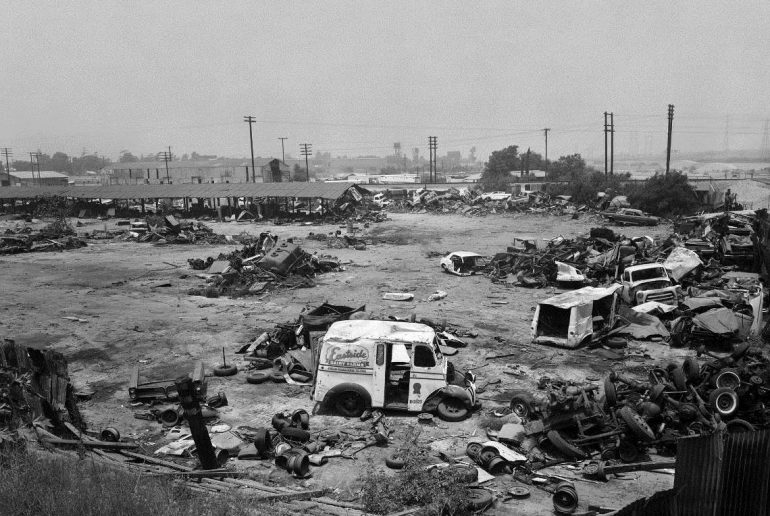
The exhibition has been organised by the San Francisco Museum of Modern Art (SFMOMA), an institution with which Fundación MAPFRE has collaborated since 2015 when it presented the exhibition Garry Winogrand at its Madrid exhibition space. At the present time Fundacion MAPFRE’S exhibition Brassaï can be seen at the SFMOMA, where it is on display until 17 February 2019.


Hernandez was born in Los Angeles in 1947, the son of Mexican immigrants. Without specific photographic training or further education, his career began in the streets of his home city at the end of the 1960s. After his beginnings which followed the great American tradition of street photography, his work rapidly evolved towards an approach that used different techniques and aesthetics.

In his early career he used black and white photography, concentrating on the human figure. He switched from 35 mm to large format and from 1984 he turned to color photography, excluding people from his images to the extent of capturing details that verged on the abstract. His work on various series, which can span several years, maintain their consistency thanks to an artistic vision that is hard and direct, yet full of formal beauty. Today, Hernandez maintains his interest in things and places that don’t initially appear to be suitable as subjects for photography.

In his photos of Los Angeles, Hernandez avoids any overt form of cliché, using his camera to capture anonymous citizens going about their business, waiting for buses or engaged in simple pleasures designed to help cope with their daily lives. Neither does the photographer shirk from more distressing issues such as homelessness, evictions and those affected by economic crises. However, his images go far beyond mere social documentation, in that all his work reaffirms his interest in formal beauty and composition.

Two postdoctoral position in Sweden

The first one is for a Postdoctoral researcher in sociology with focus on International expert organisations: the School of Humanities, Educational and Social Sciences is seeking a postdoctoral researcher in sociology for a fixed-term appointment.
Eligible for the appointment as postdoctoral researcher are applicants holding a doctoral degree in sociology or in related subject areas. The doctoral degree should have been awarded no more than three years prior to the application deadline. Candidates who have obtained their doctoral degree prior to that may however also be considered if special grounds exist (leave of absence due to illness, parental leave, clinical duties, an elected position in a trade union, or other similar circumstances).
The application deadline is 15 March 2019

For information and application use this link

The second position is Postdoctoral researcher in sociology with focus on Environmental expertise. The subject area of the position is sociology with a focus on international environmental governance. The work will form part of a research project on interdisciplinary and transdisciplinary challenges for the intergovernmental expert organization IPBES, which synthesizes and assesses knowledge about biodiversity and ecosystem services. The project is part of the research conducted by the Environmental sociology group. For further information about this group, please visit its website.

Call for Research Associate in Colombia

SEI (Stockholm Environment Institute) Latin America is recruiting a highly motivated early-career colleague (Research Associate) who is committed to conducting quantitative research to support the implementation of the Sustainable Development Goals (SDGs) in Latin American countries. The Research Associate will work under the leadership of the SEI Latin America SDGs program manager.

The main responsibilities will include:
– Contributing to SEI’s current portfolio of research projects, for example; reviewing literature, carrying out interviews and other socio-environmental data collection, data analysis and reporting
– Support the development of scientific research, models and tools related to topics covered by the SDGs
– Support the development and application of user-friendly tools and activities for stakeholder’s engagement, capacity building and decision making for SDG implementation, including organizing workshops and dialogues
– Support the preparation of reports, scientific publications, guides and manuals and presentations, among others.

The candidate’s profile
To succeed in this role, the candidate has to be organized, collaborative, solution oriented, proactive and have excellent communications skills in both Spanish and English. He/She must have the ability to work independently and is good at meeting dates and deadlines. The candidate should be able to, on occasion, work on the field (inside and outside of the country).

Qualifications and experience
B.Sc. in engineering, statistics, environmental- or earth sciences, with 1-3 years of work experience, or hold a relevant M.Sc. with no professional experience
Experience in quantitative research. Experience related to statistics, data and development is a plus
Familiarity with conducting desk research and navigating academic sources and online databases
Knowledge of network analysis software (e.g. Netdraw, Pajek and Gephi)
Excellent writing and communication skills in Spanish and English
Knowledge of socio-environmental conditions in Latin America is desired.

How to apply
Aapplications are reviewed on an ongoing basis so please submit your application as soon as possible, however no later than 8 February 2019 23:59 Colombia standard time.

Applications are accepted only through the recruitment system, you could apply online using this link and include cover letter highlighting relevant qualifications and experience, curriculum vitae.