
Leveraging COP 28 consensus for inclusive socio-environmental transformation
Brazil and paths after COP 28
by Dra. Vanessa Sousa de Oliveira, Dr. Marcos Vinicius Campelo Junior
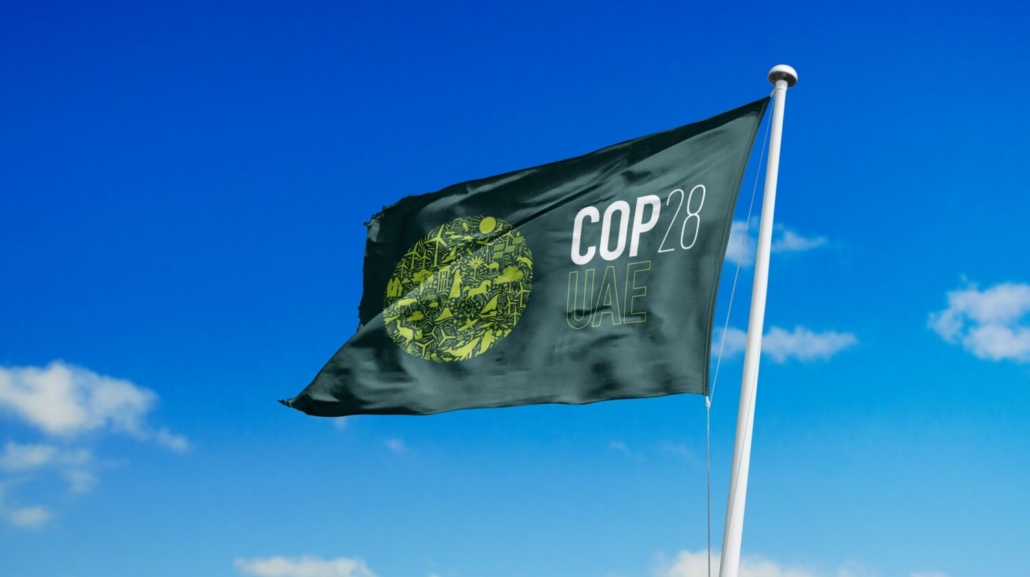
Between November 30 and December 12, 2023, the 28th Session of the Conference of the Parties (COP 28) of the United Nations Framework Convention on Climate Change (UNFCCC) took place in Dubai, United Arab Emirates. The 195 participating countries discussed strategies to reduce, mitigate, and control the emission of greenhouse gases, responsible for climate change.
The Conference of the Parties (COPs) is the most important international meetings to discuss climate change. The United Nations Framework Convention on Climate Change (UNFCCC) agreement establishes commitments and obligations for the signatory countries, where strategies to curb the acceleration of climate change are discussed and negotiated.
The final document of COP 28 can be analyzed from different perspectives. When assessing global responses to climate change, the goal of uniting efforts to ensure the stabilization of the planet’s warming at 1.5°C, as defined in the Paris Agreement, identified significant omissions in the commitments made, especially by developed countries. The existing advancements were considered timid and disjointed.
For the first time, the overall balance of the Paris Agreement explicitly addresses the reduction of production and consumption of fossil fuels, ensuring global consensus on an energy transition and assigning greater responsibility to developed countries. However, the reduction values and funding sources for decarbonization of energy systems were not defined.
Another achievement is the connection with the Convention on Biological Diversity (CBD) through issues directly related to the conservation of biodiversity, its sustainable use, and the fair and equitable sharing of genetic resources in the three levels categorized in the CBD: ecosystems, species, and genetic resources.
In its participation, Brazil focused on mediating consensus between developed countries and those that can develop in setting goals and fulfilling them in addressing climate change. It is certain that to achieve environmental justice, one must consider the historical gap between rich and poor nations. Proportionally, nations with greater economic power must initiate the process of abandoning fossil fuels, thinking about decarbonization within the set goals.
Given Brazil’s socio-environmental importance on the international stage and anticipating its role as the host country for COP 30 in Belém do Pará (PA) in the heart of the Brazilian Amazon in 2030, how can Brazil use the current established consensus to strengthen its actions domestically and present itself as a leader in the global environmental context with internal proposals that go beyond reducing deforestation in the Amazon Rainforest?
Brazil, as a strategic environmental actor, plays an important role in this context and can contribute with successful experiences and new models of socio-environmental management. These biomes present a significant representation of sociobiodiversity: forests, wildlife, and the presence of people who inhabit these spaces, such as quilombolas, indigenous peoples, riparian dwellers, rubber tappers, and others.
We believe that Brazil’s significant contribution to the international decarbonization process lies in public policies focused on resolving internal conflicts that directly affect the existence of indigenous and traditional peoples, as well as the quality of life in urban centers. Reducing socio-environmental inequalities, ensuring fundamental rights, and protecting biomes that are directly related.
Ensuring the legal protection of indigenous and quilombola lands and their way of life integrated with nature; Expediting agrarian reform, which constitutionally revolves around the social use of land. Expanding successful experiences of sustainable agriculture and livestock farming carried out by social movements in rural areas; Incorporating clean technologies produced in universities into urban mobility structures, construction, and educational processes for new generations.
Finally, it will be necessary to unite governments, civil society, researchers, and others in this endeavor, which may be our last chance to “postpone the end of the world” (a reference to the title of Ailton Krenak’s book). Thus, social justice, climate justice, and the reduction of inequalities form an inseparable triad that will underpin the processes of economic, social, and symbolic decarbonization. Above all, we need to decarbonize our thinking!



Leave a Reply
Want to join the discussion?Feel free to contribute!