Hoping for education, in a time of transition. A call for debate
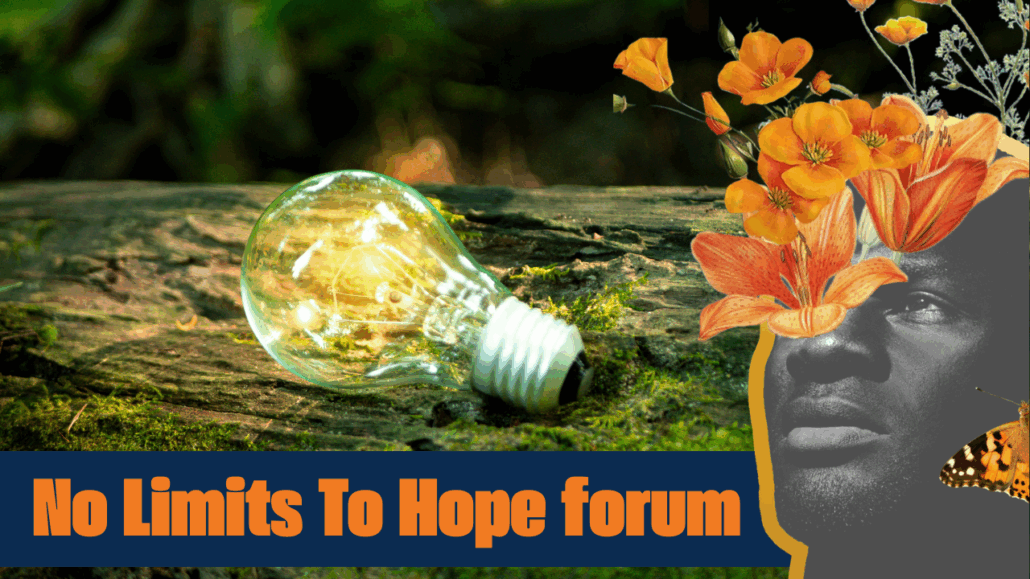
“No Limits to Hope: Transforming learning for better futures”.
Why this need for hope and this need for learning transformation? Because, in 2024, forty-five years after the report “No Limits to Learning: Bridging the Human Gap”, the Club of Rome, The Fifth Element, taking up the proposal of the WEEC Network, have jointly launched a new global call that aims to inspire action by educators, learners and citizens alike to pursue a global shift in educational and learning paradigms, and together they launched the initiative at the 12th WEEC?
The answer is that forty-five years after the 1979 report, what the founder of the Club of Rome, Aurelio Peccei, wrote in the Preface is even more valid. There is a “human gap” between the human condition and the natural environment, destined almost inevitably to get much broader.
The report, as a result of the “No Limits to Hope” initiative, will be presented at the 13th World Congress, which will take place in Perth (Australia) from 21 to 25 September 2026 and will be a key event of that congress.
Perfectly converged lenses
The goals of the joint initiative CoR, T5thE, and WEEC and the global environmental education community’s goals, which meet every two years for congresses in different parts of the planet, are perfectly convergent.
The CoR, with its more than 50 years of existence, and the EE community, with its more than 20 years of international meetings, work for a wide-ranging and long-term vision to produce significant systemic change.
In the 1979 report to the Club of Rome, “No Limits to Leaning: Bridging the Human Gap,” the global WEEC community saw a splendid explanation of the principles and methods of environmental education (EE) that in those times had been structured over about ten years.
In the joint initiative of research and debate on how to “transforming learning for better futures” we have seen a splendid opportunity for synergies and common commitment with those who since 1968 (therefore more or less from the same years in which environmental education began to be talked about with more awareness) have given the most continuous, most authoritative and most wide-ranging contribution to research on the challenges and dangers of contemporary history.
At the centre of a crossroad of perspectives
Reconnecting humanity and Nature in a new Alliance, reconnecting people and cultures, reconnecting disciplines: “Reconnecting” is a keyword of the next WEEC congress in 2026.
The same reconnection is needed for education globally. It involves reconnecting educational systems, methods, and organisations with ethical challenges and crucial issues, as well as goals and daily routines with the sad reality of an unequal and dangerous society.
Contrary to a trivial vision of EE, the education on the interconnectedness and interdependence of Humans-Nature and its complexity (that is, speaking of the environment) is a broad crossroads of perspectives and the ideal ground for building interdisciplinarity and transdisciplinarity. EE must lead a global commitment to profoundly reorganising knowledge, structures, and laws towards interdisciplinarity and transdisciplinarity. This requires considering socio-cultural diversity, biodiversity, the relationalities between humankind and nature, and the place of epistemological pluralism in our field. Western scientific thinking must be questioned, and the relationships between expert knowledge and traditional and empirical knowledge must be examined. It requires changing the questions: we teach many answers, but do not pose enough new and alternative questions.
Action and Hope
For us, reconnecting is an educational challenge—an authentic, transformative mission. Complexity, Systems Thinking, Interconnectedness, and Interdependence are keywords closely related to “Reconnecting,” but education is also about eco-citizenship, global citizenship, equity, multiculturalism, and peace. So, EE is education both for the present (action and commitment) and the future (hope and capacity for designing and building alternative futures).
We don’t have power, properties, or weapons: our tools are nonviolent and meek. Sometimes, words and books can wound and hurt. In history, words and books prepared and legitimised wars, hate, injustices, and genocides. Our unarmed means can change minds, mindsets, science, paradigms, worldviews, and, therefore, socioeconomic models and global policies. This is an integral shift: “shift” is another keyword common to the “No Limits to Hope” Initiative and the environmental education’s fight for a new, ecological, sustainability-based, holistic culture.
It means moving towards decolonisation, amplifying, recognising, and valuing voices from the Global South, respecting traditional knowledge, and moving beyond the dominant logic of globalisation.
It means opening education more and more to pedagogies and methodologies for transformative learning, e.g., service learning, community stewardship, project-work-based activities, Place-Based education, participatory action, citizen science, skills development, and action-oriented education for making new personal, communal, and political choices.
It means considering different scales of space (local, national, global) and time (past, present, and future) to understand how elements of the environmental, social, economic, and cultural dimensions interact and relate to each other.
Get involved and attend the world congress in Perth (Australia)
It means paying attention to climate and social justice and cultivating a critical understanding of our current socioeconomic model and its differentiated effects in the Global South and the Global North.
It means examining educational systems worldwide, their blockages or innovations, weaknesses, and threats to propose a renewed role for education and learning.
So, the “No Limits to Hope. Transforming learning for better futures” Initiative offers many ultimate stimuli to everyone interested in assuring a safe and fair operational space for Humans without destroying themselves and what remains for Nature. And the WEEC Congress in 2026 offers a consistent, biodiverse milieu for meeting, debate, and enhancing action and collaboration.
Get involved, send comments for the Forum online, and cooperate in many other ways with the Initiative. Consider also attending the worldwide meeting in Perth.
Looking forward to hearing from many, my warmest greetings.
This contribution is part of the comments and suggestions on the document ‘No limits to hope: Transforming learning for better futures‘