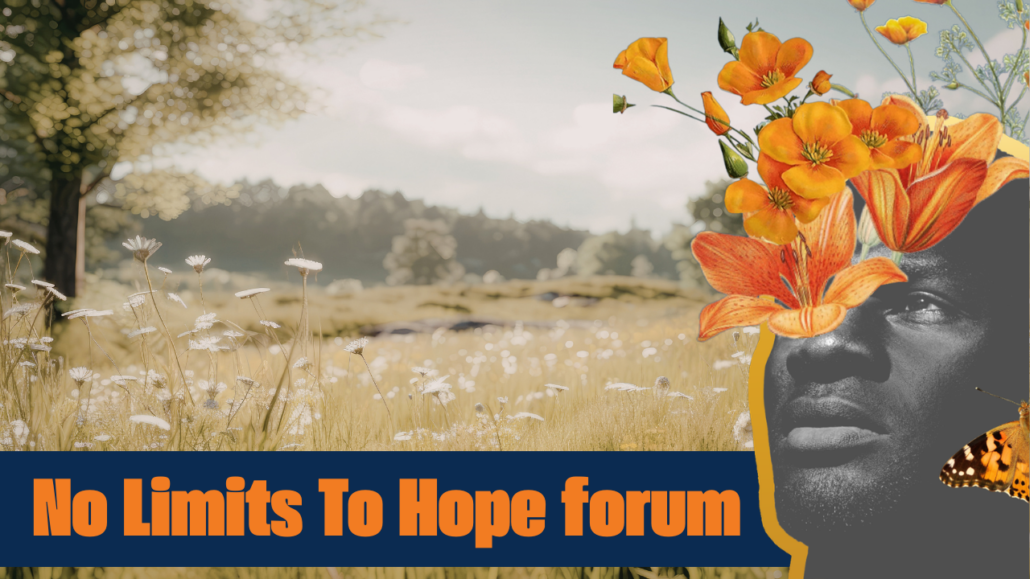
The Meadow Knows
A child does not need to be taught that soil is alive. She already knows. She has felt it, smelled it, watched things emerge from it and return to it. What she needs is for us not to take that knowledge away from her.
This is where education fails most quietly. Not in what it teaches, but in what it displaces.
We fill classrooms with representations of the world while the world waits outside.
We offer diagrams of ecosystems to children who have not yet learned to sit still in one. We talk about biodiversity in rooms where the only living things are the students themselves. And then, years later, we wonder why the adults those children became struggle to think in systems, to tolerate complexity, to imagine futures that look genuinely different from the present.
The meadow was always the better classroom. We just stopped going there.
What the forest teaches before the teacher arrives
What nature offers young learners is not content. It is a way of seeing.
A child who spends time in a forest learns, without being told, that nothing is wasted. That what falls becomes what rises. That a dead tree is not an ending but a reorganization of energy, shelter, soil. She learns that adaptation is constant, that disruption is not catastrophic but generative, that the most resilient systems are the ones with the most relationships.
These are not metaphors for life. They are life’s actual operating principles, visible, touchable, available.
And here is what matters most for the generation we are educating now: nature does not teach sustainability. It teaches regeneration. Sustainability asks how we preserve what remains. Regeneration asks how we restore what was lost, how we participate in cycles larger than ourselves, how we leave a place more alive than we found it. This is a fundamentally different orientation, and it begins with a fundamentally different relationship to the living world. One that starts young. One that starts outside.
A child who has watched a river find its way around an obstacle has already understood something that most strategic planning frameworks spend pages trying to explain. Give her that experience first. The frameworks can come later.
The lichen speaks first
The same principles hold when we shift from the young to those who lead.
I work with executives, teams, and organizations in the alpine environment. What I have observed, consistently, is that nature does something for adult learners that no workshop can replicate. It mediates.
There is a moment I have watched happen more times than I can count. A manager, a team leader, someone who arrived carrying the full weight of their role, stops talking about strategy. And starts talking about lichen.
They do not plan it. No one asks them to.
Something about kneeling in front of a rock face, examining how a crustose lichen persists at 2,800 meters with almost no resources, no soil, no shelter, something about that unlocks a different kind of speech. They begin to describe, quietly, their own fragility. Their organization’s brittleness. The way they have been trying to grow on nothing.
They are talking about themselves. Without talking about themselves.
Every educator knows that the most important things are hardest to say directly. To ask directly is to trigger defensiveness, performance, or silence. Nature removes that barrier. When the mind is directed outward toward a living system, internal defenses lower. Pattern recognition deepens. The connections people draw back to their own lives carry an authenticity that classroom exercises rarely achieve.
Nature does not judge. It simply shows what works, what endures, and what does not survive.
Not Surviving. Returning.
And it teaches the same lesson it taught the children: not how to sustain, but how to regenerate.
The alpine ecosystems I have worked in for over fifteen years are functioning models of adaptive intelligence. They manage uncertainty, scarcity, and shock. They build resilience through redundancy, collaboration, and radical efficiency. They do not merely hold their ground. After every disturbance, fire, avalanche, drought, they come back differently, more complex, more diverse, more capable. That is not sustainability. That is regeneration, and organizations are beginning to understand that this is what they need too.
A lichen is not a metaphor for symbiosis. It is symbiosis, alive, under pressure, performing. A gentian flowering at the edge of a snowfield is not an illustration of persistence. It is persistence, instantiated, measurable, real.
When we treat nature as the learning platform rather than the backdrop, something shifts in the learner. Observation becomes rigorous. Questions become genuine. The transfer of insight to human contexts happens on its own, because the learner built the bridge themselves, from their own attention.
This is the difference between being told a principle and discovering it. Between information and formation.
An unmade choice
What would it mean to take all of this seriously, for every age, every public, every context?
It would mean training educators in natural history alongside pedagogy, giving them the tools to read a landscape the way a scientist reads a text. It would mean designing curricula around living systems questions: how does this forest recover from fire, what can we learn from that? It would mean trusting that a mountain, a wetland, a garden, a hedgerow, any living system, contains everything needed to teach adaptive thinking, collaborative intelligence, and regenerative possibility.
Above all, it would mean recognizing that the separation between human learning and the natural world is not a given. It is a choice, made not long ago, and one we can unmake.
The children who grew up tracking seasons, reading soil, following rivers were not romantics. They were learning, at a cellular level, how living systems work. We can offer that back to the young and to the seasoned alike. Not as nostalgia. As method. As hope.
The meadow has been teaching for longer than we have been arriving to learn. What changes now is our willingness to sit quietly enough to be taught.